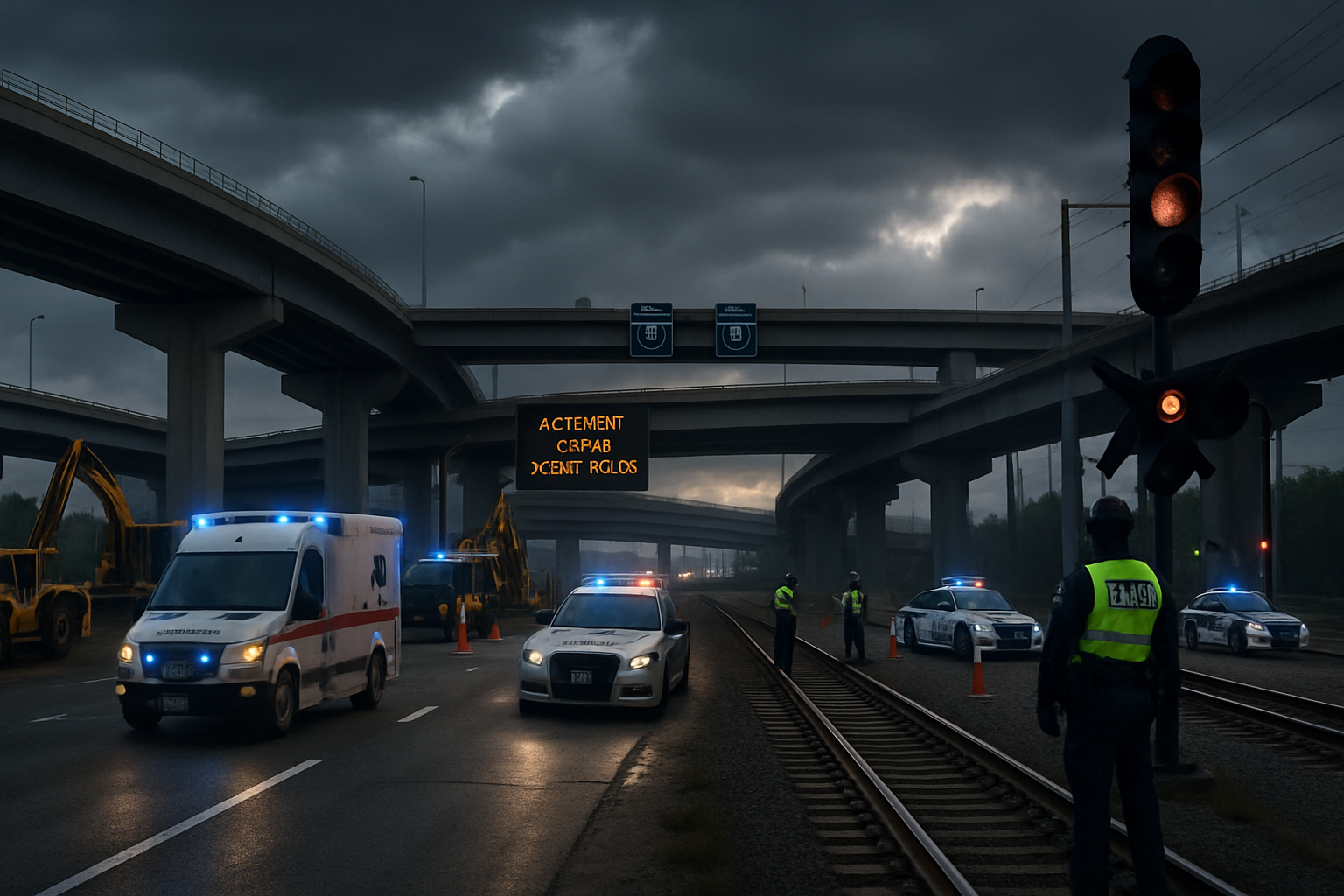
A devastating series of transportation accidents across ten countries in the first week of February 2026 has exposed critical safety vulnerabilities in global infrastructure systems, even as nations pour unprecedented resources into modernizing their transportation networks amid climate challenges and infrastructure investment surges.
The deadly incidents, ranging from a catastrophic vehicle accident in Afghanistan that killed 12 people to suspected railway sabotage in Italy during the Winter Olympics, underscore the complex challenges facing transportation authorities worldwide as they balance rapid infrastructure development with safety protocols.
Fatal Accidents Highlight Safety Vulnerabilities
In Afghanistan's remote Badakhshan Province, poor road conditions contributed to a tragic accident that claimed 12 lives and injured three others when a Flancoach vehicle veered off the road and plunged into a ravine in the Samdar area of Arghanjkhwah district. The incident, reported by Provincial Police spokesperson Ehsanullah Kamgar, occurred during daylight hours on Saturday, affecting men, women, and children.
The Netherlands experienced two separate fatal crashes within days. In Kessel, Limburg, a 17-year-old from Peel en Maas died in a single-vehicle crash after the car collided with a commercial building, while another incident in Gorssel saw two people killed when their vehicle struck a tree on provincial road N348 early Saturday morning.
Australia faced tragedy when a grandmother was killed as a car crashed through her bedroom while she slept, highlighting the devastating human cost of transportation accidents that extend beyond roadways to residential areas.
Railway Infrastructure Under Attack and Strain
Italy's railway system faced unprecedented disruption as authorities investigated potential sabotage near Bologna, with damaged electrical cables causing widespread delays to high-speed and intercity trains across northern Italy. The timing coincided with the opening of the Winter Olympics in Milan and Cortina, raising concerns about coordinated attacks on critical infrastructure.
Polish authorities reported a complex railway incident in Daniszyn, Wielkopolska, where a passenger car collided with a rail bus at a level crossing. After the driver and 14-year-old child evacuated, a Wrocław-Białystok train subsequently struck the abandoned vehicle, injuring two people and highlighting the cascading risks in transportation system failures.
The incidents come against the backdrop of historical context showing European transportation networks already under severe strain from extreme weather events. Recent memory includes massive disruptions from Storm Leonardo and unprecedented winter conditions that paralyzed railways across multiple countries, demonstrating the intersection of climate challenges with infrastructure vulnerabilities.
Aviation Safety Challenges Continue
Even seemingly minor incidents revealed ongoing aviation safety concerns. A SAS flight from Stockholm to Malaga was forced to turn back after passengers spotted a mouse aboard the aircraft, demonstrating how unexpected safety protocols can disrupt air travel and highlighting the comprehensive nature of transportation safety challenges.
These aviation disruptions occur within the context of previous major weather-related airport closures, including Berlin Brandenburg Airport's extended shutdowns due to black ice conditions and widespread flight cancellations across European airports during recent extreme weather events.
Cross-Border Transportation Cooperation Amid Crisis
While safety incidents dominated headlines, positive developments emerged in international transportation cooperation. Luxembourg hosted crucial meetings between French and German representatives with Mobility Minister Yuriko Backes to discuss cross-border railway mobility in the Greater Region, demonstrating how nations are working to enhance regional integration despite ongoing challenges.
This diplomatic initiative reflects broader trends in infrastructure collaboration documented in recent months, including massive multi-national projects such as Vietnam's $120 billion expressway network expansion and coordinated European Union responses to transportation crises.
Infrastructure Investment Surge Continues Despite Safety Concerns
The safety challenges emerge during an unprecedented global infrastructure investment wave that has seen commitments exceeding $570 billion across multiple nations in early 2026. This surge includes transformative projects such as Kenya's accelerated flyover completions, Nicaragua's airport reconstruction partnerships with Chinese engineering firms, and Portugal's climate-resilient transportation initiatives.
However, the recent accidents highlight the tension between rapid infrastructure development and safety protocol implementation. As nations rush to modernize transportation networks for climate adaptation and economic connectivity, ensuring adequate safety measures becomes increasingly critical.
Climate Adaptation and Infrastructure Resilience
The transportation incidents occur within the context of extreme weather events that have tested infrastructure resilience across Europe and beyond. Recent storms and unprecedented winter conditions have demonstrated how climate change creates new challenges for transportation safety, from railway systems freezing in Poland to Portuguese infrastructure damage from flooding.
Transportation authorities are increasingly recognizing the need for infrastructure that can withstand both traditional safety challenges and emerging climate-related risks. This includes implementing advanced warning systems, improving emergency response coordination, and designing infrastructure with greater resilience to extreme weather events.
Emergency Response Coordination Challenges
The multiple simultaneous incidents have tested emergency response systems across different countries, revealing both strengths and weaknesses in coordination mechanisms. Afghanistan's remote location complicated rescue efforts for the vehicle accident, while European incidents benefited from more developed emergency response networks but still faced coordination challenges across multiple jurisdictions.
Recent experience with continent-wide emergency responses, including the deployment of 1,975 military personnel and 30 naval vessels during Portuguese flooding, provides models for enhanced emergency coordination that could be applied to transportation safety incidents.
Technology and Safety Integration
The incidents highlight the growing importance of integrating advanced technology into transportation safety systems. From automated warning systems at railway crossings to real-time traffic monitoring on highways, technological solutions offer potential pathways to prevent many types of accidents.
However, the suspected sabotage of Italian railway infrastructure also demonstrates the cybersecurity vulnerabilities that accompany technological advancement, requiring comprehensive approaches to both physical and digital security in transportation systems.
Economic Impact and Recovery Implications
Transportation accidents impose significant economic costs beyond immediate human tragedy, affecting trade routes, tourism, and economic confidence. The Italian railway disruptions during Olympic events, for example, threatened both transportation functionality and international image during a major global event.
These costs must be considered alongside the massive investments being made in transportation infrastructure worldwide, emphasizing the economic importance of effective safety protocols that protect both human lives and economic investments.
Looking Forward: Integrated Safety and Development
As global infrastructure investment continues at unprecedented levels, the recent accidents underscore the critical importance of integrating safety considerations into all aspects of transportation development. This includes enhanced training for operators, improved maintenance protocols, better emergency response coordination, and climate-adaptive design standards.
The experience also highlights the need for international cooperation in sharing safety best practices and coordinating responses to transportation emergencies that increasingly cross national boundaries due to integrated transportation networks and shared infrastructure investments.
Moving forward, transportation authorities worldwide must balance the urgent need for infrastructure modernization with comprehensive safety protocols that protect lives while enabling the connectivity essential for economic development and climate adaptation. The lessons from this deadly week in global transportation will likely influence safety standards and emergency response protocols for years to come.