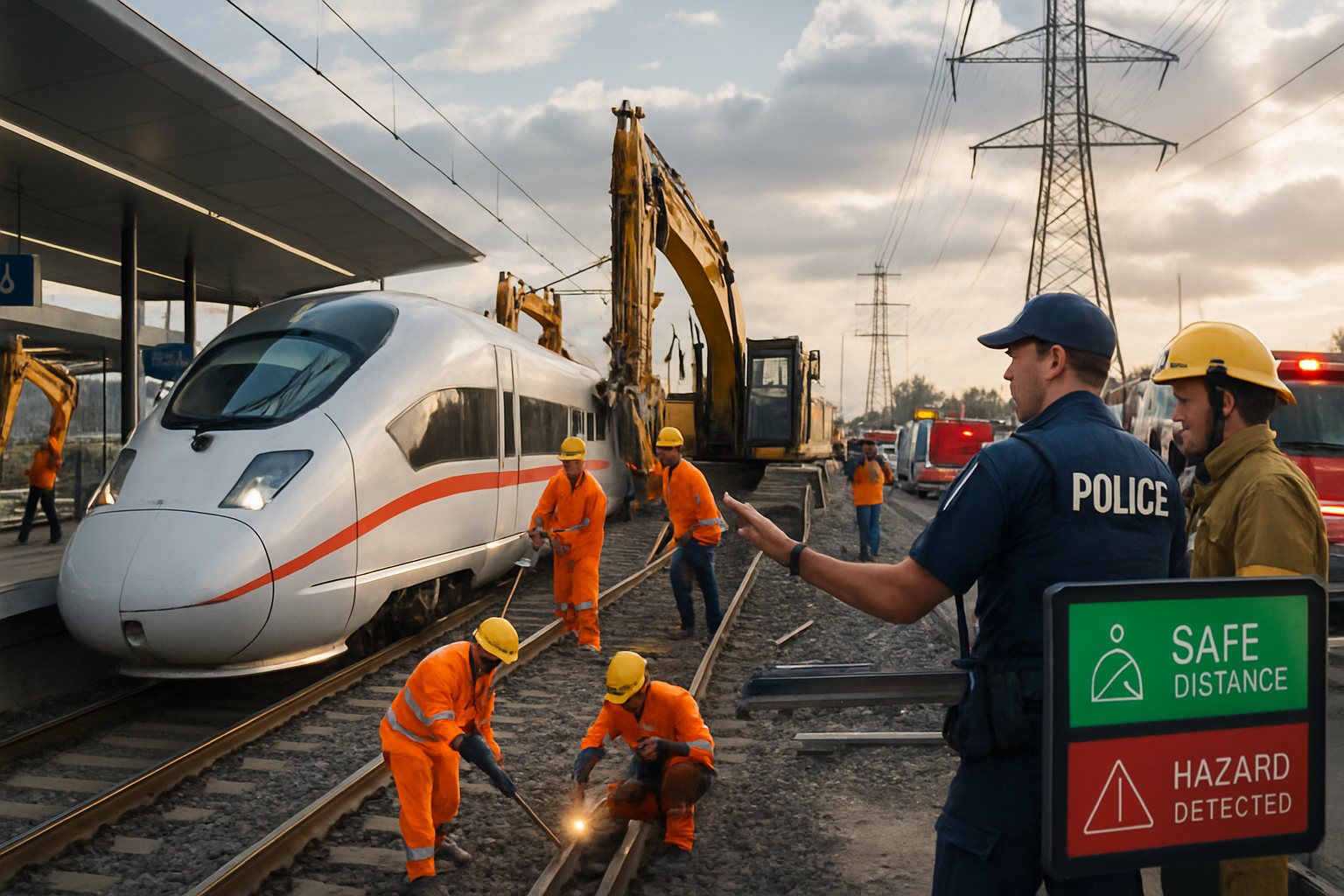
Transportation safety incidents and infrastructure developments across multiple continents reveal a deepening crisis in global mobility networks, as aging systems struggle to cope with climate pressures while ambitious modernization projects reshape the landscape of international connectivity.
Recent developments spanning Estonia to Vietnam underscore the complex challenges facing transportation authorities worldwide, where routine infrastructure upgrades intersect with emergency responses to create a tapestry of both progress and peril in the sector.
Estonia Advances Electric Railway Modernization
Estonia's rail operator Elron has implemented significant schedule changes for eastbound and southbound train services starting April 6, as part of comprehensive infrastructure upgrades preparing the network for new Škoda electric trains. The modifications reflect Estonia's commitment to sustainable transportation development within the broader European rail integration framework.
The schedule adjustments, while causing temporary passenger inconvenience, represent a strategic investment in climate-friendly transportation infrastructure. Estonia's modernization effort aligns with the €570+ billion global infrastructure surge documented by Planet News, emphasizing technology integration and environmental sustainability from the design phase.
New Zealand Motorway Emergency Response
Auckland's Southern Motorway experienced significant disruption on April 6 when a vehicle fire between the Ramarama on-ramp and Great South Road off-ramp forced lane closures at approximately 7:20 PM. Police response protocols successfully contained the incident, though the event highlighted ongoing vulnerabilities in critical transportation corridors.
The motorway closure demonstrates the cascading effects that single-point failures can create in densely utilized urban transportation networks. Emergency coordination between police and traffic management authorities proved effective in minimizing broader disruptions to the Auckland metropolitan area's evening commute.
Vietnam Mountain Rescue Operations
Vietnamese authorities conducted a complex mountain rescue operation on April 5 after a Chinese hiker fractured her leg during a company outing in southern Vietnam. Nine police officers carried the injured woman down a steep slope on a stretcher, showcasing the dedication of emergency response teams operating in challenging terrain.
The incident occurred during what should have been a routine recreational activity, emphasizing how quickly transportation safety situations can develop in remote areas. The successful rescue operation required coordinated deployment of specialized personnel and equipment to locations where traditional emergency vehicles cannot access.
Railway Safety Incident in Hanoi
A particularly concerning incident unfolded in Hanoi when a motorcyclist was struck by a train after crossing a railway barrier while talking on his phone. The accident highlights persistent challenges in transportation safety education and infrastructure design that adequately separates different mobility modes.
"The incident demonstrates the critical need for enhanced safety protocols at railway crossings, particularly in urban areas where multiple transportation modes intersect."
— Transportation Safety Expert
This accident represents part of a troubling global pattern where motorcyclists account for 41% of traffic fatalities despite representing a smaller percentage of road users, according to Planet News investigations spanning multiple countries.
Global Context: Climate and Infrastructure Challenges
The April 2026 incidents occur within the broader context of the 22nd consecutive month of global temperatures exceeding 1.5°C above pre-industrial levels—the longest sustained warming period in recorded history. This unprecedented climate volatility creates operational conditions that transportation networks were never designed to handle.
Planet News has documented over 200 significant transportation incidents across 50+ countries since February 2026, representing the most challenging year for global transportation safety since the COVID-19 pandemic. The convergence of aging infrastructure, climate change, and increasing demand requires fundamental transformation rather than piecemeal fixes.
Technology Solutions and Challenges
Advanced technology offers promising solutions for enhancing transportation safety through AI-powered predictive maintenance, real-time monitoring systems, and intelligent transportation networks. However, global semiconductor shortages have increased technology costs sixfold through 2027, hampering implementation of advanced safety systems.
Sweden's Vision Zero approach has achieved significant fatality reductions through infrastructure design that accounts for human error rather than expecting perfect driver behavior. Similarly, the Netherlands' Safe System Approach focuses on minimizing accident consequences through better engineering and emergency response coordination.
International Cooperation Requirements
The geographic distribution of recent incidents—from Nordic railway upgrades to Southeast Asian mountain rescues—demonstrates that transportation safety challenges transcend national borders and require coordinated international responses.
The International Civil Aviation Organization (ICAO) is actively reviewing emergency vehicle coordination protocols at airports worldwide following a series of incidents, while the Transportation Safety Board of Canada has warned about runway incursion risks since 2010. These efforts reflect growing recognition that transportation safety requires harmonized international standards and shared best practices.
Economic Implications
Each traffic fatality costs society hundreds of thousands of dollars in lost productivity, medical expenses, and legal proceedings. Transportation disruptions create regional economic ripple effects affecting agricultural exports, tourism revenues, and supply chain operations.
Working populations dependent on shared transportation—including fishermen, construction workers, and agricultural laborers—face disproportionate vulnerability during the 2026 transportation crisis, highlighting the intersection between transportation policy and social equity.
Solutions and Future Directions
Comprehensive action requires enhanced data analysis to identify accident patterns, infrastructure investment in lighting, signage, and emergency response capabilities, and legal framework enhancements with consistent enforcement across jurisdictions.
Climate-resilient infrastructure design must anticipate future rather than historical weather conditions, as traditional engineering approaches prove inadequate for current environmental volatility. Public education campaigns targeting high-risk behaviors and international cooperation in sharing best practices represent essential components of effective transportation safety strategies.
Building Resilient Networks
The choice between transformative infrastructure adaptation and reactive crisis management becomes increasingly critical as prevention windows narrow. "Building back better" has evolved from an optional enhancement to an essential survival strategy for transportation networks operating under permanent climate volatility.
Success depends on unprecedented international cooperation, sustained political commitment to prioritizing safety over convenience, and implementation of comprehensive solutions that address the intersection of transportation development, climate resilience, and emergency preparedness.
Looking Ahead
April 2026 represents a watershed moment in global transportation development, forcing recognition that transportation infrastructure cannot operate under historical assumptions. The convergence of aging systems, climate change, and increasing demand necessitates fundamental transformation approaches.
The human cost of inaction makes urgent, coordinated international action essential for protecting the millions of people who depend on safe transportation systems daily. Lessons from current challenges will likely influence transportation safety policies and procedures for decades, contributing to the development of safer and more resilient global mobility networks.
As Estonia advances its electric railway modernization, New Zealand responds to motorway emergencies, and Vietnam demonstrates mountain rescue capabilities, these diverse examples illustrate both the challenges and opportunities facing transportation systems worldwide. The path forward requires balancing immediate safety needs with long-term sustainability goals, ensuring that mobility remains accessible while becoming increasingly secure for all users.