The global travel and tourism industry is experiencing a dramatic recovery surge in February 2026, with billions of dollars in new investments flowing into luxury hotel developments, cruise infrastructure expansion, and destination marketing initiatives spanning from the Caribbean to Europe and beyond.
Caribbean Leads Investment Wave with Luxury Hotel Boom
The Caribbean is emerging as the epicenter of global tourism recovery, with an unprecedented wave of luxury hotel investments transforming the region's hospitality landscape. The Dominican Republic is leading this surge with a massive $1.5 billion Moon Palace mega-resort development in Punta Cana, alongside a groundbreaking $160 million tokenized golf resort that represents the first of its kind in the Caribbean.
These developments are driven by robust visitor numbers, with the Dominican Republic recording 11.6 million visitors and maintaining hotel occupancy rates exceeding 70% throughout 2025. The country's tourism sector is projecting even stronger performance in 2026, with cruise operations expected to handle over 1.4 million passengers across Taíno Bay and Port Cabo Rojo facilities.
Belize is joining the luxury hospitality expansion with its first major international brand presence through Four Seasons' private-island resort development near the Mesoamerican Reef. This project represents a significant milestone for Central American tourism, positioning the country as a premium destination alongside its Caribbean neighbors.
Cruise Industry Demonstrates Unprecedented Capacity Management
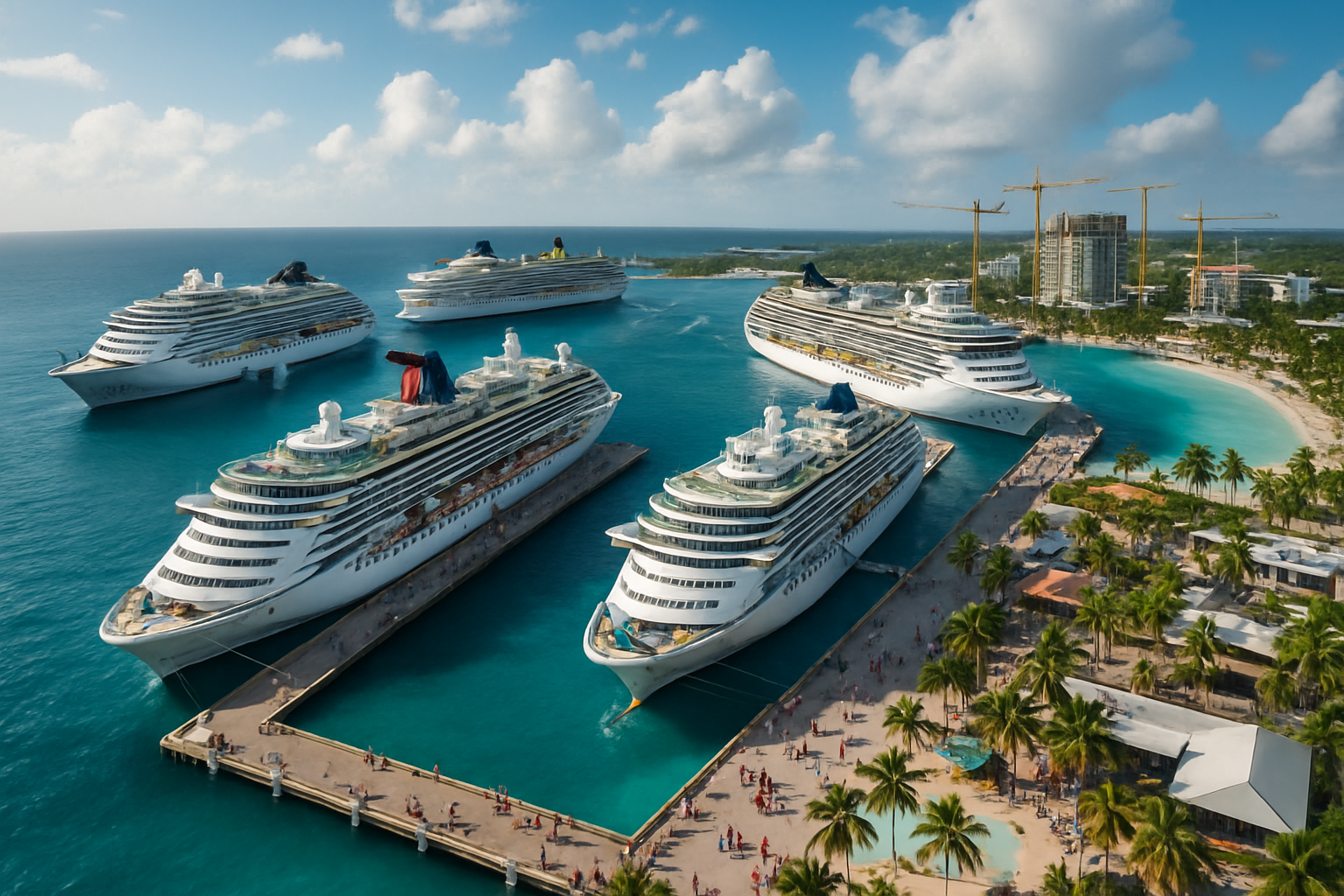
The Caribbean cruise sector is showcasing remarkable operational sophistication, with ports demonstrating advanced infrastructure capabilities that would have been unimaginable just years ago. Saint Kitts and Nevis' Port Zante recently achieved a logistical milestone by simultaneously accommodating six major cruise ships, with some vessels docking directly while others anchored offshore in a coordinated operation that brought thousands of visitors to the island.
This achievement reflects broader regional integration in cruise operations, with destinations coordinating marketing efforts and collaborative infrastructure development to create multi-destination experiences. The approach represents a fundamental shift from individual competition to regional cooperation, maximizing economic benefits across the Caribbean basin.
"The cruises brought thousands of visitors to St Kitts, eager to explore its historic sites, pristine beaches and vibrant local culture, marking another successful day for cruise tourism."
— WIC News Report
The Dominican Republic's cruise facilities are expecting record-breaking performance with sustained disembarkation rates of 90-95% per CEO Mauricio Hamui, significantly boosting the economies of Puerto Plata, Cabarete, and Sosúa. These high disembarkation rates indicate strong visitor satisfaction and confidence in destination offerings.
European Destinations Innovate with Strategic Marketing and Infrastructure
European tourism destinations are demonstrating sophisticated strategic approaches to market development and visitor management. Croatia is showcasing its diverse tourism offerings at Munich's f.re.e travel and leisure fair, strengthening partnerships with key German markets while reinforcing its position as a premier Mediterranean destination.
The Croatian approach exemplifies the industry's evolution toward quality-focused strategies, with destinations investing in comprehensive marketing campaigns that emphasize cultural authenticity, sustainable practices, and enhanced visitor experiences rather than simple capacity expansion.
France is experiencing growing appeal among American expatriates, with Montpellier emerging as a particularly attractive destination. The city's combination of sunny weather, car-free lifestyle, and excellent travel connections is drawing increasing numbers of long-term American residents, reflecting broader trends in international mobility and lifestyle-driven tourism.
Brazil's Cultural Tourism Renaissance
Brazil is demonstrating remarkable resilience in its tourism recovery, with major cities like São Paulo and Rio de Janeiro quickly returning to their vibrant rhythms following Carnival 2026. The post-Carnival period has seen both cities pivot seamlessly back to their year-round tourism offerings, with nightlife, cultural attractions, and hospitality sectors operating at full capacity.
The successful integration of Carnival celebrations with sustained tourism infrastructure highlights Brazil's sophisticated destination management capabilities and its ability to leverage cultural events for long-term economic benefits rather than short-term tourism spikes.
Infrastructure Investment Surge Supports Recovery
The current tourism recovery is being supported by an unprecedented global infrastructure investment surge exceeding $570 billion, with projects spanning from transportation improvements to digital technology integration. This infrastructure development is not limited to traditional tourism facilities but encompasses comprehensive visitor support services including healthcare, transportation, and communication systems.
Croatia's development of 62 tourist medical clinics for the 2026 season represents the most extensive seasonal healthcare network in Europe, addressing both visitor safety and pandemic-era lessons about accessible medical services. This investment demonstrates the evolution of tourism infrastructure beyond accommodation and entertainment to comprehensive visitor welfare.
Technology Integration Enhances Traditional Experiences
The industry is successfully integrating advanced technology with authentic cultural experiences, creating enhanced visitor engagement without diminishing traditional practices. Rome's Trevi Fountain €2 entry system, which generates €6 million annually while managing overcrowding, provides a template for sustainable tourism management that other destinations are adapting.
Digital platforms and AI-integrated travel planning are enabling unprecedented global participation in cultural events and destination discovery, with Generation Z travelers driving demand for authentic experiences enhanced by technology rather than replaced by it.
Regional Integration Creates Competitive Advantages
The most successful tourism recovery stories are emerging from regions that have embraced integration and cooperation rather than individual competition. Caribbean destinations are coordinating cruise operations and marketing efforts, creating seamless multi-destination experiences that benefit entire regions rather than individual locations.
This cooperative approach is being replicated in other regions, with European destinations sharing best practices for sustainability and visitor management, while Asian markets continue to lead global recovery through quality-focused strategies and cultural authenticity.
Challenges and Adaptations
Despite overall positive trends, the industry faces ongoing challenges that require sophisticated adaptive management. Climate resilience has become a critical factor, with destinations investing in weather-resistant infrastructure and crisis management capabilities following recent disruptions to transportation networks across multiple regions.
The industry has also demonstrated remarkable adaptability in addressing geopolitical challenges and supply chain disruptions, with operators developing contingency planning and alternative routing strategies that maintain service quality while managing increased operational complexity.
Future Outlook: Quality Over Volume
The tourism recovery of 2026 represents a fundamental transformation rather than a simple return to pre-pandemic patterns. The industry has evolved toward quality-focused strategies that prioritize visitor experience, community benefits, cultural preservation, and environmental sustainability over pure capacity expansion.
Success factors consistently emerging across all regions include cultural authenticity, enhanced visitor experiences, climate-resilient infrastructure, meaningful community involvement, and international cooperation. Destinations demonstrating these characteristics are positioned for sustained competitiveness in an increasingly sophisticated global marketplace.
The current recovery phase, characterized by unprecedented investment levels, technological integration, and regional cooperation, suggests that the tourism industry is not merely recovering from past challenges but establishing new standards for sustainable, community-focused development that could define the sector for decades to come.