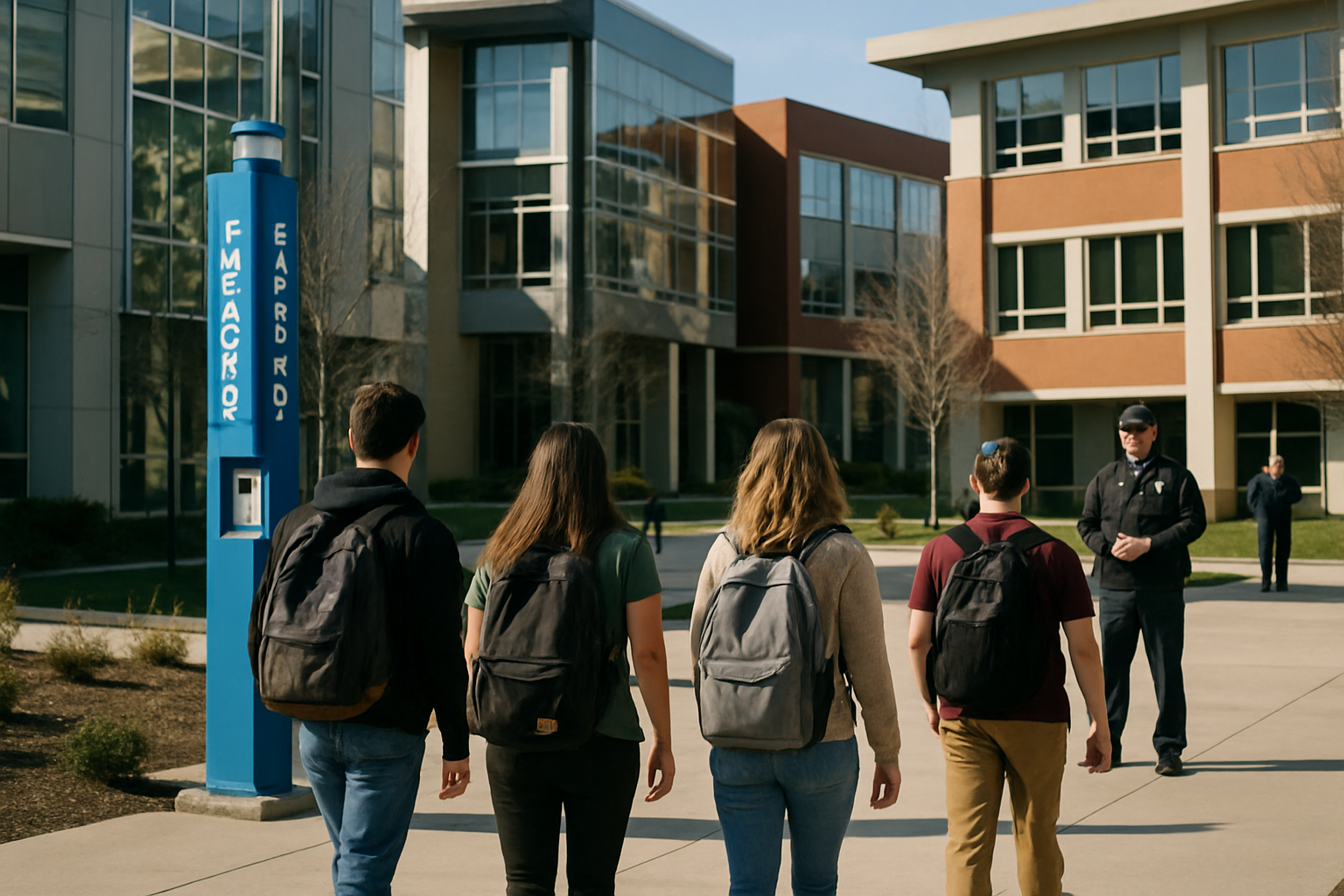
Educational institutions worldwide are grappling with an escalating safety crisis as a series of shocking incidents across multiple continents highlight the vulnerability of students, staff, and faculty in what should be secure learning environments.
From bomb threats targeting schools in India to a tragic murder of a university administrator in Uganda, and disturbing reports of child abuse in Bosnia and Herzegovina, the past week has exposed critical gaps in educational safety protocols that demand immediate international attention and coordinated response.
India's Educational System Under Siege
The crisis reached alarming proportions in Punjab's Mohali region, where 16 private schools in Mohali city, along with one each in Zirakpur and Kharar, received simultaneous bomb threat emails that forced mass evacuations and widespread panic among students, parents, and educators.
The coordinated nature of these threats suggests a sophisticated campaign designed to disrupt educational activities on a regional scale. Local authorities implemented emergency protocols, evacuating thousands of students and conducting thorough security sweeps of the affected institutions. While no explosive devices were found, the incident highlighted the vulnerability of educational institutions to psychological warfare and the devastating impact such threats can have on learning environments.
The timing and scope of these threats raise serious questions about the security preparedness of educational institutions in rapidly developing regions, where infrastructure investment has not always kept pace with enrollment growth and evolving security challenges.
Tragic Violence Strikes Uganda's Higher Education
The safety crisis took a deadly turn in Uganda, where Pamela Ruth Tumwebaze, Dean of Student Affairs at Uganda Christian University (UCU), was brutally murdered at her home in Mukono. The tragic incident sends shockwaves through the East African academic community and underscores the personal risks faced by university administrators.
According to Kampala Metropolitan Police spokesperson Luke Owoyesigyire, Tumwebaze was attacked by unidentified assailants at her residence on Tuesday night. Police investigations revealed that the perpetrator gained entry when the househelp opened the gate in the early hours of Wednesday, February 11, 2026. The administrator was strangled in what appears to have been a targeted attack.
"This is a devastating loss for our university community. Pamela was dedicated to student welfare and safety, making this tragedy all the more painful."
— UCU Administration Statement
The murder of a high-ranking university official responsible for student safety represents a particularly disturbing development in the global pattern of educational institution security challenges. Tumwebaze's role specifically involved overseeing student welfare programs and campus safety initiatives, making her death not just a personal tragedy but a symbolic blow to university security efforts.
The incident raises urgent questions about the protection of university personnel, particularly those in administrative roles who may become targets due to their visibility and decision-making authority within educational institutions.
Child Abuse Scandal Rocks Early Education System
The crisis extends beyond higher education to affect the youngest learners. In Bosnia and Herzegovina, prosecutors launched a comprehensive investigation following shocking allegations of physical and psychological abuse at a kindergarten in Hadžići.
The Sarajevo Canton Prosecutor's Office initiated proceedings after parents reported possible child abuse, with medical examinations by KCUS (Clinical Center of University of Sarajevo) confirming physical injuries on at least one child. The allegations include disturbing reports that educators forced a child into feeding equipment and subjected young students to humiliating treatment.
Parents claim to possess video evidence showing both psychological and physical abuse, raising serious questions about supervision and oversight in early childhood education settings. The Cantonal Administration for Inspection Affairs has launched a comprehensive review of the institution's operations.
Following the investigation launch, police were ordered to conduct thorough inquiries to establish all circumstances surrounding the alleged abuse. The Center for Social Work has also been notified, indicating the severity and multi-agency nature of the response required.
Global Pattern of Educational Safety Failures
These incidents occur within a broader context of educational safety challenges documented throughout early 2026. Historical data reveals a troubling pattern of violence and security failures affecting educational institutions worldwide:
- Multiple school stabbing incidents in France, including a February 3 attack where a 15-year-old student stabbed a 60-year-old art teacher
- School violence in Senegal, where student confrontations with security forces resulted in deaths
- Bomb threats and evacuation procedures becoming routine in multiple countries
- Campus security incidents affecting both students and staff across multiple continents
The convergence of these incidents suggests that educational safety has become a global crisis requiring coordinated international response and knowledge sharing among educational systems facing similar challenges.
Systemic Challenges and Response Failures
Analysis of these incidents reveals several systemic problems affecting educational institution safety worldwide:
Infrastructure and Resource Constraints
Many educational institutions, particularly in developing regions, lack adequate security infrastructure, trained personnel, and emergency response protocols. The rapid expansion of educational access has not been matched by corresponding investments in safety systems.
Coordination and Communication Gaps
The incidents highlight poor coordination between educational institutions, law enforcement, and emergency services. Communication systems often fail during crises, leaving students, parents, and communities without vital information during critical situations.
Oversight and Accountability Deficits
The Bosnia and Herzegovina case particularly illustrates how inadequate oversight of educational personnel can lead to systematic abuse going undetected. Background checks, ongoing supervision, and reporting mechanisms appear insufficient across many educational systems.
International Response and Reform Initiatives
The crisis has prompted calls for comprehensive reform of educational safety protocols. Educational authorities worldwide are reviewing security measures and considering enhanced coordination mechanisms:
Emergency response training for educational personnel has been identified as a critical need, with many institutions lacking staff trained in crisis management, threat assessment, and emergency communication protocols.
Technology solutions, including improved communication systems, surveillance capabilities, and threat detection mechanisms, are being explored by educational authorities seeking to enhance campus security without creating prison-like environments that impede learning.
International cooperation frameworks for sharing best practices, coordinating responses to cross-border threats, and developing common standards for educational institution safety are under development.
The Path Forward: Comprehensive Safety Reform
Addressing this crisis requires sustained political commitment, adequate funding, effective oversight mechanisms, and genuine stakeholder engagement across the educational sector.
Key reform requirements identified by education safety experts include:
- Enhanced screening and ongoing supervision of all educational personnel
- Comprehensive emergency response protocols with regular training and drills
- Improved physical security infrastructure appropriate to institutional settings
- Robust reporting mechanisms for students, parents, and staff to report safety concerns
- Coordinated response capabilities between educational institutions and law enforcement
The development of early warning systems for institutional instability, rapid response mechanisms for educational emergencies, and transparent communication and accountability frameworks represents the minimum standard for protecting educational communities.
As educational systems worldwide face increasing challenges from technological disruption, social tensions, and resource constraints, the fundamental responsibility to provide safe learning environments becomes even more critical. The incidents documented in recent weeks serve as a stark reminder that educational safety cannot be treated as an afterthought but must be integrated into the core mission of every educational institution.
The global nature of these challenges demands international cooperation and knowledge sharing among educational systems, law enforcement agencies, and policy makers. Only through coordinated action can educational institutions fulfill their fundamental obligation to provide safe, secure environments where learning can flourish without fear.