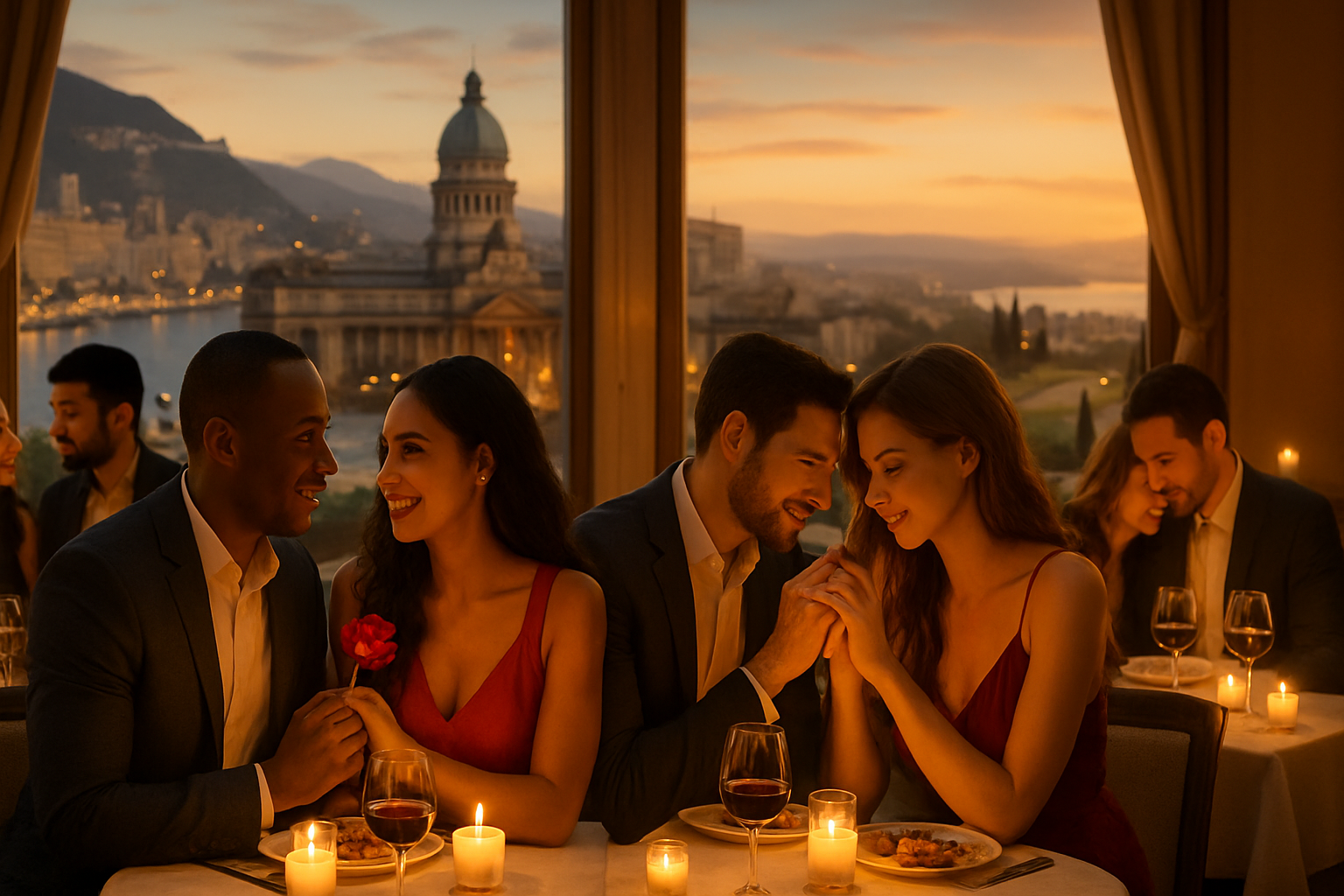
As Valentine's Day approaches on Saturday, February 14, 2026, couples across six nations are embracing diverse approaches to romance that reflect deeper cultural shifts in how modern society views love, commitment, and celebration. From Monaco's opulent dining experiences to Argentina's hidden speakeasies, this year's Valentine's Day reveals a global renaissance in romantic expression.
Monaco: Where Luxury Meets Romance
Monaco's approach to Valentine's Day 2026 exemplifies luxury romance elevated to an art form. With Valentine's Day falling on Saturday this year, couples in the Principality have the luxury of a full day to celebrate, and Monaco's restaurants have responded with extraordinary offerings that redefine romantic dining.
The Michelin-starred establishments are presenting their finest work for the occasion. Blue Bay Marcel Ravin has created an exclusive menu at €510 per person, complete with half a bottle of Ruinart Millésimé 2016 champagne, while L'Abysse Monte-Carlo at the Hôtel Hermitage Monte-Carlo offers a special Omakase experience at €420 per person. Chef Yannick Alléno's Pavyllon Monte-Carlo provides a more accessible yet still luxurious five-course experience for €290.
These high-end offerings reflect Monaco's position as a destination where romance intersects with exclusivity, catering to couples seeking experiences that transcend traditional dinner-and-a-movie Valentine's celebrations. The Mediterranean views and world-class cuisine create an atmosphere where love is celebrated through culinary artistry and unprecedented luxury.
Argentina: The Speakeasy Romance Revolution
Argentina's contribution to Valentine's Day 2026 comes through Frank's, a Buenos Aires speakeasy that The World's 50 Best has recognized as one of the world's premier romantic bars. Located in Palermo Hollywood, Frank's represents a departure from traditional Valentine's dining toward more experiential, adventure-based romantic encounters.
The venue requires reservations and features a ritual entrance through a telephone booth guarded by security with strict door policies. Once inside, couples are transported to the "Roaring Twenties" with crystal chandeliers, wallpaper, polished bars, and velvet stools creating an atmosphere of romantic intrigue and historical glamour.
This trend toward speakeasy-style Valentine's celebrations reflects broader shifts in romantic culture, where couples increasingly seek unique, story-worthy experiences over conventional restaurant dinners. The combination of exclusivity, atmosphere, and crafted cocktails appeals to modern couples who view romance as an adventure to be shared rather than simply a meal to be consumed.
Austria and Italy: Traditional Romance Reinvented
Austria's approach to Valentine's Day 2026 demonstrates how traditional romantic gestures are being reinterpreted for contemporary couples. The classic combination of flowers, chocolate, fine dining, and spa experiences continues to resonate, but with enhanced attention to quality and personalization that reflects modern expectations for meaningful romantic expression.
Italy's Valentine's Day celebrations, known as San Valentino, showcase the enduring power of cultural tradition in romantic celebration. The country's 2026 observances blend religious and cultural events that honor both historical saints and contemporary expressions of amore. Italian celebrations maintain deep cultural roots while adapting to modern relationship dynamics, creating a template for how tradition can evolve without losing authenticity.
Hungary: Marriage as Political Statement
Hungary's contribution to Valentine's Day discourse comes through Prime Minister Viktor Orbán's participation in Marriage Week, a campaign that emphasizes family life values around Valentine's Day. Orbán's public reflection on his nearly four-decade marriage provides insight into how political leaders use romantic holidays to communicate broader social values.
When asked about the key to lasting marriage, Orbán's response reflects traditional Hungarian values while acknowledging the complexity of modern relationships. His participation in Marriage Week demonstrates how Valentine's Day extends beyond individual couples to become a platform for discussing societal approaches to commitment, family structure, and long-term partnership.
This politicization of romantic celebration reveals how Valentine's Day has evolved beyond commercial holiday to become a space where cultural leaders articulate visions for relationship stability and social cohesion.
Paraguay: Authentic Expression Over Convention
Paraguay's Valentine's Day coverage through media personality Vane Morais reflects the country's embrace of authentic, unfiltered romantic expression. Her direct approach to discussing Valentine's Day expectations represents a broader cultural shift toward honest communication about romantic desires and relationship dynamics.
This authenticity-first approach to Valentine's Day contrasts sharply with more formal or commercialized celebrations, suggesting that modern couples increasingly value genuine expression over adherence to traditional romantic scripts. The willingness to discuss intimate expectations publicly indicates a cultural move toward transparency in romantic relationships.
Global Patterns: The Hospitality Industry Response
The hospitality industry's response to Valentine's Day 2026 reveals sophisticated understanding of evolving romantic preferences. Argentina's hotels are launching comprehensive romantic packages featuring spa services, specialized gastronomy, and wellness experiences that target couples tourism as a significant market segment.
This shift toward experiential luxury reflects broader changes in how couples approach romantic celebration. Rather than focusing solely on gifts or dining, modern Valentine's Day increasingly emphasizes shared experiences, wellness, and relationship investment that extends beyond a single evening.
Cultural Diplomacy Through Romance
Valentine's Day 2026 also serves as a vehicle for cultural diplomacy and international understanding. The global nature of romantic celebration creates opportunities for cross-cultural exchange, from Monaco's Mediterranean luxury to Argentina's Latin American passion, from Austria's European elegance to Italy's historical romanticism.
These diverse approaches to romantic celebration demonstrate how universal themes of love and commitment can be expressed through distinctly local cultural traditions, creating a global tapestry of romantic expression that celebrates both unity and diversity.
The Economics of Modern Romance
The economic implications of Valentine's Day 2026 extend far beyond traditional flower and chocolate sales. Monaco's high-end restaurant experiences, Argentina's craft cocktail culture, and the broader trend toward experience-based romance represent significant economic opportunities for the hospitality and entertainment industries.
The premium pricing for Valentine's experiences—from €510 dining in Monaco to exclusive speakeasy access in Buenos Aires—indicates couples' willingness to invest substantially in meaningful romantic experiences. This trend suggests a fundamental shift in consumer behavior, where romantic celebration becomes a form of lifestyle investment rather than obligatory expense.
Technology and Authentic Connection
While technology continues to influence how couples meet, communicate, and maintain relationships, Valentine's Day 2026 celebrations emphasize the enduring importance of authentic, in-person experiences. The appeal of Monaco's face-to-face fine dining, Argentina's immersive speakeasy experiences, and traditional European romantic activities suggests that despite digital connectivity, couples continue to prioritize physical presence and shared experiences.
This balance between technological convenience and authentic connection reflects broader tensions in modern romance, where digital tools facilitate relationship formation while traditional romantic experiences provide the emotional depth that sustains long-term partnerships.
Future Implications for Romantic Culture
Valentine's Day 2026 celebrations across these six countries reveal several emerging trends that will likely influence romantic culture in coming years. The move toward experiential romance, the emphasis on cultural authenticity, the integration of wellness and relationship health, and the demand for unique, personalized experiences all suggest a maturation in how society approaches romantic celebration.
The diversity of approaches—from Monaco's luxury to Paraguay's authenticity—demonstrates that modern romantic culture is becoming more inclusive and personalized, allowing couples to choose celebration styles that align with their values, preferences, and cultural backgrounds rather than conforming to standardized romantic expectations.
As Valentine's Day 2026 approaches, these global celebrations offer insight into humanity's enduring capacity for love while revealing how cultural evolution continues to shape the ways we express and celebrate romantic connection. The holiday's transformation from commercial obligation to cultural exploration suggests that romance itself is experiencing a renaissance, one that honors both tradition and innovation in the eternal human pursuit of meaningful connection.