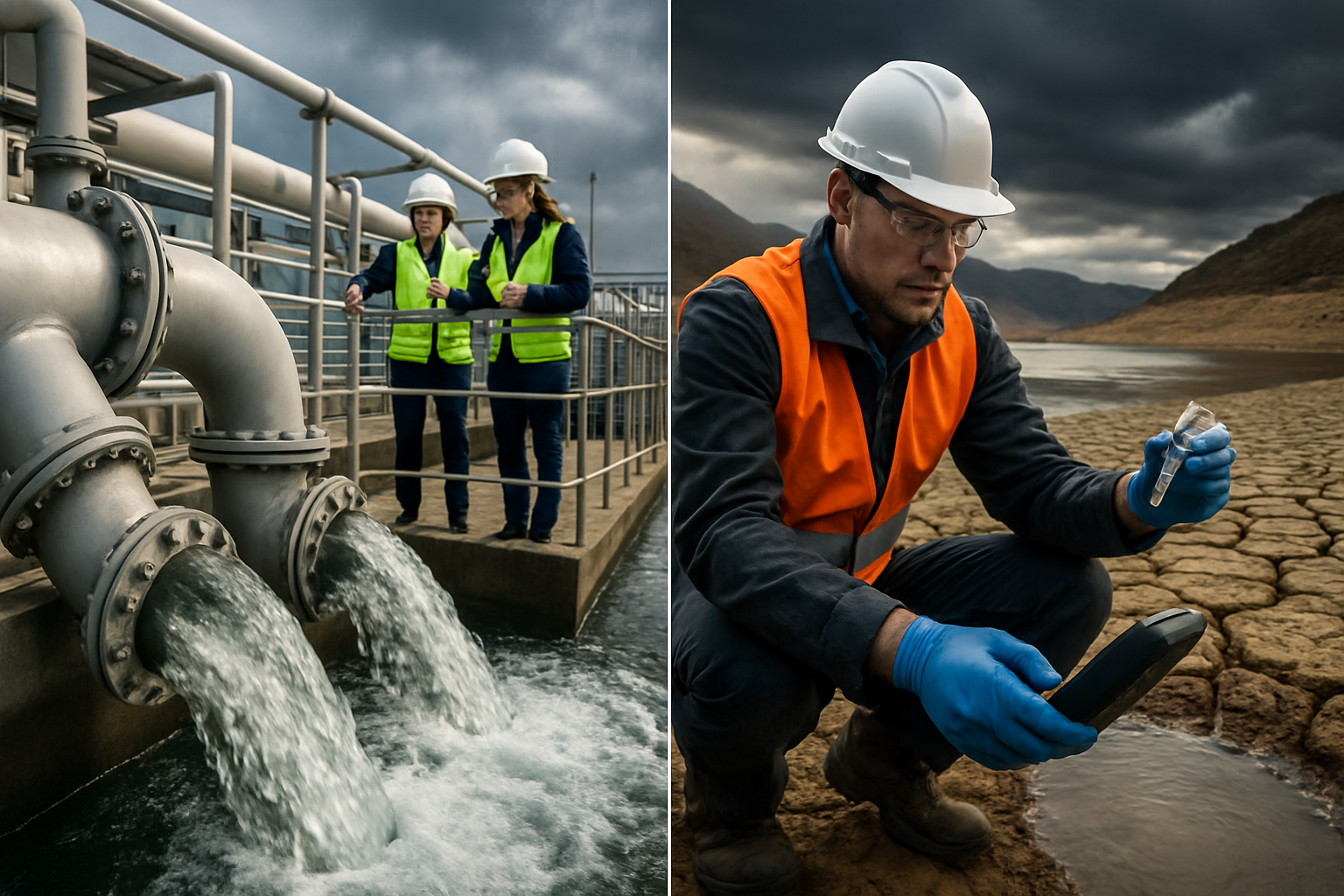
A cascade of water safety emergencies across the Pacific and Mediterranean has exposed critical vulnerabilities in global water infrastructure, as E. coli contamination forces widespread boil water notices in Auckland while Cyprus struggles with extended drought conditions despite recent rainfall improvements.
Multiple water crises erupted simultaneously across continents this week, highlighting the fragile state of essential water infrastructure during a period of unprecedented environmental stress. The incidents, spanning from New Zealand's largest city to the drought-stricken island nation of Cyprus, underscore the mounting challenges facing water systems worldwide.
Auckland Faces E. Coli Emergency
Watercare, Auckland's water utility, issued precautionary boil water notices Monday evening for multiple suburbs after detecting E. coli bacteria in water samples. The advisory affects critical areas including parts of Hillsborough, Mt Roskill, Royal Oak, and Three Kings, impacting thousands of residents in New Zealand's largest metropolitan area.
The contamination discovery prompted immediate public health warnings, with authorities advising residents to boil water for drinking, food preparation, and teeth brushing until further notice. The presence of E. coli bacteria in municipal water supplies represents a serious public health risk, potentially causing severe gastrointestinal illness, particularly dangerous for children, elderly residents, and immunocompromised individuals.
"This is a precautionary measure to protect public health while we investigate the source of the contamination and implement corrective measures,"
— Watercare spokesperson
The timing of Auckland's water crisis adds pressure to New Zealand's already strained infrastructure. The country has experienced repeated water system failures in recent months, including major sewage spills in Wellington that threatened marine ecosystems and previous water treatment facility breakdowns across the South Island.
Cyprus Battles Extended Drought Despite Recent Gains
Meanwhile, Cyprus continues confronting one of its most severe water crises in decades, despite recent improvements from unprecedented March rainfall. Water Development Department officials report current dam levels at 33.9%, storing 98.7 million cubic metres of water – a significant improvement from last year's critical 24.1% levels, but still well below sustainable thresholds.
Chief Technical Engineer Marios Hadjicostis described March 2026 as "a very rare phenomenon," ranking as the ninth wettest March since records began. The month delivered 113.2mm of average rainfall, with mountainous and western areas receiving particularly heavy precipitation. Total inflow since October 2025 reached 81 million cubic metres, providing crucial relief to severely depleted reservoirs.
However, authorities maintain strict water conservation measures despite the recent improvements. "We are in a much better position than last year, but not in a position to be carefree in the coming years," Hadjicostis warned, emphasizing the need for continued vigilance in water usage.
Papua New Guinea Storm Threats
Adding to global water infrastructure concerns, Papua New Guinea faces imminent threats from tropical weather systems moving across the Pacific. Emergency authorities have issued warnings for potential water crisis conditions as storms approach the Bougainville region, threatening both water supply infrastructure and quality.
The developing weather system poses risks to remote communities already struggling with limited water infrastructure. Papua New Guinea's challenging geography, with over 800 indigenous languages spread across difficult terrain, makes coordinated emergency response particularly complex during water-related crises.
Infrastructure Under Climate Pressure
These concurrent water crises occur during Earth's 23rd consecutive month of temperatures exceeding 1.5°C above pre-industrial levels – the longest sustained extreme warming period in recorded human history. Climate scientists warn that elevated global temperatures fundamentally alter traditional water cycles, increasing evaporation rates, disrupting precipitation patterns, and placing unprecedented stress on aging water infrastructure worldwide.
The convergence of infrastructure failures across diverse geographic regions – from Auckland's contamination to Cyprus's drought and Papua New Guinea's storm preparations – illustrates how climate pressures expose systematic vulnerabilities in essential water systems. Traditional water management approaches, designed for historical climate patterns, prove inadequate for current environmental realities.
Historical Context of Global Water Stress
The current water crises build upon a troubling pattern of infrastructure failures documented throughout 2026. Wellington's ongoing sewage crisis has contaminated marine ecosystems along New Zealand's capital coast. European cities have implemented mandatory water consumption reductions, with Cyprus and other EU member states required to cut usage by 10% by 2030 under new water resilience strategies.
Barcelona has emerged as a global leader in water recycling technology, providing approximately 25% of the city's drinking water through treated wastewater – demonstrating potential solutions for water-stressed regions. The Spanish city's success during severe drought conditions offers a template for sustainable urban water management, though implementation requires substantial infrastructure investment and political commitment.
Economic and Social Implications
Water infrastructure failures impose massive economic costs beyond immediate health risks. Auckland's boil water notice disrupts business operations, educational institutions, and healthcare facilities, while creating additional burdens for families forced to purchase bottled water or implement complex boiling procedures. The economic impact extends to lost productivity, increased healthcare costs, and potential tourism industry damage.
In Cyprus, persistent drought conditions threaten agricultural productivity, tourism infrastructure, and economic stability. The island's strategic location and tourism-dependent economy make water security essential for maintaining international competitiveness and social stability.
Technological Solutions and Innovation
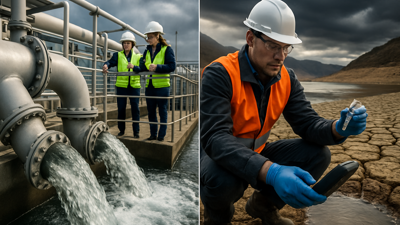
Water infrastructure increasingly incorporates sophisticated technology for real-time monitoring, predictive maintenance, and treatment optimization. Advanced sensors can detect contamination earlier, while AI-powered systems optimize distribution and identify potential failures before they become critical.
However, technology adoption faces constraints from global semiconductor shortages, which have increased memory chip prices sixfold, affecting smart water management systems deployment until new manufacturing facilities come online by 2027. Despite these challenges, successful water management increasingly depends on integrating traditional engineering with digital innovation.
International Cooperation Requirements
Water challenges transcend national boundaries through shared river systems, atmospheric moisture transport, and climate effects. Successful responses require unprecedented international cooperation, including technology sharing, coordinated emergency response protocols, and collaborative infrastructure investment.
The European Union's mandate for 10% water consumption reduction by 2030 represents coordinated policy responses, while initiatives like the US-EU-Japan Critical Minerals Partnership address supply chain vulnerabilities affecting water infrastructure technology. Success requires sustained political commitment, adequate funding, and comprehensive coordination across multiple sectors.
Prevention-First Approaches
Water experts emphasize prevention-first strategies offer superior cost-effectiveness versus reactive crisis management. Proactive infrastructure maintenance, comprehensive monitoring systems, and strategic reserve management prevent emergencies that prove far more expensive to address after failures occur.
Countries implementing comprehensive prevention programs report better water security outcomes, reduced emergency response costs, and enhanced community resilience. Economic analyses demonstrate that prevention-focused approaches achieve substantial cost reductions while improving population health outcomes and economic stability.
Future Implications and Urgent Action
April 2026 represents a critical juncture for global water security, with current challenges previewing conditions expected to become routine without immediate infrastructure adaptation and climate action. Water security increasingly functions as essential infrastructure comparable to transportation networks, power grids, and communication systems for modern society.
The window for effective water infrastructure adaptation is narrowing rapidly as environmental pressures intensify and population growth increases demand. Tools, knowledge, and cooperation frameworks exist for comprehensive water protection, but success requires unprecedented speed and coordination.
"Water security determines whether communities can maintain basic health, economic productivity, and social stability during our planet's most challenging environmental period,"
— Water infrastructure expert
Success depends on sustained international cooperation, enhanced multi-sector coordination, and increased financial commitments recognizing water infrastructure as essential for human prosperity and planetary sustainability. The choice between reactive crisis management and transformative infrastructure adaptation will determine water security trajectories for generations, making April 2026 a decisive moment for global water policy.
The convergence of water crises from Auckland to Cyprus demonstrates that water security challenges require coordinated international responses addressing immediate threats while building long-term resilience against accelerating environmental change.