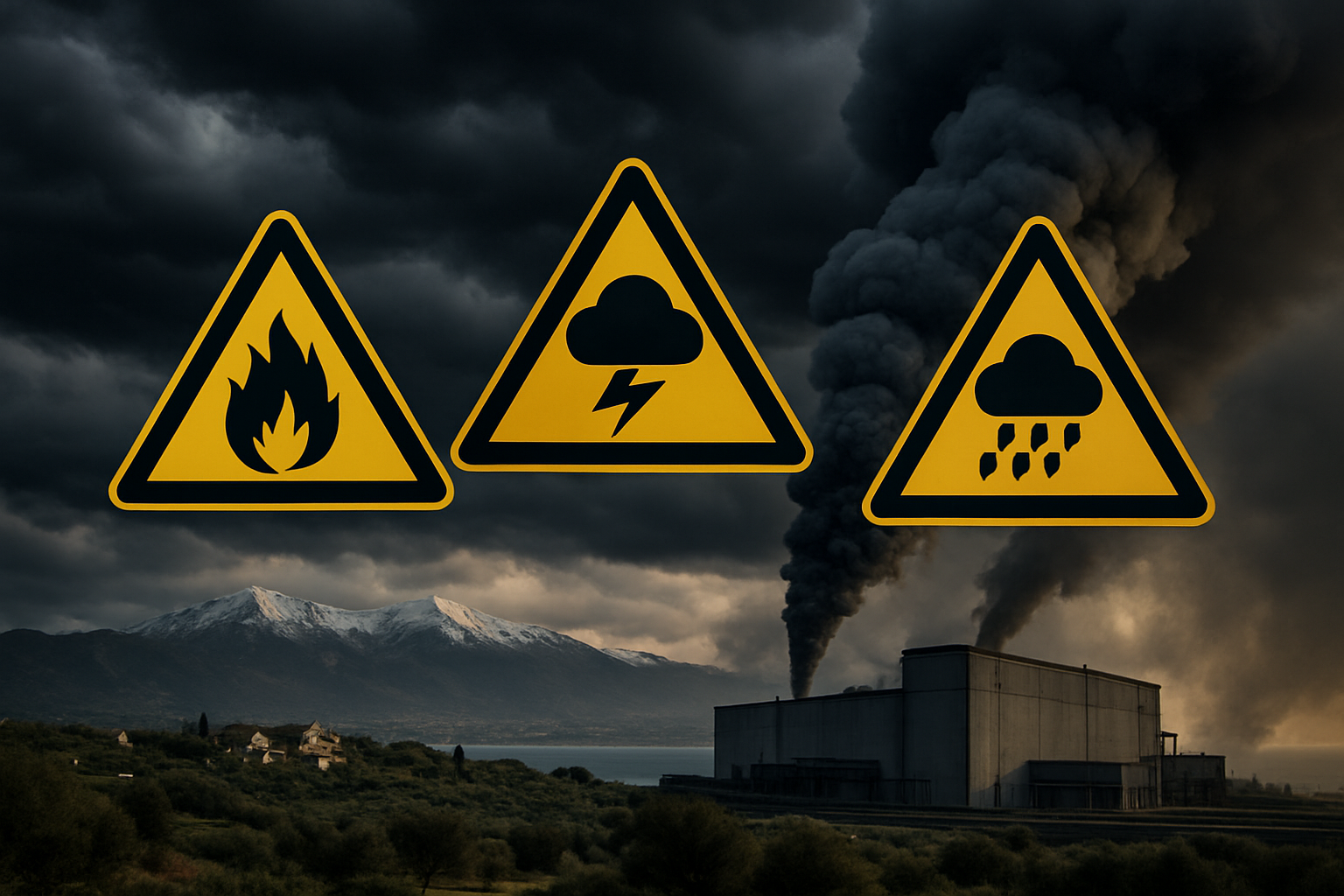
A convergence of severe weather warnings and environmental emergencies across multiple continents reveals the unprecedented strain on global emergency response systems, as Algeria faces dangerous storms, Finland battles industrial fires amid extreme heat, and Nordic countries struggle with seasonal disruptions during what experts warn may become the "new normal" for climate volatility.
The current crisis spans from North Africa to Scandinavia, demonstrating how extreme weather events are becoming increasingly simultaneous rather than sequential, overwhelming traditional mutual aid mechanisms designed for isolated regional disasters.
Algeria Braces for Multi-Hazard Storm System
Algeria's meteorological services have issued urgent warnings for a dangerous triple threat beginning this weekend, with heavy thunderstorms expected to deliver rainfall exceeding 60mm, accompanied by dangerous winds surpassing 100 km/h. The system will bring dense snowfall to mountainous regions above 1,100 meters elevation, affecting the western and central highlands.
The atmospheric disturbance poses additional respiratory hazards through dust storms, particularly threatening vulnerable populations. This multi-faceted weather event represents the type of compound emergency that has become increasingly common during the current period of unprecedented climate volatility.
"The convergence of multiple weather hazards in a single system demonstrates the complexity of modern climate emergencies that our traditional response systems were not designed to handle."
— Regional Emergency Response Coordinator
Finland Faces Industrial Fire Crisis Amid Extreme Weather
In Finland, authorities have issued critical safety warnings as a large industrial building fire in Parainen continues to burn, generating hazardous smoke that has prompted health alerts across the region. The crisis occurs against the backdrop of Finland experiencing its highest March temperatures in 145 years, creating conditions that experts describe as unprecedented in recorded meteorological history.
The timing of industrial emergencies with extreme weather events illustrates how climate change is creating cascading risks across multiple systems simultaneously. Finnish authorities have advised residents to remain indoors and close ventilation systems as the dangerous smoke spreads across populated areas.
Environmental Health Concerns Mount
The industrial fire has prompted emergency health advisories warning of serious respiratory risks from toxic smoke exposure. This environmental emergency exemplifies how extreme weather can exacerbate industrial hazards, creating compound crises that strain both firefighting resources and public health systems.
Nordic Weather Patterns Signal Broader Climate Disruption
Across Scandinavia, meteorological services are reporting weather patterns that deviate significantly from historical norms. Norway is experiencing variable Easter weather conditions, with meteorologists tracking systems that could bring either drought or flooding to different regions of the country, reflecting the unpredictable nature of current atmospheric conditions.
Sweden faces its own challenges with poor Easter weather forecast, including risks of persistent rain and snow that threaten to disrupt traditional seasonal activities and tourism. These disruptions come at a time when Nordic countries are already grappling with infrastructure vulnerabilities exposed by increasingly extreme weather.
Historical Context of the Crisis
This latest wave of environmental emergencies builds upon what climate scientists describe as the 22nd consecutive month of global temperatures exceeding 1.5°C above pre-industrial levels—the longest sustained warming period in recorded human history. The pattern demonstrates how human-induced climate change is overriding natural cooling mechanisms, creating what experts term a "climate volatility paradox."
Emergency Response Systems Under Unprecedented Strain
Traditional emergency response frameworks are proving inadequate for the scale and simultaneity of current environmental crises. Emergency services across multiple countries are operating at or beyond capacity limits, with transportation networks, power grids, and communication systems repeatedly failing under extreme conditions that exceed their operational parameters.
The European Union's Civil Protection Mechanism has been activated repeatedly in 2026, with recent coordinated responses requiring hundreds of millions in assistance—demonstrating both the potential for international cooperation and its limitations when facing simultaneous multi-continental disasters.
"We're seeing a fundamental shift from sequential regional disasters to concurrent global emergencies that challenge every assumption about mutual aid and resource allocation."
— International Emergency Management Expert
Infrastructure Vulnerabilities Exposed
Critical infrastructure designed for historical climate patterns is repeatedly failing under current conditions. Power grids are positioning crews for widespread outages, while transportation systems face constant disruption from weather events that exceed design specifications. The cascading nature of these failures is creating compound emergencies that amplify the impact of individual weather events.
Economic and Social Impact
The economic toll of simultaneous environmental emergencies is mounting rapidly, with agricultural sectors facing billions in losses from damaged crops and disrupted supply chains during critical growing seasons. Tourism industries across affected regions are experiencing extended cancellations and infrastructure damage, while transportation disruptions create ripple effects throughout global commerce.
The human cost extends beyond immediate economic impacts, as families face the prospect of losing generational homes and small businesses confront extinction from repeated environmental disruptions. Mental health services report increased demand for support as climate anxiety and trauma from repeated extreme weather events take their toll on vulnerable populations.
Recovery Timelines Fundamentally Changed
Perhaps most concerning is the fundamental shift in recovery timelines, with traditional expectations of weeks now extending to months or years for full restoration. This change reflects not just the intensity of individual events, but their frequency—communities often face new emergencies before fully recovering from previous disasters.
Adaptation Imperatives
Climate adaptation experts describe March 2026 as a potential watershed moment in global climate preparedness, representing a critical choice between reactive crisis management and transformative infrastructure adaptation. The current crisis demonstrates that "building back better" with climate-resilient infrastructure has evolved from an optional enhancement to an essential survival strategy.
Traditional seasonal patterns that guided infrastructure design, agricultural planning, and emergency preparedness for centuries are no longer reliable frameworks. Current conditions provide a preview of what may become routine in the 2030s without comprehensive climate adaptation investment.
"The window for effective climate action is narrowing rapidly, and the costs of both adaptation and inaction are escalating exponentially as ecological systems approach critical thresholds."
— Climate Adaptation Specialist
International Cooperation at Breaking Point
Environmental challenges transcend political boundaries, as atmospheric systems and ocean currents transport climate effects globally regardless of borders. The simultaneity of current disasters is testing cooperation mechanisms that were developed assuming stable regions could assist others during isolated emergencies.
Success in addressing these challenges requires unprecedented international cooperation, enhanced multi-sector coordination, and financial commitments that recognize environmental protection as essential infrastructure for human prosperity and planetary sustainability.
Strategic Implications
The convergence of extreme weather events, infrastructure vulnerabilities, and emergency response limitations underscores the urgent need for coordinated international action. Tools, knowledge, and cooperation frameworks exist for comprehensive environmental protection, but success depends on unprecedented speed and coordination through sustained international cooperation and political commitment.
Scientists warn that additional weather systems are developing in the Atlantic and Pacific regions, with authorities maintaining high alert status globally. The persistence of crisis conditions may establish a "new normal" characterized by extreme weather frequency and intensity that permanently challenges traditional emergency response frameworks.
A Decisive Moment for Humanity
The question facing global society is no longer whether transformative climate action is needed, but whether humanity can organize and implement solutions rapidly enough to maintain planetary habitability during what may be Earth's most environmentally challenging period in recorded history.
The choices made in the coming months regarding climate resilience strategies, infrastructure investment, and international cooperation may prove decisive for generations, determining humanity's ability to thrive in an era of unprecedented environmental change.