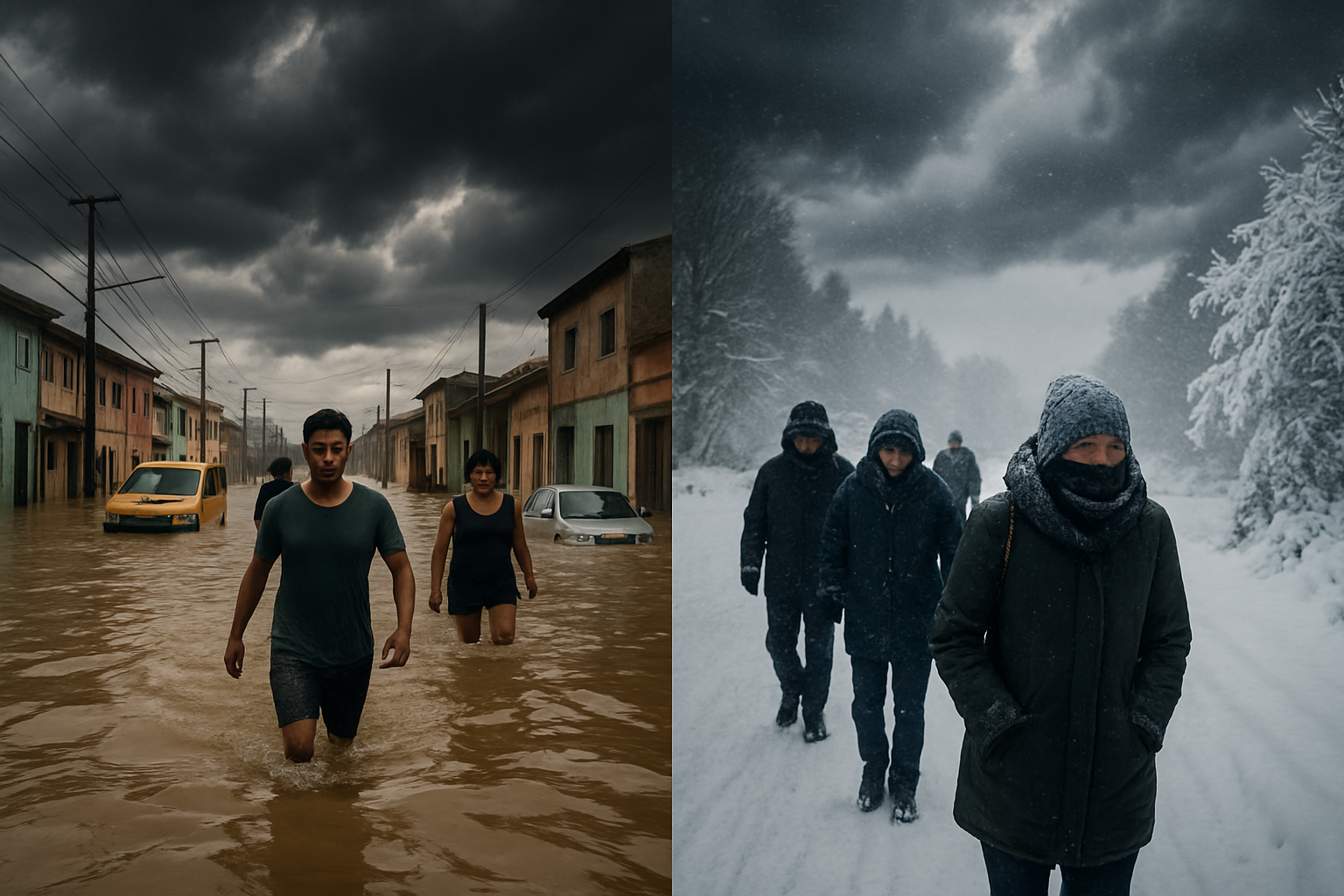
Extreme weather events are simultaneously devastating regions from Latin America to Europe, marking the continuation of humanity's most challenging climate period as global temperatures exceed pre-industrial levels for an unprecedented 23rd consecutive month.
From the flood-ravaged highlands of Bolivia to the unprecedented late-season cold snap gripping Iceland, our planet is experiencing a convergence of climate extremes that meteorologists describe as historically unprecedented. The Democratic Republic of Congo faces a mounting maritime disaster, while El Salvador battles one of its most scorching heat waves on record, painting a stark picture of our rapidly changing climate.
Bolivia: Agricultural Regions Under Siege
In Bolivia's Santa Cruz region, agrometeoroologist Luis Alberto Alpire issued urgent warnings as severe weather patterns continue to pummel the country's agricultural heartland. The region faces a triple threat of southern winds, overcast skies, and intermittent precipitation that has transformed normal farming operations into a crisis management scenario.
Temperatures have plummeted to between 18°C and 20°C for minimums, with maximums reaching only 24°C to 25°C—well below seasonal averages. Thursday's conditions proved particularly dangerous, with wind gusts reaching 40 km/h and temperatures fluctuating between 20°C and 24°C, accompanied by afternoon and evening downpours.
"The instability in the cruceño valleys will persist with scattered rains through the weekend," Alpire warned. "This situation significantly increases the risk of landslides, and we strongly recommend the population take preventive measures."
The weather pattern represents part of a broader transition toward winter, but its intensity and duration have caught agricultural communities off-guard. Local farmers report concerns about crop damage and the timing of traditional planting seasons, which have become increasingly unreliable due to these extreme weather variations.
Iceland: When Spring Meets Arctic Conditions
Perhaps nowhere is the climate volatility more evident than in Iceland, where an unexpected late cold snap has proven more severe than the recent Easter storms that dominated headlines. Despite migratory birds arriving as scheduled—with the first golden plover spotted in Höfn on Easter Monday and whimbrels beginning their seasonal appearance—the harsh conditions represent a dramatic departure from expected spring weather.
Ornithologist Jóhann Óli Hilmarsson notes that the persistence of migratory species despite the brutal conditions demonstrates nature's remarkable adaptability, even as human infrastructure struggles to cope. The cold snap has created unprecedented challenges for wildlife management and tourism operations that depend on predictable seasonal transitions.
The severity of this weather system exceeded initial forecasts, with meteorological services scrambling to issue updated warnings as conditions deteriorated rapidly. Road closures and transportation disruptions have become commonplace, highlighting the vulnerability of modern infrastructure to extreme weather variations.
El Salvador: Record-Breaking Heat Crisis
On the opposite end of the temperature spectrum, El Salvador is enduring what meteorologists describe as one of the most brutal heat waves in recent memory. April 9th marked a particularly dangerous day, with temperatures expected to soar above 40°C in eastern regions and interior valleys, while major cities like San Salvador and Santa Ana face temperatures between 34°C and 37°C.
The combination of intense solar radiation and extremely warm air masses has created conditions that feel even more oppressive due to humidity and direct sun exposure. Health authorities have implemented emergency protocols, advising citizens to avoid direct sunlight between 10:00 a.m. and 4:00 p.m., maintain constant hydration, and provide special care for children, elderly residents, and pets.
The heat wave represents more than just uncomfortable conditions—it poses serious public health risks, with significantly elevated dangers of heat stroke and dehydration. Emergency services report increased calls related to heat-related illnesses, while energy infrastructure faces unprecedented strain as cooling demand reaches critical levels.
Democratic Republic of Congo: Maritime Tragedy Unfolds
The Democratic Republic of Congo faces a different but equally devastating crisis as the death toll from the April 7th Lake Kivu disaster continues to climb. What initially appeared to be a minor incident has evolved into a major humanitarian catastrophe, with civil society sources in Kalehe reporting at least two confirmed deaths, approximately twenty missing persons, and twenty-three survivors.
The tragedy highlights the vulnerability of communities dependent on water transportation, particularly during periods of unstable weather that can create dangerous conditions on large bodies of water. Lake Kivu, one of Africa's Great Lakes, has become increasingly unpredictable as changing weather patterns affect wind conditions and water safety.
Search and rescue operations continue despite challenging conditions, but hopes of finding additional survivors diminish with each passing hour. The incident underscores broader concerns about transportation safety in remote regions where water travel remains essential for communities and commerce.
A Global Pattern of Climate Disruption
These simultaneous extreme weather events occur against the backdrop of an unprecedented climate milestone: 23 consecutive months of global temperatures exceeding 1.5°C above pre-industrial levels, representing the longest sustained period of extreme warming in recorded human history.
"We're witnessing a climate volatility paradox where global warming enables both heat records and devastating regional extremes through disrupted atmospheric circulation patterns."
— Climate Scientists, World Meteorological Organization
The World Meteorological Organization indicates a 50-60% probability of El Niño development between July and September 2026, which could drive temperatures to unprecedented levels by combining baseline warming with natural cycle amplification. This prospect has climate scientists deeply concerned about the potential for even more severe weather disruptions in the coming months.
Infrastructure Under Unprecedented Strain
Across all affected regions, infrastructure systems designed for historical climate patterns are failing as extreme weather exceeds operational parameters. Transportation networks face constant disruption, power grids struggle with demand fluctuations, and emergency services operate at or beyond capacity limits.
Traditional mutual aid mechanisms—designed to help regions assist each other during sequential disasters—prove inadequate when multiple continents face simultaneous emergencies. This reality forces a fundamental rethinking of disaster response strategies and international cooperation frameworks.
The European Union's Civil Protection mechanism, despite representing one of the world's most sophisticated disaster response systems, has been repeatedly activated this year, with recent assistance packages exceeding €246 million for Sweden and Denmark alone. However, even these substantial efforts appear insufficient when facing the scale and simultaneity of current global challenges.
Economic and Social Consequences
The human cost extends far beyond immediate physical dangers. Agricultural sectors across affected regions report billions in losses as extreme weather destroys crops and disrupts supply chains during critical growing seasons. Tourism industries face extended cancellations and infrastructure damage during peak revenue periods.
Mental health services report increased demand as climate anxiety and repeated weather trauma take their toll on communities. Families face the prospect of losing generational properties multiple times within a single decade, while businesses confront extinction-level threats from recurring disruptions.
Recovery timelines have fundamentally shifted from weeks to months or years, representing a permanent change in disaster response approaches. The concept of "building back better" has evolved from an optional enhancement to an essential survival strategy for communities facing permanent climate volatility.
International Cooperation at a Breaking Point
Environmental challenges increasingly transcend political boundaries as atmospheric systems and ocean currents transport climate effects globally, making unilateral adaptation efforts insufficient for comprehensive resilience. The simultaneity of disasters tests cooperation mechanisms originally developed for stable regions assisting others during isolated emergencies.
Success now requires unprecedented international cooperation, enhanced multi-sector coordination, and financial commitments that recognize environmental protection as essential infrastructure rather than regulatory burden. Traditional frameworks struggle when multiple continents face simultaneous disasters, requiring fundamental restructuring of global aid and disaster response systems.
A Watershed Moment for Climate Action
April 2026 may mark a watershed moment in global climate preparedness, representing a critical choice between reactive crisis management and transformative infrastructure adaptation. Current conditions provide a preview of routine 2030s circumstances without significant climate adaptation investment.
The window for effective climate action continues to narrow as ecological systems approach critical thresholds that could trigger irreversible changes affecting global food security, climate stability, and human settlements. Additional weather systems developing in Atlantic and Pacific regions suggest current crisis conditions may persist for weeks, potentially establishing a "new normal" of extreme weather frequency and intensity that permanently challenges traditional emergency response frameworks.
The Path Forward
The convergence of extreme weather events, infrastructure vulnerabilities, and emergency response limitations underscores the urgent need for coordinated international action. Tools, knowledge, and cooperation frameworks exist for comprehensive environmental protection, but success depends on unprecedented speed and coordination in sustained international cooperation and political commitment.
The question is no longer whether transformative climate action is needed, but whether humanity can organize and implement solutions rapidly enough to maintain planetary habitability during Earth's most environmentally challenging period in recorded history. The choices made in the coming months may prove decisive for global climate resilience strategies that will affect generations to come.