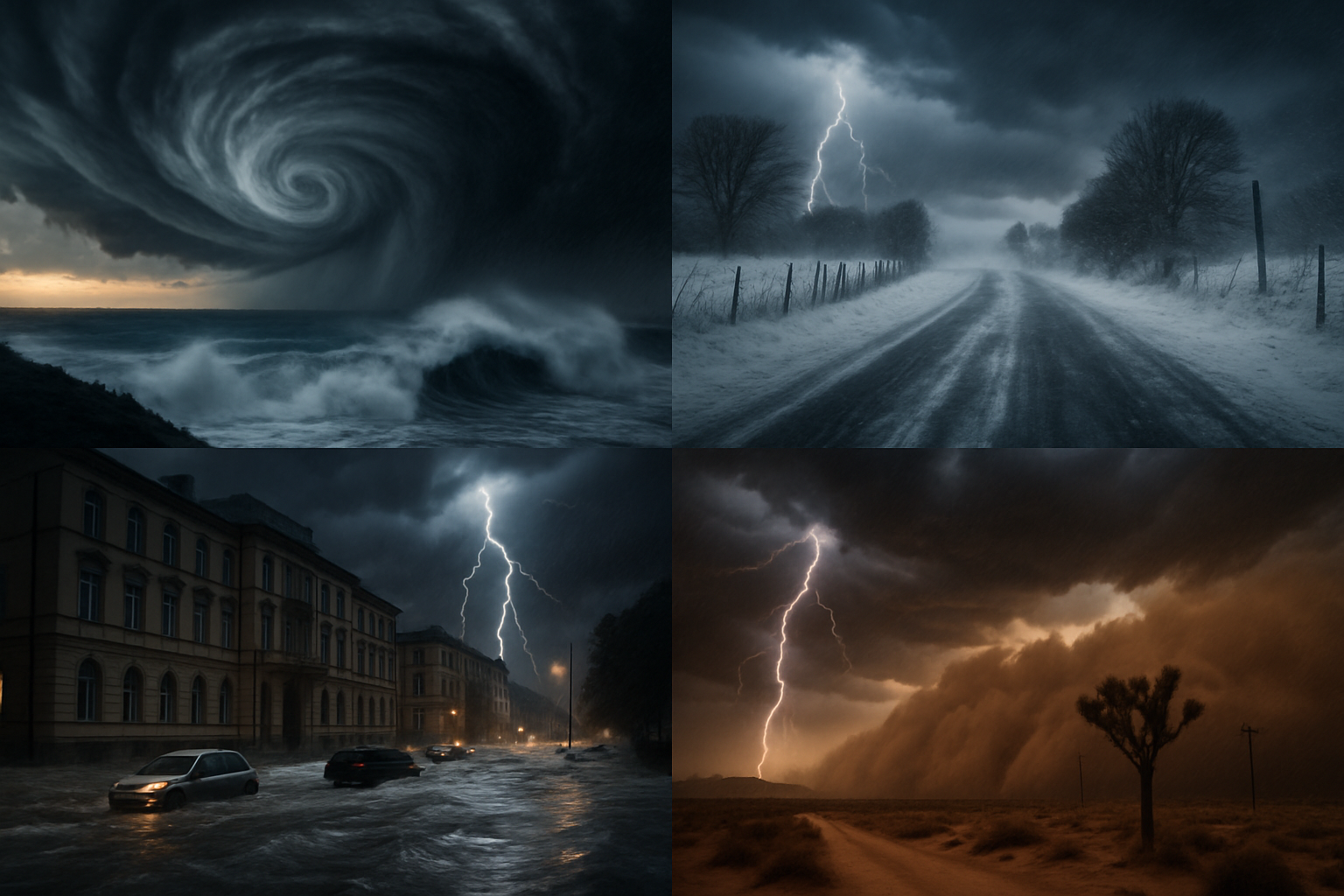
A devastating convergence of extreme weather disasters across multiple continents is overwhelming global emergency response systems in April 2026, marking the 23rd consecutive month of record-breaking global temperatures - the longest sustained warming period in human history.
The unprecedented crisis features Pacific tropical cyclones threatening millions in Micronesia and Papua New Guinea, unusual April snowfall paralyzing Norwegian highways, torrential rains flooding Algeria's provinces, and powerful wind systems disrupting transportation networks from the Pacific to the Atlantic.
Pacific Cyclone Emergency Unfolds
The Northern Mariana Islands declared Typhoon Condition II for Saipan, Tinian, and Rota as Typhoon Sinlaku, initially a near-stationary system, strengthened rapidly while approaching the region. Governor Arnold Patel Apatang requested emergency declarations from federal authorities as the storm threatens critical infrastructure across the Commonwealth.
The Commonwealth Healthcare Corporation (CHCC) immediately updated visitation protocols in preparation for the typhoon's arrival, while government offices remain closed until "All Clear" declarations are issued. Bank of Guam announced the closure of all branches as a precautionary measure.
In Papua New Guinea, education authorities in Bougainville province delayed the start of classes by one week due to Cyclone Maila approaching the region. Relief supplies have begun reaching cyclone-hit communities in East New Britain province, where previous storm damage left thousands in need of emergency assistance.
"The situation exceeds normal preparedness capabilities," said a regional emergency coordinator. "We're seeing multiple storm systems threatening our communities simultaneously."
— Pacific Emergency Management Official
European Winter Chaos in Spring
Norway experienced unprecedented April weather conditions as heavy snowfall forced authorities to close sections of the E39 highway near Lyngdal, creating dangerous driving conditions normally associated with deep winter rather than spring months.
The unusual timing of severe snow conditions demonstrates the growing unpredictability of weather patterns across Northern Europe, where infrastructure designed for traditional seasonal patterns struggles to cope with increasingly erratic precipitation and temperature swings.
North African Deluge and Dust Storms
Algeria faced a triple weather threat as meteorological services issued urgent warnings for dangerous conditions across multiple provinces. Heavy rainfall exceeding 60mm combined with powerful winds over 100 km/h created hazardous conditions from the coast to mountainous regions.
The Algerian weather service warned of thunderstorms with significant hail across 14 provinces, including major population centers like Algiers, Blida, and Tizi Ouzou. Mountain regions above 1,100 meters elevation experienced heavy snowfall, while desert areas battled dust storms that reduced visibility and created respiratory hazards.
Civil protection teams conducted rescue operations as the powerful atmospheric disturbance affected northern Algeria, the northern Sahara, oases, and southwestern regions. The combination of flooding rains, mountain snow, and desert dust storms represents an unusual convergence of weather patterns typically spread across different seasons.
Global Climate Context
The simultaneous weather disasters occur during what scientists confirm as the 23rd consecutive month with global temperatures exceeding 1.5°C above pre-industrial levels - representing the longest sustained period of extreme warming in recorded human history.
January 2026 remains the hottest month ever recorded, as human-induced climate change continues to override natural cooling mechanisms. The World Meteorological Organization reports a 50-60% probability of El Niño development during July-September 2026, which could drive global temperatures to unprecedented levels by combining baseline warming with natural climate amplification.
Dr. Sarah Chen from the European Centre for Medium-Range Weather Forecasts describes current conditions as representing a "paradigm shift" in global climate patterns, where sustained warming enables both temperature records and devastating regional weather extremes through disrupted atmospheric circulation.
Emergency Response Systems Under Strain
Traditional mutual aid mechanisms designed for sequential regional disasters are proving inadequate for simultaneous multi-continental emergencies. Emergency services across affected regions report operating at or beyond capacity limits as transportation networks, power grids, and communication systems repeatedly fail under extreme weather conditions that exceed their operational parameters.
The crisis represents what emergency management experts identify as the evolution from isolated regional disasters to "compound disasters" - multiple emergency types occurring concurrently across vast geographic areas, fundamentally challenging traditional resource allocation and mutual aid mechanisms.
The European Union's Civil Protection mechanism has been activated repeatedly, with Sweden and Denmark receiving €246 million in assistance representing the largest coordinated European weather response on record. However, the scale and simultaneity of current global disasters render even these enhanced international responses insufficient.
Infrastructure Crisis and Adaptation Needs
Transportation networks, power grids, and communication systems designed for historical climate patterns are operating beyond their intended parameters as extreme weather events exceed the thresholds established by previous weather patterns. Recovery timelines have fundamentally shifted from weeks to months or years, representing a permanent change in disaster response approaches.
"Building back better" with climate-resilient infrastructure has evolved from an optional enhancement to an essential survival strategy for communities facing repeated extreme weather events. Traditional seasonal patterns that guided infrastructure design, agricultural planning, and emergency preparedness for centuries are proving unreliable in the current climate volatility era.
Economic and Social Impacts
Agricultural sectors face mounting losses as extreme weather destroys crops and disrupts supply chains during critical growing seasons. Tourism industries experience extended cancellations and infrastructure damage during peak revenue periods, while families face the prospect of losing generational properties multiple times within a decade.
Mental health services report increased demand for support related to climate anxiety and repeated trauma as vulnerable populations, including the elderly and those with respiratory conditions, face disproportionate impacts from the frequency and intensity of extreme weather events.
Businesses across affected regions face extinction threats from recurring disruptions, while transportation failures create cascading effects throughout global commerce networks.
International Cooperation at Breaking Point
Environmental challenges increasingly transcend national boundaries as atmospheric systems, ocean currents, and climate effects operate regardless of political borders. The simultaneity of disasters is testing international cooperation mechanisms that were designed to help stable regions assist others facing isolated emergencies.
Traditional frameworks that assumed some regions would remain stable enough to provide aid are breaking down as multiple continents face simultaneous disasters, requiring unprecedented cooperation and enhanced coordination for comprehensive environmental protection.
April 2026: A Watershed Moment
Climate experts describe April 2026 as representing a critical choice between reactive crisis management and transformative infrastructure adaptation. Current conditions provide a preview of what could become routine in the 2030s without comprehensive climate adaptation investment.
The window for effective climate action continues to narrow as ecological systems approach critical thresholds that could trigger irreversible changes to global food security, climate stability, and human settlements. Additional weather systems developing in the Atlantic and Pacific regions suggest that the crisis may persist for weeks, potentially establishing a "new normal" of extreme weather frequency and intensity that permanently challenges traditional emergency response frameworks.
Future Trajectory and Response
The convergence of extreme weather events, infrastructure vulnerabilities, and emergency response limitations underscores the urgent need for coordinated international action. Success in addressing these interconnected challenges requires unprecedented cooperation, enhanced multi-sector coordination, and sustained financial commitments to environmental protection as essential infrastructure for planetary sustainability.
The tools, knowledge, and cooperation frameworks exist for comprehensive environmental protection, but success depends on unprecedented speed of coordination and sustained international cooperation during what many scientists describe as the decisive climate action decade.
The fundamental question facing humanity is whether global society can organize and implement solutions rapidly enough to maintain planetary habitability during Earth's most environmentally challenging period in recorded history.