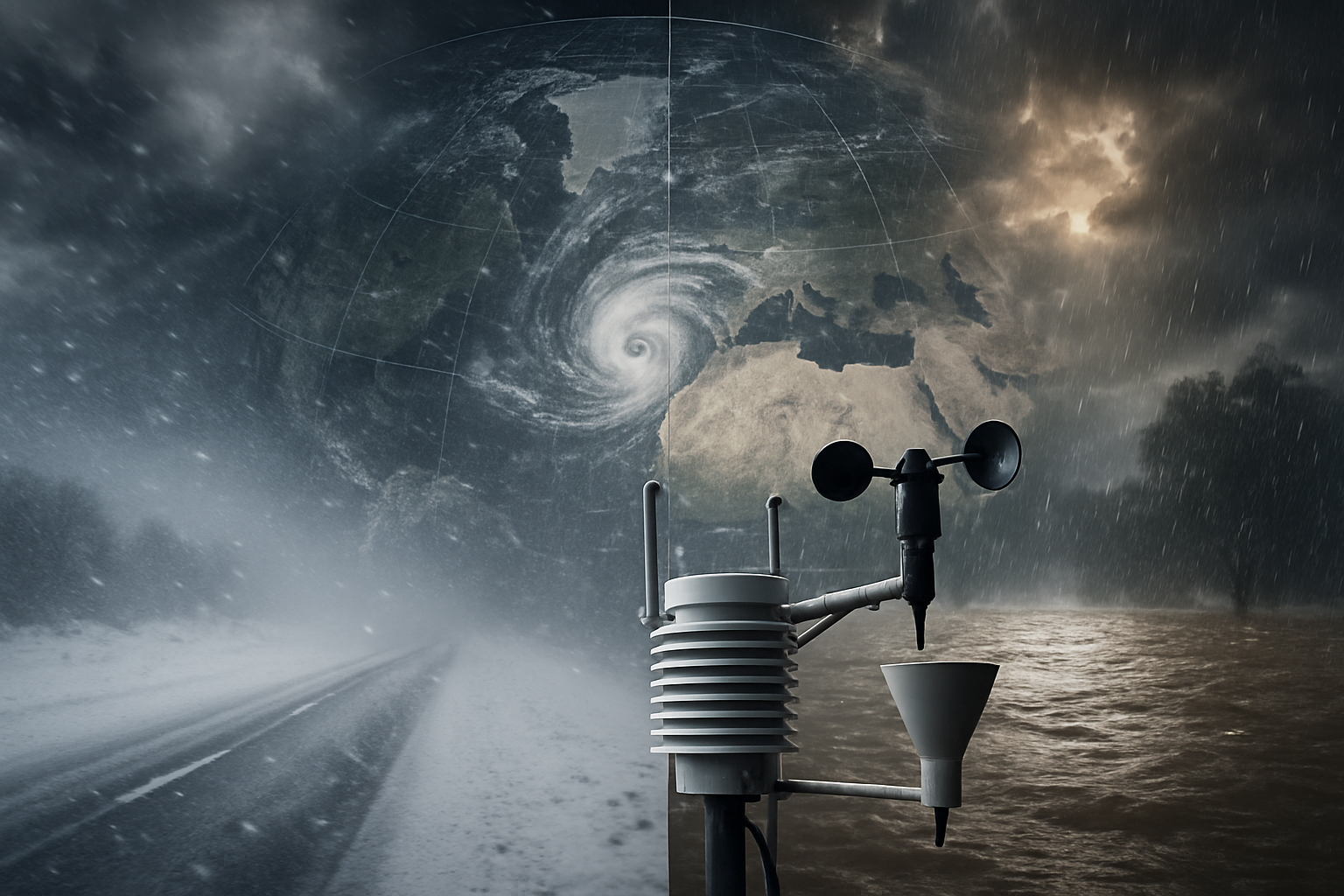
A devastating convergence of extreme weather events across four continents has exposed critical vulnerabilities in global emergency response systems, as Cyprus experiences rare Mediterranean snow, Finland battles dangerous ice conditions, Iceland confronts severe blizzards, and South Africa faces thunderstorm emergencies during what scientists are calling an unprecedented climate crisis.
Mediterranean Anomaly: Cyprus Shivers Under Unusual Snow
The Mediterranean island of Cyprus experienced a remarkable meteorological event on Sunday as light snowfall blanketed the peak of the Troodos mountains, creating scenes rarely witnessed in this typically warm climate zone. While barely covering the ground, the snow provided a stark visual reminder of the atmospheric disruption affecting weather patterns across the region.
Local meteorologists report that cold air masses brought temperatures significantly below seasonal averages, with mountain peaks reaching just 2°C while inland areas struggled to climb above 15-18°C. The unusual weather pattern is expected to give way to cloud cover on Monday, though temperatures will remain well below normal for the time of year.
This Mediterranean cooling comes as a striking counterpoint to the broader global warming trend, illustrating the complex ways climate change manifests in regional weather extremes rather than uniform heating across all areas.
Nordic Nations Face Severe Winter Conditions
Finland's meteorological services have issued urgent warnings about dangerous overnight freezing conditions expected through the weekend, even as daytime temperatures remain above zero across much of the country. The volatile temperature swings create hazardous ice formation on roadways and walkways, posing significant public safety risks.
Meanwhile, Iceland confronts what meteorologists describe as potentially life-threatening conditions across its eastern and northern regions. The Icelandic Met Office has issued a series of yellow and orange warnings for severe blizzards, blowing snow, and gales that will make travel extremely dangerous where movement remains possible.
The most serious situation faces the Eastfjords and East Iceland, where orange warnings prohibit all travel from 1:00 PM to 11:00 PM on Monday, March 2. Additional yellow warnings extend across the Northeast, Central Highlands, and Southeast regions for much of the following day.
Iceland's Roads Authority has declared that "uncertainty will be in effect in many areas, and roads can be expected to close" as the storm system intensifies. The severity of conditions has prompted authorities to issue blanket travel advisories urging residents to avoid all non-essential movement.
Southern Africa Thunderstorm Emergency
The South African Weather Service has activated a comprehensive severe weather response across multiple provinces, issuing a Yellow Level 4 warning for thunderstorms bringing heavy downpours to the eastern regions of Limpopo and Mpumalanga provinces. The warning system indicates conditions that could produce dangerous flooding, hail, and damaging winds.
These thunderstorm systems represent part of a broader pattern of intensifying weather across the African continent, as the region experiences more frequent and severe convective events during what has become an increasingly unpredictable rainy season.
Climate Context: Record-Breaking Global Pattern
The simultaneous weather emergencies across these diverse regions occur against the backdrop of January 2026 marking the 19th consecutive month that global temperatures have exceeded 1.5°C above pre-industrial levels. This unprecedented streak represents the longest sustained period of extreme global warming since temperature records began, according to climate scientists.
The phenomenon demonstrates what researchers term "climate volatility paradox" – where sustained global warming enables both unprecedented heat records and devastating regional weather extremes through disrupted atmospheric circulation patterns. Polar vortex disruptions and altered Atlantic circulation systems create conditions where extreme cold, heat, precipitation, and drought can occur simultaneously across different regions.
"What we're witnessing is not simply global warming in the traditional sense, but a fundamental destabilization of Earth's atmospheric systems that manifests as extreme variability rather than uniform change."
— Dr. Elena Rodriguez, Climate Systems Analyst
Infrastructure Under Unprecedented Stress
The global scope of simultaneous weather emergencies has exposed critical vulnerabilities in infrastructure systems designed for historical rather than current climate conditions. Transportation networks, power grids, and communication systems across affected regions are operating beyond their intended design parameters.
Emergency services in all four affected regions report reaching capacity limits, with traditional mutual aid mechanisms strained when multiple countries face disasters simultaneously. This situation prevents the typical regional compensation approaches that have historically managed localized extreme weather events.
Recovery timelines have fundamentally shifted from weeks to months or years, representing a decisive change in disaster response and preparation approaches. The concept of "building back better" has evolved from optional improvement to essential community survival strategy.
Historical Context of Crisis Escalation
The current weather emergencies build upon a devastating sequence of extreme weather events that have characterized early 2026. Europe recently endured a succession of Atlantic storms (Kristin, Leonardo, Marta, Nils, Pedro) that claimed over 30 lives across Portugal, Spain, and France, requiring Portugal's largest peacetime rescue operation involving 26,500 personnel.
These events prompted the activation of the EU Civil Protection Mechanism and resulted in a €246 million assistance package from Sweden and Denmark – the largest coordinated European weather response on record. The frequency and intensity of these storms have overwhelmed traditional emergency response frameworks designed for sequential rather than simultaneous disasters.
Economic and Social Devastation
The economic toll of this global weather crisis continues mounting across multiple sectors. Agricultural systems face billions in losses from damaged crops and disrupted supply chains. Tourism industries confront extended cancellations and infrastructure damage during typically peak seasons. Transportation disruptions create cascading effects throughout global commerce networks.
Beyond immediate economic impacts, communities worldwide report families losing generational homes, small businesses facing extinction, and vulnerable populations requiring extended emergency support. Mental health services report dramatically increased demand as repeated extreme weather events create sustained community trauma.
Scientific Warnings and Future Implications
Climate scientists describe the current conditions as a preview of routine circumstances expected in the 2030s without significant climate adaptation investment. The choice between reactive crisis management and transformative infrastructure adaptation has become increasingly urgent as traditional emergency response capabilities prove inadequate for the scale and frequency of emerging challenges.
International cooperation frameworks require fundamental restructuring to address multi-continental simultaneous disasters effectively. The traditional model of regional assistance becomes impossible when all regions face emergencies concurrently, necessitating entirely new approaches to global emergency coordination.
Adaptation Imperatives
February and March 2026 represent what experts characterize as a watershed moment in global climate preparedness. The window for effective climate action continues narrowing while the costs of both adaptation and inaction escalate rapidly. Current events demonstrate that extreme weather frequency and intensity have surpassed existing response capabilities across diverse geographic and economic contexts.
Success in managing this permanent climate volatility era requires unprecedented coordination between government agencies, infrastructure providers, and communities to build resilience for an uncertain climate future. The convergence of extreme weather across Cyprus, Finland, Iceland, and South Africa provides both urgent warnings about current vulnerabilities and potential templates for enhanced global preparedness.
As additional weather systems continue developing across Atlantic and Pacific basins, authorities worldwide maintain high alert levels. The crisis persistence over recent weeks has established what experts term a "new normal" of extreme weather frequency that challenges traditional emergency response frameworks and demands transformative approaches to climate adaptation.