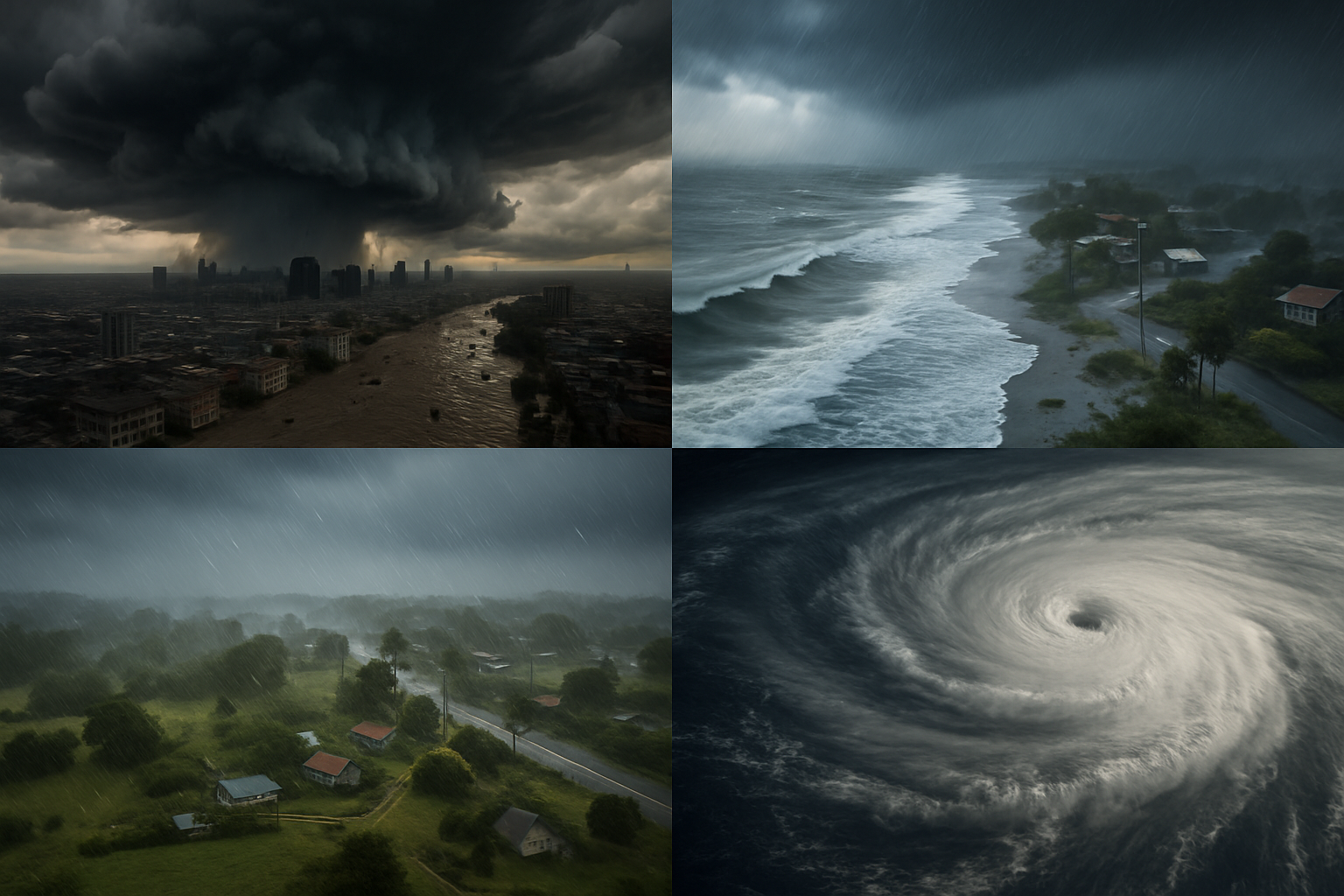
The world is grappling with an unprecedented global weather crisis as multiple extreme weather events unfold simultaneously across three continents, marking the continuation of the 22nd consecutive month of global temperatures exceeding 1.5°C above pre-industrial levels - the longest sustained extreme warming period in recorded human history.
New Zealand Braces for Devastating 53-Hour Storm
New Zealand's Northland region faces an imminent weather catastrophe as MetService has issued a fresh 53-hour heavy rain watch, threatening to bring two days of stormy weather to an area already vulnerable from previous extreme weather events. The approaching subtropical low pressure system is expected to deliver heavy rain and strong winds, adding to the mounting pressure on infrastructure designed for historical rather than current climate conditions.
This latest threat comes against the backdrop of previous devastating weather events that have tested New Zealand's emergency response capabilities. Earlier this year, the Banks Peninsula became completely isolated after receiving ten times its monthly rainfall in just 48 hours, with State Highway 75 blocked by landslides, cutting off the crucial Christchurch-Akaroa route. Christchurch Mayor Phil Mauger was forced to explore Starlink satellite internet solutions to reconnect Little River and other isolated communities after traditional communication networks failed.
Kenya Faces Deadly Flooding Crisis
Simultaneously, Kenya is experiencing catastrophic flooding that has claimed at least 81 lives in March alone, according to latest official reports. The western regions of Kenya have been hit hardest, with flash flooding prompting Nairobi authorities to issue urgent evacuation warnings as the capital's drainage systems become completely overwhelmed.
The Kenya Defence Forces (KDF) and Red Cross have launched their largest urban flood response operation in recent memory, with Cabinet Secretary Ruku issuing immediate emergency measures. The Kenya Meteorological Department has warned of continued heavy rainfall exceeding 20mm within 24 hours across the Lake Victoria Basin, Highlands West of the Rift Valley, affecting millions of residents.
"The scale of this crisis is unprecedented for our region. We're seeing infrastructure failures that expose decades of inadequate climate-resilient investment."
— Kenya Emergency Response Official
Portugal Battles Ongoing Storm Devastation
Meanwhile, Portugal continues its recovery from what has been described as an extraordinary succession of Atlantic storms. The most recent reports from the Serviço Regional de Protecção Civil reveal that storm damage from Depression Therese has elevated the number of emergency incidents to 157, representing a 41-incident increase from earlier assessments. The island of Madeira has suffered extensive flooding and property damage, with at least one person displaced from their home due to severe structural damage.
This crisis builds upon February 2026's devastating storm succession of Kristin, Leonardo, Marta, Nils, and Pedro, which claimed over 35 lives across Portugal, Spain, and France, requiring the deployment of 26,500 emergency personnel in Portugal's largest peacetime rescue operation.
Climate Volatility Paradox Intensifies
The simultaneous occurrence of these extreme weather events exemplifies what scientists term the "climate volatility paradox" - where sustained global warming enables both unprecedented heat records and devastating regional extremes through disrupted atmospheric circulation and polar vortex patterns.
January 2026 was confirmed as the hottest month ever recorded, extending an unprecedented warming streak where human-induced climate change has fundamentally overridden natural cooling mechanisms, including La Niña effects. The World Meteorological Organization indicates a 50-60% probability of El Niño development during July-September 2026, potentially driving global temperatures to unprecedented territory.

Emergency Services Overwhelmed Globally
Traditional emergency response mechanisms designed for sequential regional disasters are proving inadequate when multiple continents face simultaneous crises. Emergency services are operating at or beyond capacity limits globally, with traditional mutual aid mechanisms strained by the sheer geographic scope and simultaneity of current disasters.
The European Union's Civil Protection Mechanism has been repeatedly activated, with Sweden and Denmark providing €246 million in assistance - representing the largest coordinated European weather response in recorded history. However, this unprecedented cooperation highlights both the potential for international coordination and its limitations when faced with truly global simultaneous emergencies.
Infrastructure at Breaking Point
Transportation networks, power grids, and communication systems designed for historical climate patterns are repeatedly failing as extreme weather exceeds their operational parameters. Recovery timelines have shifted from weeks to months or even years, representing a fundamental change in disaster response approaches.
The Australian Fire Emergency Services Authority (AFAC) has identified a critical shift from sequential to "compound disasters" - multiple emergency types occurring concurrently across vast geographic areas, fundamentally challenging traditional resource allocation and mutual aid mechanisms.
Economic and Social Devastation Mounts
The economic toll continues to mount across affected regions, with agricultural sectors suffering billions in losses as extreme weather destroys crops and disrupts supply chains during critical growing seasons. Tourism industries face extended cancellations and infrastructure damage during what should be peak revenue periods.
The human cost extends beyond immediate physical damage. Mental health services report increased demand for climate anxiety support and trauma counseling as communities face repeated extreme weather events. Families are losing generational homes, businesses face extinction from repeated disruptions, and vulnerable populations require extended emergency support.
Urgent Need for Transformative Adaptation
March 2026 represents a potential watershed moment in global climate preparedness. The convergence of extreme weather events, infrastructure vulnerabilities, and emergency response limitations underscores the urgent need for coordinated international action that goes beyond reactive crisis management.
"Building back better" with climate-resilient infrastructure has evolved from an optional enhancement to an essential survival strategy. Traditional seasonal patterns that have guided infrastructure design, agricultural planning, and emergency preparedness for centuries are no longer reliable frameworks.
"We're seeing a preview of routine 2030s conditions. Without comprehensive climate adaptation investment, this level of crisis will become our new normal."
— Leading Climate Scientist
International Cooperation at Critical Juncture
Environmental challenges transcend political boundaries, with atmospheric systems and ocean currents carrying climate effects across continents regardless of borders. The simultaneity of current disasters is testing cooperation mechanisms that were developed assuming stable regions could assist others during isolated emergencies.
Success in managing this crisis requires unprecedented international cooperation, enhanced multi-sector coordination, and financial commitments that recognize environmental protection as essential infrastructure rather than optional enhancement.
Window for Climate Action Narrowing
Current conditions provide a preview of what could become routine circumstances in the 2030s without significant climate adaptation investment. The window for effective climate action is narrowing rapidly as ecological systems approach critical thresholds that could trigger irreversible changes affecting global food security, climate stability, and human settlements.
Additional weather systems are developing across the Atlantic and Pacific regions, with authorities maintaining high alert status globally. The persistence of crisis conditions may establish a "new normal" of extreme weather frequency and intensity that permanently challenges traditional emergency response frameworks.
The tools, knowledge, and cooperation frameworks exist for comprehensive environmental protection and climate adaptation. Success depends on unprecedented speed of coordination, sustained international cooperation, and political commitment to environmental protection as essential infrastructure for human prosperity and planetary sustainability.
Looking Forward: A Decisive Decade
The question is no longer whether transformative climate action is needed, but whether humanity can organize and implement solutions rapidly enough to maintain planetary habitability during Earth's most environmentally challenging period in recorded history.
The choices made in the coming months regarding adaptation strategies, infrastructure investment, and international cooperation may prove decisive for global climate resilience strategies affecting generations to come. As extreme weather events continue to converge across multiple continents, the urgency for comprehensive, coordinated action has never been greater.