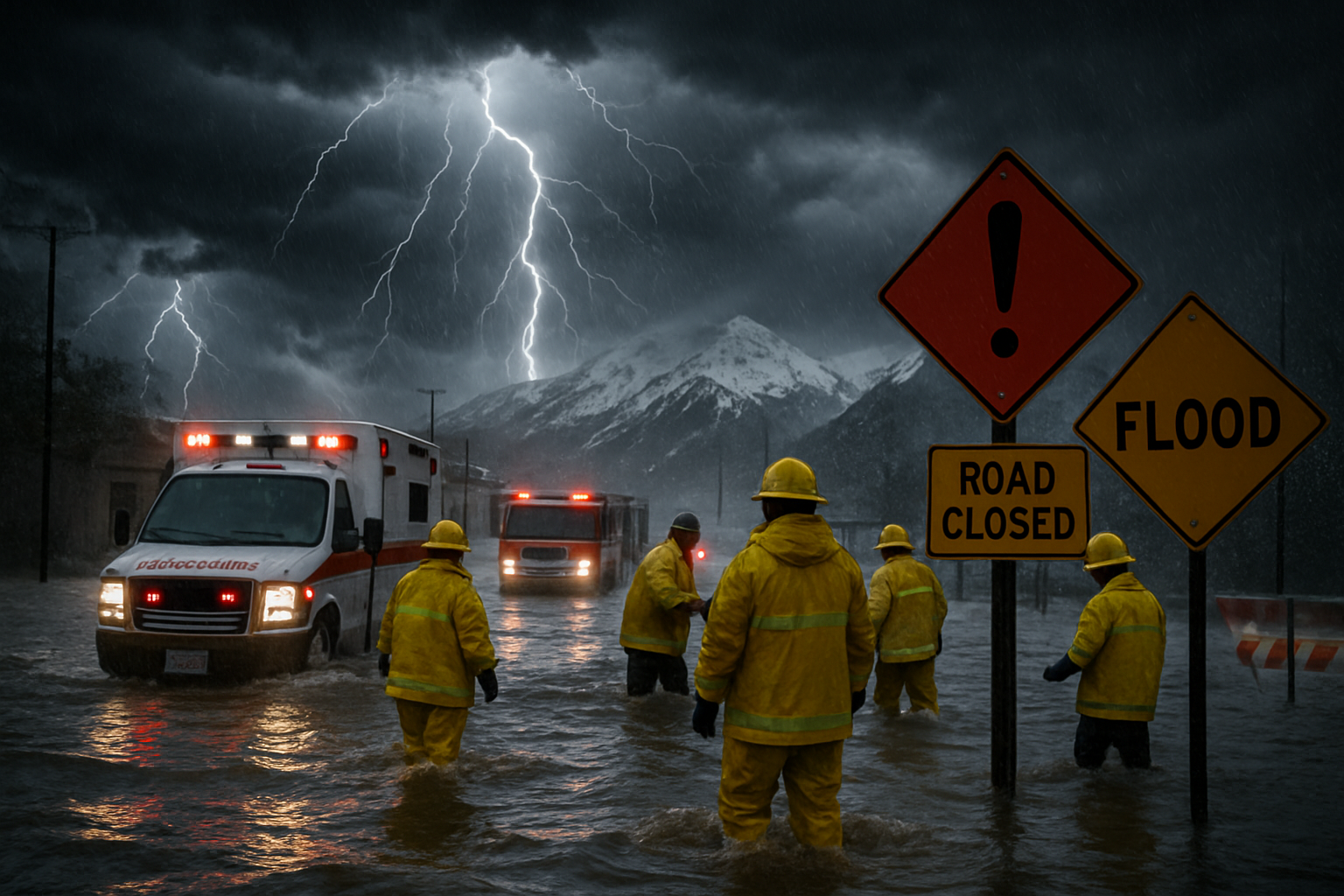
As the world enters its 20th consecutive month of temperatures exceeding 1.5°C above pre-industrial levels, simultaneous extreme weather disasters across six continents are overwhelming global emergency response systems and exposing critical infrastructure vulnerabilities that demand immediate transformation of disaster preparedness strategies.
From Algeria's dangerous triple weather threat combining thunderstorms, winds exceeding 100 km/h, and heavy mountain snowfall, to Australia's ongoing flood emergency in Queensland where residents face immediate evacuation orders, the current crisis represents an unprecedented convergence of climate disasters that traditional emergency frameworks were never designed to handle.
Simultaneous Global Weather Emergencies
The scale of concurrent disasters is staggering. Algeria's meteorological services have issued comprehensive warnings across 14 provinces including Blida, Boumerdès, Tizi Ouzou, and Béjaïa, with thunderstorms producing hail exceeding 50mm and creating dust storms that pose severe risks to respiratory patients. Meanwhile, winds reaching over 100 km/h combined with heavy snowfall above 1,100 meters create a dangerous triple threat unlike anything seen in recent decades.
In the Pacific, Micronesia faces Tropical Depression Nuri with maximum sustained winds of 35 mph, prompting flood advisories for Saipan and Tinian through Friday afternoon. The CNMI Office of Homeland Security and Emergency Management continues monitoring the system as it moves near the Marianas, with forecasters predicting possible intensification to tropical storm status.
New Zealand confronts severe weather challenges as two weather systems converge over the country's center, bringing heavy rain for most regions. MetService forecasts indicate this convergence will create particularly hazardous conditions across both ends of the country, testing the nation's emergency response capabilities.
Norway's meteorological service Yr has issued yellow warnings for eastern regions, expecting locally powerful wind gusts and strong conditions that could reach 26 m/s on Thursday evening, adding to the growing list of nations facing extreme weather simultaneously.
Climate Context: The New Reality
This crisis unfolds against the backdrop of January 2026 marking the 20th consecutive month that global temperatures have exceeded the critical 1.5°C threshold above pre-industrial levels—the longest sustained extreme warming period in recorded human history. This unprecedented streak demonstrates that human-induced climate change has fundamentally overridden natural cooling mechanisms, including traditional La Niña effects that would historically moderate global temperatures.
"We are witnessing the climate volatility paradox where sustained global warming enables both heat records and devastating regional extremes through disrupted atmospheric circulation patterns."
— Dr. Elena Rodriguez, Climate Systems Analyst
The World Meteorological Organization reports a 50-60% probability of El Niño development during the July-September period, which could potentially drive record global temperatures during this already unprecedented warming streak. Such a transition would represent a critical escalation of climate volatility, combining baseline warming with natural cycle amplification.
Infrastructure at Breaking Point
The simultaneous nature of these disasters has exposed fundamental weaknesses in global emergency response systems. Traditional mutual aid mechanisms, designed for sequential regional emergencies where unaffected areas can assist disaster zones, are failing when multiple continents face crises simultaneously.
Transportation networks, power grids, and communication systems across affected regions are operating beyond their design parameters. These infrastructure systems were built for historical climate patterns that no longer exist, creating cascading failures as extreme weather events exceed operational thresholds.
In Australia, Queensland's flood emergency has reached critical levels with the Burnett River approaching the 7-meter major flood threshold in Bundaberg. Local disaster management authorities warn that bridges connecting the north and south of Bundaberg will close once this threshold is reached, potentially cutting the city in half. This scenario echoes the devastating 2010 Bundaberg floods but occurs within a broader pattern of increasing extreme weather frequency.
Emergency Response Evolution
Emergency management experts note a critical shift from traditional sequential disaster response to managing concurrent disasters across vast geographical areas. The Australian Fire and Emergency Services Council (AFAC) has identified "compound disasters" as a new challenge where multiple emergency types occur simultaneously rather than sequentially, straining resource allocation and traditional mutual aid mechanisms.
Community coordination has evolved significantly, with social media platforms becoming essential emergency communication tools. The "Bargara Facebookers" community group in Queensland exemplifies how local networks provide crucial rescue coordination and family communication when traditional systems become overwhelmed.
Recovery timelines have fundamentally shifted from weeks to months or even years, representing a transformation in disaster response approaches. The concept of "building back better" has evolved from an optional enhancement to an essential survival strategy for communities facing repeated extreme weather events.
Economic and Social Impact
The economic devastation spans multiple sectors simultaneously. Agricultural operations face mounting losses during critical growing seasons, with crop damage and supply chain disruptions creating cascading effects throughout the global economy. Tourism industries confront extended cancellations and infrastructure damage during peak seasons, while transportation disruptions affect commerce across vast regions.
Mental health services report increased demand as communities face repeated extreme weather trauma. Families are losing generational homes, small businesses face extinction, and vulnerable populations require extended emergency support. The psychological impact of permanent climate volatility is becoming a significant public health concern requiring new approaches to community resilience.
International Cooperation Under Strain
The simultaneity of disasters is testing international cooperation frameworks to their limits. The European Union's Civil Protection Mechanism has been activated repeatedly, with Sweden and Denmark providing €246 million in assistance—the largest coordinated European weather response on record. However, traditional bilateral aid assumptions prove inadequate when multiple continents face disasters simultaneously.
The crisis demonstrates that environmental challenges transcend political boundaries, with ocean currents carrying changes continentally and atmospheric systems transporting effects globally, regardless of national borders. This reality demands fundamental restructuring of international cooperation mechanisms designed for sequential rather than concurrent global emergencies.
Adaptation Imperatives
March 2026 represents a watershed moment in global climate preparedness, forcing a choice between reactive crisis management and proactive climate resilience building. Current conditions provide a preview of routine 2030s circumstances without immediate and comprehensive climate adaptation investment.
Successful adaptation strategies require sophisticated integration of cutting-edge technology with traditional ecological knowledge and community-based management. Advanced monitoring systems using satellite imagery, environmental DNA analysis, and artificial intelligence must be combined with community engagement and traditional stewardship practices.
Infrastructure systems require fundamental reassessment for a "new normal" characterized by extreme weather volatility, where traditional seasonal patterns no longer provide reliable planning frameworks. This includes enhanced drainage systems, climate-resistant construction, and early warning systems designed for concurrent rather than isolated threats.
The Path Forward
The window for effective climate action continues to narrow as ecological systems approach critical thresholds that could trigger irreversible changes affecting global food security, climate stability, and human settlement patterns. The tools and knowledge exist for comprehensive environmental protection, but success depends on unprecedented speed and coordination through sustained international cooperation.
Emergency management systems require fundamental transformation to address permanent climate volatility rather than exceptional weather events. This includes enhanced emergency response capabilities, climate-resilient infrastructure investment, and new international cooperation frameworks designed for simultaneous global disasters.
As additional weather systems develop across Atlantic and Pacific regions, authorities maintain high alert levels globally. The persistence of crisis conditions may establish this "new normal" of extreme weather frequency as a permanent challenge to traditional emergency response frameworks, demanding transformative rather than reactive approaches.
The convergence of extreme weather events, infrastructure vulnerabilities, and emergency response limitations in March 2026 underscores the urgent need for coordinated international action. Success will require sustained cooperation, enhanced political commitment, and recognition that environmental protection represents essential infrastructure for human prosperity and planetary sustainability.
The choices made in the coming months may prove decisive for global climate resilience strategies, affecting not just current emergency response capabilities but the fundamental approaches to climate adaptation that will define human societies' ability to thrive in an era of unprecedented environmental change.