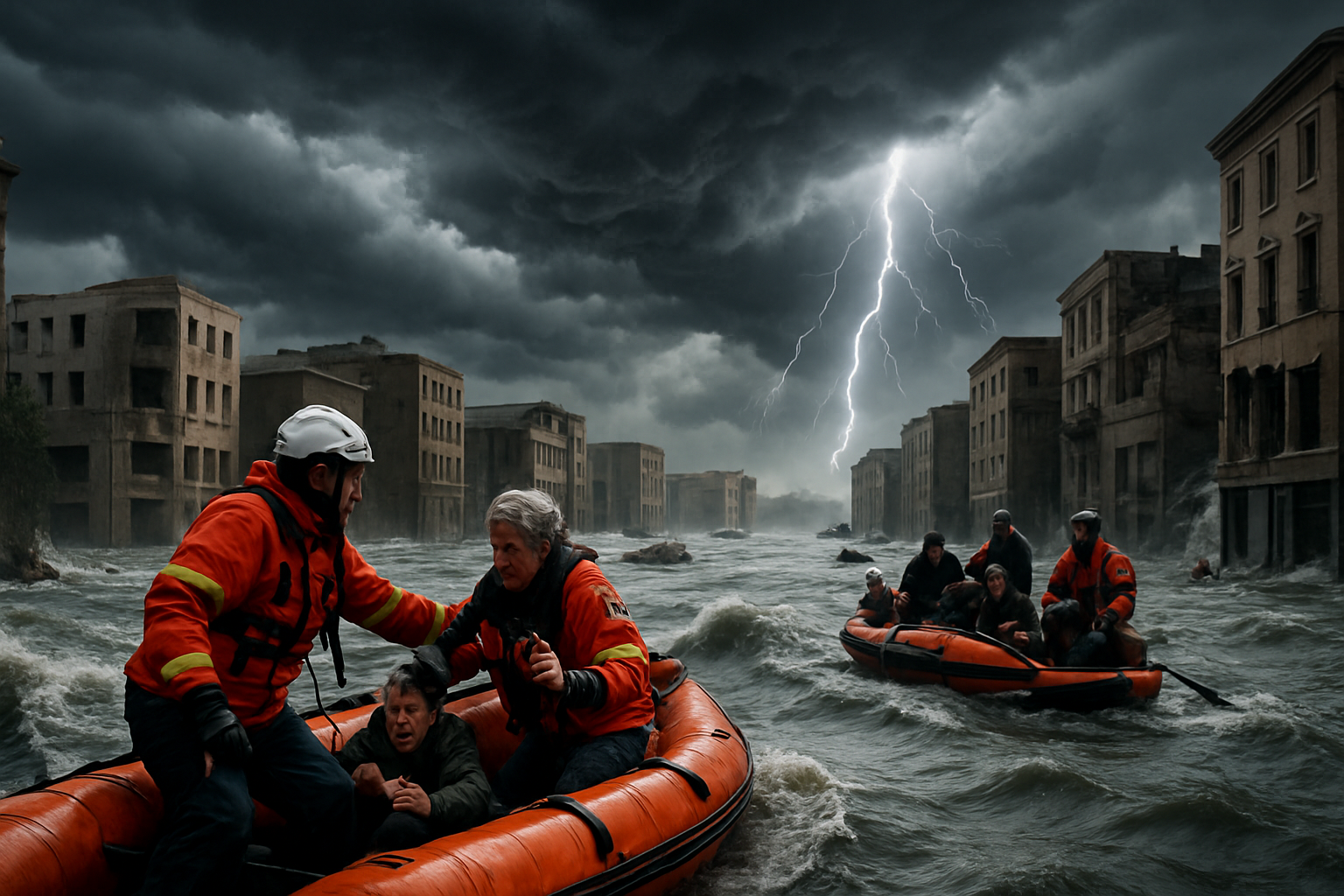
A convergence of extreme weather events across three continents has unleashed devastating destruction, with Colombia's Caribbean coast floods claiming 14 lives, Mozambique bracing for Tropical Cyclone Gezani, and Portugal battling the aftermath of three consecutive Atlantic storms that have left 14 dead and triggered the nation's largest peacetime rescue operation.
The simultaneous disasters, occurring during what climate scientists have confirmed as the hottest January on record globally, underscore the accelerating pace of extreme weather events that are overwhelming emergency response systems worldwide. From the flooded plains of Colombia to the cyclone-threatened shores of Mozambique, governments are deploying unprecedented resources to protect populations from nature's increasingly violent manifestations.
Colombia's Caribbean Coast Devastation
Colombia's Caribbean coastal region faces its worst flooding crisis in recent memory, with authorities confirming at least 14 fatalities and approximately 50,000 families affected across the departments of Córdoba and Sucre. The disaster unfolded as a powerful cold front brought torrential rains that overwhelmed drainage infrastructure and caused multiple rivers to burst their banks.
The human toll extends far beyond the death count, with 9,000 homes completely destroyed and entire communities submerged under several feet of water. Emergency shelters have become temporary cities, housing thousands of displaced families who fled rising waters with nothing but the clothes on their backs.
"The situation is catastrophic," said a local civil defense coordinator. "We're dealing with flooding on a scale we haven't seen before, and our response capabilities are being stretched to their absolute limits."
— Colombian Civil Defense Official
Transportation networks have collapsed across the region, with major highways rendered impassable and hampering both rescue efforts and the delivery of humanitarian aid. Essential services including electricity, water supply, and communications have been severely disrupted, leaving many communities completely cut off from the outside world.
The economic impact is staggering, with agricultural sectors suffering devastating losses and businesses throughout the region forced to shut down indefinitely. Educational infrastructure has also been heavily damaged, affecting thousands of students whose schools now serve as emergency shelters.
Mozambique Prepares for Cyclone Gezani
As Colombia battles floods, Mozambique faces an entirely different but equally dangerous threat: Tropical Cyclone Gezani, which is rapidly intensifying in the Mozambique Channel and threatens to bring catastrophic conditions to the country's central and southern provinces.
The Mozambican government has activated early warning systems and begun implementing anticipatory disaster management measures across potentially affected regions. The National Institute of Disaster Management (INGD) has issued high-risk alerts for flooding and storm surge conditions as Gezani approaches.
Maritime authorities have suspended all navigation and crossing activities in Inhambane province as a precautionary measure, with the National Institute of Maritime Transport citing the "direct response to the threat posed by the moderate tropical storm Gezani." The suspension affects crucial transportation links and economic activities along the coast.
The timing of Gezani's approach is particularly concerning, as Mozambique is still recovering from devastating floods that have affected over 850,000 people since the rainy season began in October 2025. Recent search operations in Chibuto district, Gaza province, have recovered nine bodies from January flooding incidents, highlighting the ongoing humanitarian crisis.
"We are estimating nine deaths, which we have already recovered during search operations for missing persons in the January floods," confirmed the Chibuto district administrator.
— Chibuto District Administrator
Portugal's Storm-Battered Infrastructure
Portugal continues to grapple with the aftermath of an unprecedented succession of three major Atlantic storms—Kristin, Leonardo, and Marta—that have battered the Iberian Peninsula over the past two weeks. The Portuguese government has deployed 26,500 rescue personnel in what officials describe as the largest peacetime rescue operation in the nation's history.
The Portuguese Civil Protection Authority has maintained heightened alert status, warning of continued flood risks along the country's major rivers due to persistent rainfall. The Douro and Tejo rivers have reached critical levels, with some areas experiencing their highest water levels since the devastating floods of 1997.
Infrastructure damage has been extensive, with power outages affecting over 167,000 residents and railway services suspended on multiple lines. The Castanheira-Alvarca line remains out of service, significantly disrupting commuter traffic to Lisbon.
Despite the challenging conditions, Portugal's democratic institutions demonstrated remarkable resilience by successfully conducting the February 8 presidential election runoff. The election proceeded despite 36,000 voters being unable to participate due to storm damage, with authorities implementing special protocols to maintain electoral integrity while ensuring public safety.
Climate Change Connection
These simultaneous disasters occur against the backdrop of unprecedented global warming, with January 2026 confirmed as the hottest month in recorded history. Climate scientists note that 18 of the past 19 months have exceeded 1.5°C above pre-industrial levels, a threshold that climate models warned would lead to more frequent and severe weather extremes.
The convergence of extreme weather events across multiple continents is consistent with climate change projections that predict more volatile weather patterns as global temperatures continue to rise. The phenomenon demonstrates how warming can trigger seemingly contradictory extremes—from devastating floods to severe droughts—occurring simultaneously in different regions.
International Response and Cooperation
The scale of the unfolding disasters has triggered unprecedented international cooperation efforts. The European Union has activated its Civil Protection Mechanism, with Sweden and Denmark announcing a €246 million assistance package for affected regions.
Emergency services across all affected nations report operating at or beyond capacity limits, highlighting the strain that increasingly frequent extreme weather events place on response infrastructure. The simultaneous nature of these disasters prevents the usual practice of redirecting resources from unaffected regions, forcing countries to rely more heavily on international support.
The crisis has exposed critical vulnerabilities in infrastructure systems that were not designed to handle the intensity and frequency of extreme weather events now becoming commonplace. Transportation networks, power grids, and communication systems have all proven inadequate in the face of these natural disasters.
Looking Ahead: Adaptation Urgency
As rescue and relief operations continue, attention is already turning to long-term recovery and adaptation strategies. The current crisis provides a stark preview of the challenges that lie ahead as climate change continues to accelerate, bringing more frequent and intense extreme weather events.
Recovery efforts are expected to take months or even years, with economic damages running into the billions across the affected regions. Agricultural sectors, tourism industries, and critical infrastructure will all require massive reconstruction efforts, presenting opportunities to "build back better" with improved climate resilience.
The international community faces mounting pressure to enhance climate adaptation funding and improve coordination mechanisms for responding to simultaneous disasters across multiple regions. Current emergency response systems, while functional, are clearly strained by the scale and simultaneity of modern climate-related disasters.
As the immediate emergency response continues, these events serve as a sobering reminder that the climate crisis is no longer a future threat—it is a present reality requiring immediate, comprehensive, and coordinated global action to protect vulnerable populations and build resilience against an increasingly volatile climate system.