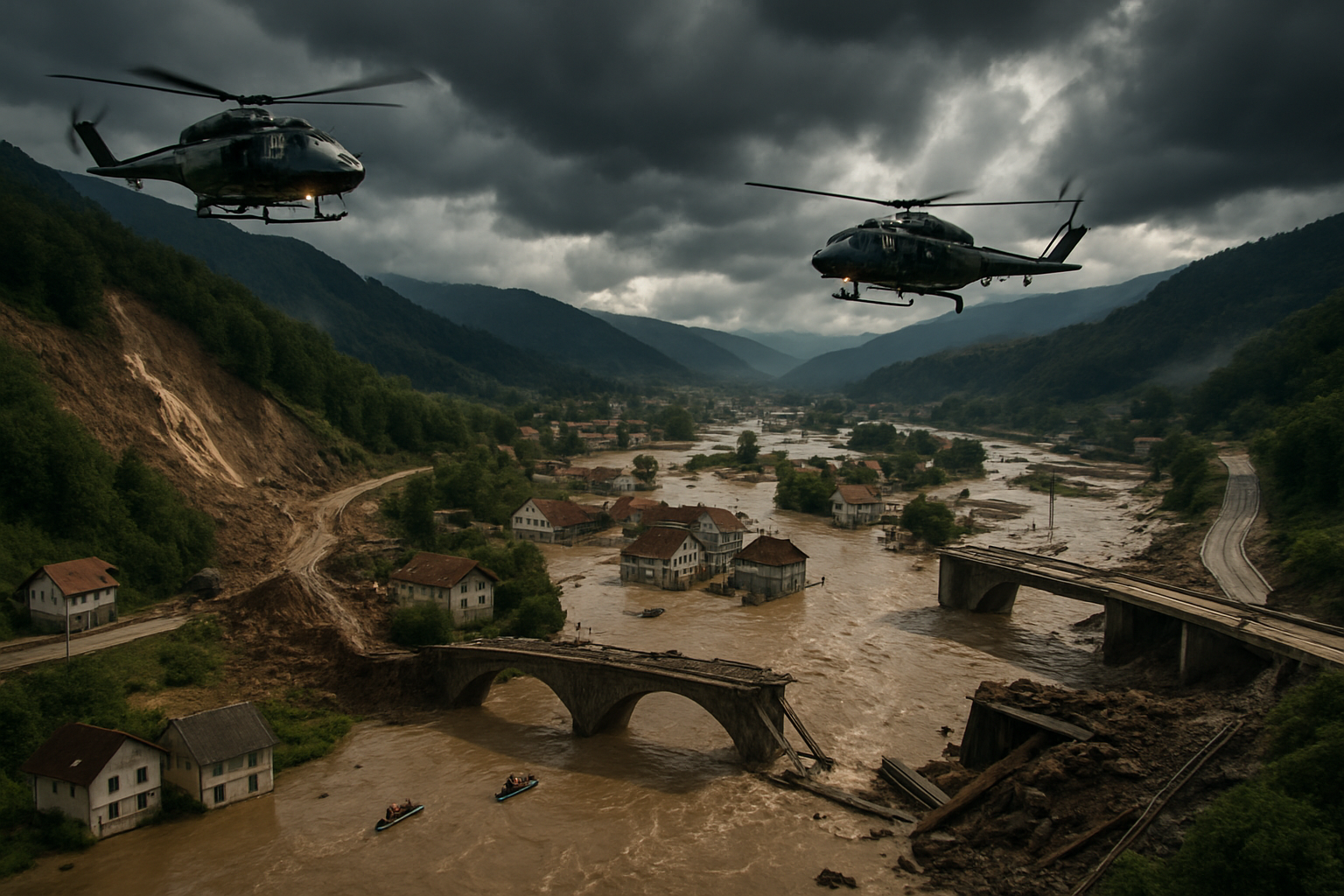
An unprecedented global weather emergency is unfolding across multiple continents as fatal avalanches, powerful earthquakes, severe storms, and extreme flooding simultaneously overwhelm emergency services from Austria to New Zealand, marking what scientists describe as the most severe multi-national natural disaster convergence in recent history.
The crisis, which has already claimed dozens of lives and affected millions of people, represents a dangerous escalation of the extreme weather patterns that have defined February 2026. Emergency response systems are operating at capacity limits as traditional mutual aid mechanisms fail under the weight of simultaneous disasters spanning five continents.
Alpine Avalanche Tragedy Claims Multiple Lives
Western Austria has been devastated by a series of deadly avalanches, with Tyrolean authorities reporting over 30 separate incidents in a single day. The death toll stands at least three, including two German nationals from Baden-Württemberg who were killed while engaging in winter sports activities.
"The avalanche danger remains at level 4 out of 5 across the alpine regions,"
— Austrian Avalanche Warning Service
The tragedy has particularly impacted the international community, with a 71-year-old Dutch national confirmed dead in an avalanche near Fiss, according to Dutch authorities. The high death toll reflects the extreme conditions that have made backcountry skiing and mountaineering extraordinarily dangerous across the Alpine region.
Dutch News reported that the victim was among several skiers caught in the avalanche, highlighting the international scope of the alpine emergency. Meanwhile, emergency services continue rescue operations hampered by ongoing dangerous conditions and the threat of additional avalanches.
Seismic Activity Strikes South America and Europe
Argentina's Atlantic coast experienced a significant 4.9 magnitude earthquake centered approximately 30 kilometers from Miramar, according to the National Institute for Seismic Prevention (Inpres). The earthquake, which occurred at a shallow depth of just 9 kilometers, was strongly felt throughout Mar del Plata's city center and southern districts.
The Argentine National Institute reported the tremor at 8:16 AM local time, with the epicenter located in waters between Miramar and Chapadmalal. This represents an unusually high magnitude for the region, raising concerns about ongoing seismic instability along South America's Atlantic coastline.
Simultaneously, Portugal experienced a 4.1 magnitude earthquake near Alenquer, approximately 45 kilometers from Lisbon. The Portuguese Institute for Sea and Atmosphere confirmed the seismic event was felt throughout the capital region, adding to the country's ongoing weather-related emergencies.
Devastating Explosions and Industrial Accidents
Chile's capital Santiago was rocked by a massive explosion involving a gas transport truck in the commune of Renca. The blast, which occurred on Route 5 near General Velásquez, generated a dense column of smoke visible across the metropolitan area and left multiple people injured with severe burns.
Emergency responders reported several vehicles caught fire in the explosion's aftermath, with witnesses describing scenes of chaos as people fled the burning wreckage. The incident highlights how extreme weather conditions can exacerbate industrial risks, as unusual temperature fluctuations and atmospheric pressures affect the transport and storage of hazardous materials.
Caribbean Weather Warnings Intensify
The Antigua and Barbuda Meteorological Service issued high surf advisories for multiple northern Leeward Islands, warning of dangerous surf conditions and powerful rip currents extending through the weekend. The advisory affects British Virgin Islands, Anguilla, Barbuda, St. Kitts, Nevis, Antigua, and Montserrat, with wave heights reaching hazardous levels.
These warnings come as the Caribbean region faces unusual weather patterns linked to broader atmospheric disruptions affecting global weather systems. Maritime authorities have suspended various coastal activities and urged extreme caution for anyone near shoreline areas.
European Aviation and Transportation Crisis
Netherlands' Schiphol Airport cancelled over 100 flights as severe winter weather brought snow and ice to central regions of the country. The disruptions reflect broader transportation chaos across Northern Europe, where extreme cold and precipitation have overwhelmed infrastructure designed for milder winter conditions.
The aviation sector has been particularly hard hit, with multiple airports across Europe implementing emergency protocols. Weather services issued nationwide code yellow warnings for hazardous driving conditions, with officials advising against non-essential travel as road conditions deteriorated rapidly.
Multi-Continental Flooding and Storm Damage
New Zealand's South Island faces ongoing crisis as the Banks Peninsula remains under a state of emergency following unprecedented flooding. Local authorities report frustration with the slow pace of recovery efforts, as communities remain cut off nearly 72 hours after the initial weather event.
Lower Hutt resident accounts describe the terrifying moment when a 10-by-30-meter section of backyard suddenly slid away, leaving families with nothing. The Wairarapa region continues assessing damage from this week's storms, with residents describing scenes of devastation across the agricultural heartland.
Meanwhile, France maintains red flood alerts across multiple departments as the Garonne River system threatens "major overflows within 24 hours." The crisis follows a devastating succession of Atlantic storms that have claimed over 16 lives across Portugal and Spain in recent weeks.
Arctic and Sub-Arctic Emergencies
Russia's capital Moscow is bracing for a major winter storm expected to deliver over 70% of the monthly average snowfall in a single day, according to Mayor Sergei Sobyanin. The unprecedented accumulation threatens to paralyze transportation networks and strain emergency services already dealing with the harsh winter conditions.
Armenia reported challenging road conditions with snow and sleet affecting transportation networks, though authorities confirmed all major interstate and republican highways remain open as of the latest update. Road service organizations continue intensive maintenance operations to keep critical routes accessible.
Historical Context and Climate Implications
The current crisis unfolds against the backdrop of January 2026 being confirmed as the hottest month in recorded history - the 18th consecutive month to exceed 1.5°C above pre-industrial levels. This extraordinary warming has created atmospheric conditions that enable the simultaneous occurrence of extreme weather events across multiple continents.
"We're witnessing a convergence of extreme weather that overwhelms traditional emergency response mechanisms designed for regional, sequential disasters rather than global, simultaneous events,"
— European Scientific Advisory Council on Climate Change
Climate scientists emphasize that the current conditions represent what may become routine circumstances in the 2030s without significant climate adaptation investments. The simultaneous nature of these disasters prevents the usual patterns of international mutual aid, as nations cannot spare resources when facing their own emergencies.
Emergency Response at Breaking Point
The scale of simultaneous disasters has pushed emergency services to capacity limits globally. Portugal's ongoing deployment of 26,500 personnel in what officials describe as the largest peacetime rescue operation in the nation's history exemplifies the extraordinary measures required to address current conditions.
The European Union has activated its Civil Protection Mechanism, while Sweden and Denmark have committed €246 million in assistance - representing the largest coordinated European weather response in recent history. However, the simultaneous nature of emergencies across multiple continents has strained traditional international cooperation frameworks.
Infrastructure Vulnerabilities Exposed
The crisis has exposed critical vulnerabilities in infrastructure designed for historical rather than future climate conditions. Transportation networks, power grids, and communication systems are operating beyond their design parameters, with failures cascading across interconnected systems.
From collapsed highway viaducts in Portugal to frozen railway systems in Poland, the infrastructure impacts demonstrate the urgent need for climate-adaptive design approaches that can withstand increasingly volatile weather conditions.
Economic and Social Consequences
The economic toll is mounting rapidly, with billions in damages expected across agricultural, tourism, and infrastructure sectors. Spanish agricultural regions face devastation to olive groves and citrus operations, while alpine tourism infrastructure suffers extensive damage during the critical winter sports season.
Beyond immediate economic impacts, the crisis is creating profound social disruption. Families are losing generational homes, businesses face extinction, and vulnerable populations require extended emergency support. Mental health services report increased demand as communities struggle to cope with repeated extreme weather events.
Looking Forward: Adaptation Imperatives
The February 2026 weather crisis represents a watershed moment that demands fundamental reconsideration of emergency preparedness and climate adaptation strategies. Traditional reactive crisis management approaches appear inadequate for the era of permanent climate volatility now unfolding.
Scientists and policy experts emphasize the need for transformative rather than incremental approaches to infrastructure adaptation. The concept of "building back better" with climate-resilient design is becoming essential as extreme weather events increase in both frequency and intensity.
International cooperation mechanisms also require evolution to address simultaneous multi-continental emergencies that overwhelm traditional regional response frameworks. The current crisis provides critical lessons for developing enhanced global coordination capabilities for the climate challenges ahead.
"This crisis demonstrates that we've entered an era where extreme weather can affect multiple continents simultaneously, requiring unprecedented international coordination and adaptive capacity,"
— UN Office for Disaster Risk Reduction
As recovery efforts continue across affected regions, the focus must shift toward building resilient systems capable of withstanding the volatile climate conditions that scientists warn will become increasingly routine in the coming decade.