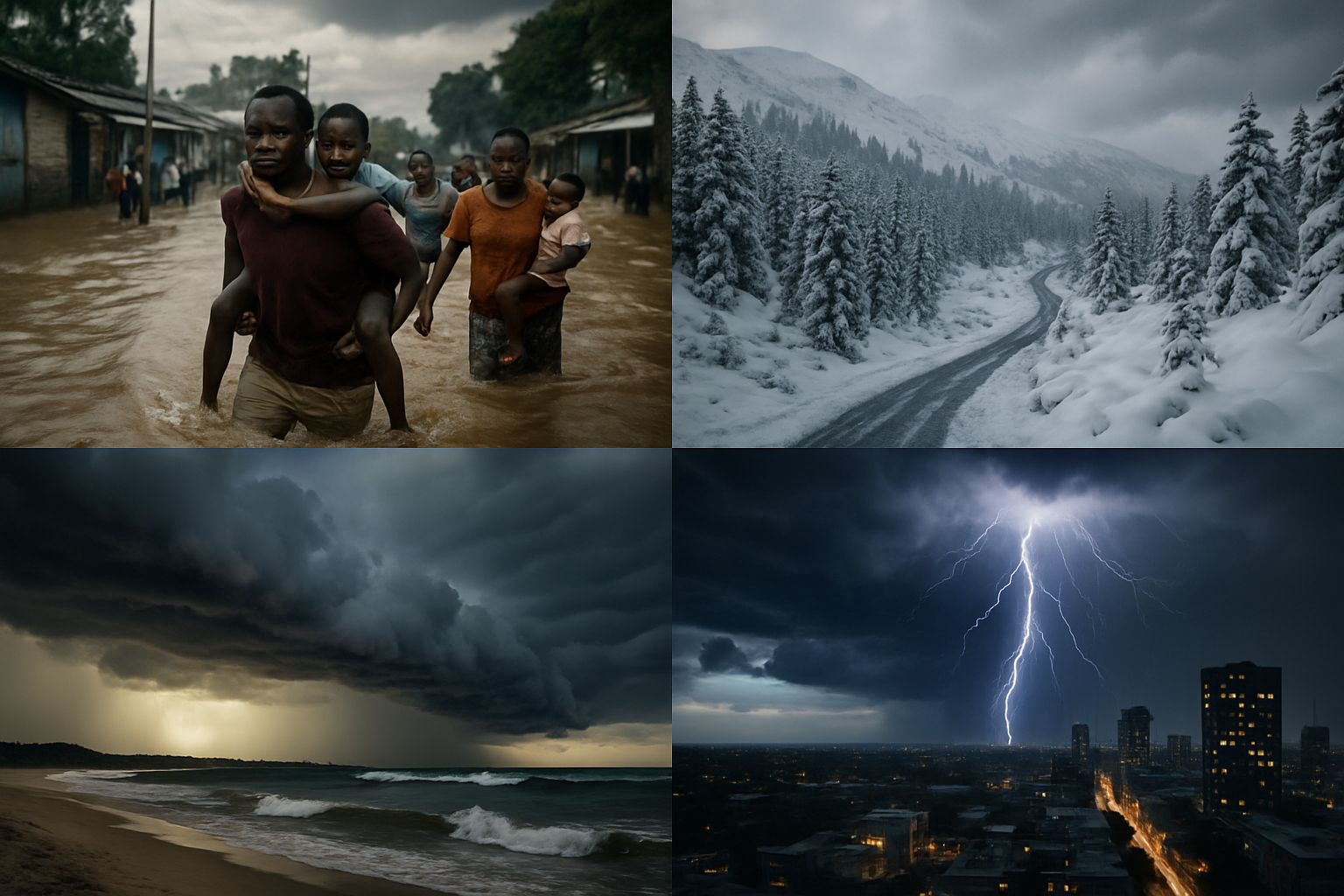
A devastating convergence of extreme weather disasters across Australia, Cyprus, Kenya, and Norway has overwhelmed emergency services worldwide, marking what scientists call a critical escalation of the global climate crisis during the 20th consecutive month of record-breaking temperatures.
From lightning strikes near Sydney to unprecedented snowfall in the Mediterranean and catastrophic flooding in East Africa, the March 7, 2026 weather events represent a dramatic intensification of the climate volatility that has defined early 2026. The simultaneous nature of these disasters is straining traditional emergency response frameworks and highlighting critical infrastructure vulnerabilities across multiple continents.
Australia: Lightning Strike and Severe Storm Warnings
In New South Wales, a man was struck by lightning near Wollongong as Sydney braced for between 70 and 100 millimeters of rain through the evening and into Saturday morning. The incident underscores the dangerous conditions associated with the severe storm system moving across southeastern Australia, bringing with it the threat of flash flooding and dangerous electrical activity.
The Australian crisis builds upon a complex weather pattern that has seen the continent experience both extreme drought conditions and unprecedented flooding within the same regions during 2026. The Bureau of Meteorology has described current conditions as representing a "new normal" of climate volatility where traditional seasonal patterns no longer provide reliable forecasting frameworks.
"These aren't isolated incidents anymore - we're seeing compound weather events that challenge everything we know about emergency preparedness."
— Senior Meteorologist, Australian Bureau of Meteorology
Simultaneously, the continent continues to grapple with lessons learned from January's bushfires, which scorched nearly as much land as the catastrophic Black Saturday fires but resulted in significantly fewer casualties. Experts attribute this improvement to enhanced early warning systems and community preparedness measures implemented following previous disasters, though they warn that vigilance remains critical as extreme weather frequency increases.
Cyprus: Mediterranean Snow Creates Rare Weather Phenomenon
In an extraordinary display of climate volatility, Cyprus experienced rare snowfall in the Troodos mountains on March 7, transforming the Mediterranean landscape into a winter wonderland that locals described as "magical." The snowfall, which occurred during the early morning hours, brought thick fog and unusually low temperatures to the mountain range.
Images shared across social media platforms by Weather Forecast–Ierodiakonou and Kitasweather showed the resort area blanketed in fresh snow, with temperatures dropping to 2°C in mountainous regions while coastal areas remained relatively mild at 17-18°C. The phenomenon represents a stark example of the extreme weather variability that has characterized the ongoing global climate crisis.
Cyprus Meteorological Service indicated that while snow is not unprecedented in the Troodos mountains, the timing and intensity of this particular event reflect the broader pattern of unusual weather occurrences across the Mediterranean region. The snowfall is expected to be followed by cloudy conditions and the possibility of isolated storms with hail in lower elevations.
Kenya: Catastrophic Flooding Claims Lives and Displaces Thousands
The most severe impacts have been felt in Kenya, where torrential rains triggered catastrophic flooding in Nairobi and surrounding regions, killing at least 10 people and leaving scores missing. Police confirmed that details of the extent of damage are still emerging, but early reports indicate that some businesses in the capital are reeling from massive flood damage.
The Kenya Meteorological Department had issued warnings for heavy rainfall exceeding 20mm within 24 hours, particularly affecting the Lake Victoria Basin and Highlands West of the Rift Valley. The flooding has forced residents to spend hours trapped in traffic while others required rescue operations as water levels rose rapidly throughout Friday night.
In response to the crisis, Cabinet Secretary Ruku ordered immediate emergency measures and called for an emergency meeting to address the flooding situation. The Kenya Defence Forces (KDF) and Red Cross have deployed teams as heavy rains continue to submerge parts of the Central Business District and major highways.
"The situation has overwhelmed our normal response capabilities. We're seeing water levels that exceed our infrastructure's capacity to handle these extreme rainfall events."
— Senior Official, Kenya Meteorological Department
The flooding coincides with the beginning of Kenya's long rain season, but meteorologists note that the intensity and rapid onset of the current rains far exceed typical seasonal patterns. This aligns with broader observations about how climate change is intensifying precipitation events across East Africa, leading to more frequent and severe flooding disasters.
Norway: Tornado Devastation in Michigan Highlights Global Reach
Meanwhile, international reports monitored in Norway described a deadly tornado that struck rural Michigan in the United States, killing at least four people and injuring dozens more. The tornado destroyed multiple homes in the countryside, demonstrating how extreme weather events are simultaneously affecting regions across different continents and hemispheres.
The Norwegian report on the Michigan tornado reflects the interconnected nature of global weather monitoring and the recognition that extreme weather events worldwide are part of a larger pattern of climate instability affecting the entire planet.
Historical Context: 20th Month of Record-Breaking Temperatures
These latest weather disasters occur against the backdrop of unprecedented global temperature records. March 2026 marks the 20th consecutive month that global temperatures have exceeded 1.5°C above pre-industrial levels, representing the longest sustained warming streak in recorded history. January 2026 was confirmed as the hottest month ever recorded, despite the presence of La Niña conditions that typically provide global cooling effects.
This temperature milestone demonstrates that human-induced climate change has fundamentally overridden natural climate variability, creating conditions that enable both record heat and extreme regional weather events through disrupted atmospheric circulation patterns. The phenomenon, termed "climate volatility paradox" by researchers, explains how global warming can coincide with devastating local storms, floods, and unusual cold snaps.
Emergency Services Under Strain
The simultaneous nature of these disasters is exposing critical weaknesses in international emergency response systems. Traditional mutual aid mechanisms, designed for sequential regional disasters, are proving inadequate when multiple continents face emergencies simultaneously.
Emergency services across all affected regions report operating at or beyond capacity limits. Infrastructure systems designed for historical climate patterns are struggling to cope with the intensity and frequency of current extreme weather events. Transportation networks, power grids, and communication systems are experiencing cascading failures as they encounter conditions for which they were not designed.
The crisis builds upon the devastating February 2026 European weather emergency that required the largest peacetime rescue operation in Portuguese history, with 26,500 personnel deployed and the EU Civil Protection Mechanism activated. That crisis, which included the historic storm succession Kristin-Leonardo-Marta-Nils-Pedro, claimed over 30 lives and caused billions in economic damage across the continent.
Economic and Social Impacts
The economic implications of these simultaneous weather disasters extend far beyond immediate emergency response costs. Agricultural sectors across all affected regions face mounting losses from damaged crops and disrupted supply chains. Tourism industries are grappling with cancellations and infrastructure damage during peak seasons.
Transportation disruptions are creating ripple effects throughout global commerce, while energy costs are rising due to increased heating demands and weather-related damage to power infrastructure. Recovery timelines have shifted from the traditional weeks to months or even years, representing a fundamental change in how societies must approach disaster preparedness and response.
The human cost includes families losing generational homes, businesses facing extinction, and vulnerable populations requiring extended support services. Mental health services report increased demand as communities struggle to cope with repeated extreme weather trauma.
Climate Adaptation Imperatives
Scientists and emergency management experts emphasize that the current crisis represents a watershed moment for global climate adaptation strategies. The choice between reactive crisis management and transformative infrastructure adaptation is becoming increasingly urgent as extreme weather events exceed the adaptive capacity of existing systems.
The European Scientific Advisory Council has warned that current infrastructure is "critically unprepared" for accelerating climate impacts, calling for urgent investment in protecting populations and infrastructure from floods, extreme heat, and severe weather events.
"We're witnessing a preview of routine conditions for the 2030s if we don't dramatically enhance our climate adaptation efforts. The window for effective action is narrowing rapidly."
— Climate Adaptation Specialist, International Panel on Climate Change
The concept of "building back better" with climate-resilient infrastructure has evolved from an optional consideration to an essential survival strategy for communities worldwide. This approach emphasizes designing systems that can withstand future climate conditions rather than simply rebuilding to historical standards.
International Cooperation Challenges
The simultaneous nature of current disasters is testing international cooperation frameworks to their limits. Traditional disaster response mechanisms assume that some regions will be available to assist others during emergencies, but when multiple continents face crises simultaneously, these assumptions break down.
The need for fundamental restructuring of international cooperation approaches is becoming apparent as the climate crisis demands coordination on an unprecedented scale. Enhanced early warning systems, pre-positioned emergency resources, and more robust communication networks are all essential components of effective global climate adaptation.
Looking Forward: Permanent Climate Volatility Era
As March 2026 unfolds, meteorological agencies worldwide are maintaining high alert levels with additional weather systems developing across both the Atlantic and Pacific. The persistence of extreme weather conditions over recent weeks and months suggests that current conditions may represent a "new normal" rather than exceptional circumstances.
The crisis highlights the urgent need for comprehensive climate adaptation strategies that address both the symptoms and causes of increasing environmental vulnerability. This includes not only technological improvements and enhanced infrastructure, but also fundamental changes in how societies organize themselves to deal with permanent climate volatility.
Success in managing this transition will require unprecedented coordination between government agencies, infrastructure providers, and communities to build resilience for an uncertain climate future. The tools and knowledge exist for comprehensive environmental protection, but the speed and scale of implementation must match the accelerating pace of climate change.
The events of March 7, 2026, across Australia, Cyprus, Kenya, and beyond serve as a stark reminder that climate change is not a future threat but a present reality demanding immediate and transformative responses across all sectors of society. The choice between reactive crisis management and proactive adaptation will determine humanity's ability to maintain essential services and protect vulnerable populations in an era of increasing weather volatility.