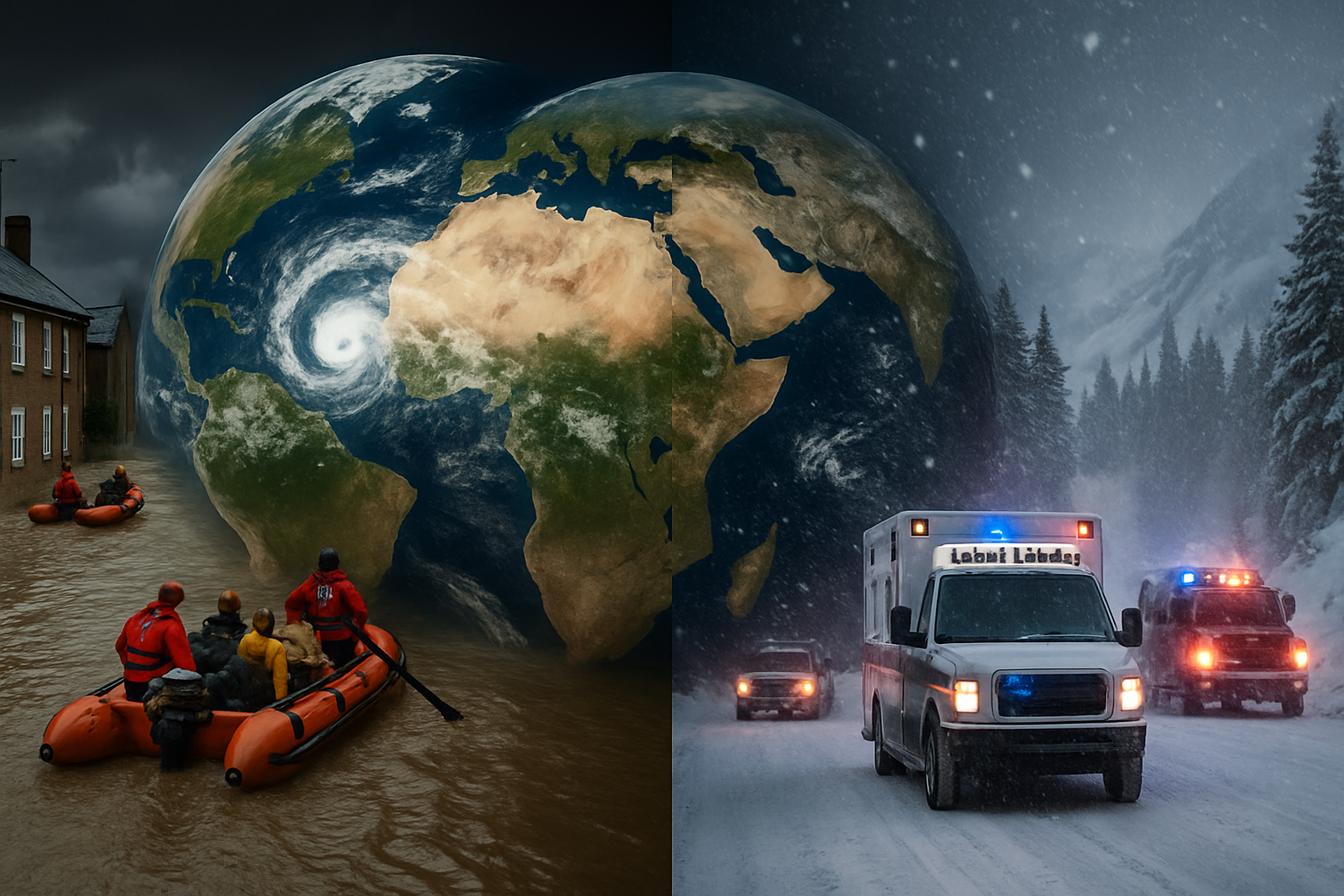
A cascade of extreme weather emergencies is overwhelming emergency services across multiple continents in February 2026, with deadly bushfires in Australia, catastrophic flooding in South America, record snowfall in Europe, and dangerous cold waves forcing mass evacuations and rescue operations worldwide.
The latest wave of disasters comes just weeks after January 2026 was confirmed as the hottest month ever recorded globally, highlighting the increasing volatility of Earth's climate systems as emergency responders struggle to manage simultaneous crises spanning from the Southern Hemisphere's fire season to the Northern Hemisphere's brutal winter conditions.
Australia Battles Unprecedented Fire Danger
More than 260 firefighters are battling an out-of-control bushfire on South Australia's Fleurieu Peninsula, with authorities warning that homes may have been lost in the Mount Lofty Ranges region. The emergency has prompted extreme fire danger warnings across southeastern Australia, affecting millions of people as hot and windy conditions create perfect storm conditions for wildfire spread.
Fire authorities have issued extreme danger alerts for South Australia's west coast, Yorke Peninsula, and Mount Lofty Ranges, where hundreds of firefighters are working to contain blazes that threaten residential areas. The situation represents the most severe fire emergency of the 2026 Australian summer season, with conditions described as highly dangerous due to the combination of scorching temperatures and strong winds.
"Firefighters across south-eastern states are bracing for a hazardous day as extreme conditions persist across the region."
— 9News Weather Services
South American Flooding Crisis Deepens
Colombia faces a mounting emergency as the Urrá dam releases 1,600 cubic meters of water per second into the Sinú River, increasing the river's flow by 2,500 cubic meters per second and forcing authorities to declare a public calamity in Córdoba department. The situation has prompted mass evacuations from areas adjacent to the swollen waterways.
Heavy rains have created dramatic scenes along Colombia's Caribbean coast, where a large vessel became stranded on Los Cocos beach near an exclusive apartment building in Santa Marta, becoming an unexpected symbol of the cold front and torrential rains battering the region. The striking images have circulated widely on social media, highlighting both the power of the storms and their impact on coastal communities.
The flooding crisis extends beyond Colombia's borders, with Morocco evacuating over 50,000 people—half the affected population—due to severe flooding from the Loukkos River in the country's northern regions. Emergency camps have been established while rescue operations continue under challenging conditions.
European Arctic Conditions Claim Lives
Scandinavia is experiencing some of its harshest winter conditions in decades, with Norway conducting major rescue operations in the Jotunheimen mountain range where four people required hospitalization after a group of 15 hikers became stranded in extreme cold. The rescue operation involved five helicopters and local emergency resources responding to a satellite-based emergency beacon indicating hypothermic and unconscious individuals.
The crisis reflects broader extreme conditions across Northern Europe, where Norway recorded its coldest January in 16 years. Climate researchers note that such extended cold periods are becoming increasingly rare due to global warming trends, making the current conditions particularly notable from a meteorological perspective.
"In the future, there will be fewer such cold days as climate change progresses, making these extreme cold events increasingly exceptional."
— Norwegian Climate Researcher
Germany has been significantly impacted by unexpected heavy snowfall, causing major transportation disruptions including flight cancellations at Frankfurt Airport and a nearly 30-kilometer traffic jam on the A3 autobahn. The snowfall caught authorities and travelers off guard, demonstrating the increasing unpredictability of European winter weather patterns.
Iberian Peninsula Under Storm Alert
Spain's Andalusia region has been placed under red alert as Storm Leonardo poses "extraordinary danger" to the southern territories. The storm system has forced school closures across the region, with only Almería province maintaining normal operations. Military personnel are being deployed to assist with slope stabilization, mining pond management, and both aquatic and terrestrial rescue operations.
Portugal is simultaneously bracing for severe conditions, with President Marcelo Rebelo de Sousa reinforcing vigilance measures while Prime Minister Luís Montenegro guarantees the deployment of "all available resources" to manage the crisis. The storm represents another test of the Iberian Peninsula's emergency response systems, which have been repeatedly challenged by extreme weather events in recent months.
Meteorological services are forecasting snowfall of up to 10 centimeters at elevations above 1,000 meters, with the storm system expected to bring sustained heavy precipitation across the region. The warnings come after severe weather killed five people in Portugal the previous week, underscoring the ongoing nature of the crisis.
Global Context and Infrastructure Strain
The simultaneous occurrence of these extreme weather events represents part of a broader Northern Hemisphere pattern that has already resulted in over 110 deaths in North America during recent weeks. The global nature of the crisis is straining international emergency response resources and highlighting the interconnected nature of modern climate impacts.
Emergency services across affected regions report being stretched to their operational limits, with traditional response protocols challenged by the scale and simultaneous nature of multiple disasters. Transportation networks, power grids, and communication systems are experiencing widespread disruption, creating cascading effects that complicate rescue and relief operations.
The crisis occurs despite January 2026 being confirmed as the hottest month ever recorded globally, with 18 of the past 19 months exceeding 1.5°C above pre-industrial temperature levels. This temperature anomaly is occurring even as natural cooling cycles should provide relief, indicating that underlying warming trends are now overriding natural climate variability.
Emergency Response and International Cooperation
International cooperation is emerging as a critical component of the response effort. Sweden and Denmark have announced a €246 million air defense package, while various nations are sharing emergency resources and expertise to manage the multifaceted crisis.
The World Health Organization has warned that shrinking global health funding is creating vulnerabilities during pandemic preparedness negotiations, a concern that extends to emergency response capabilities for natural disasters. The funding crisis affects the international community's ability to coordinate effective responses to large-scale emergencies like the current weather crisis.
Local authorities across affected regions are implementing various emergency protocols, from evacuation centers in Colombia to warming shelters in Northern Europe. The diversity of responses reflects both the range of conditions being experienced and the different resources available to various communities and nations.
Looking Forward
Meteorological services across affected regions continue to monitor evolving conditions, with many areas expected to experience additional severe weather in coming days. The current crisis serves as a stark reminder of the increasing frequency and intensity of extreme weather events and the growing challenges they pose to emergency response systems worldwide.
Climate adaptation experts emphasize that the current crisis represents a major test of international emergency response capabilities and climate adaptation systems. The lessons learned from managing these simultaneous disasters will likely inform future emergency preparedness strategies and international cooperation frameworks.
As rescue operations continue and communities work to recover from immediate impacts, the broader implications of this global weather emergency extend beyond immediate humanitarian concerns to questions of infrastructure resilience, international cooperation, and long-term climate adaptation planning in an increasingly volatile climate system.