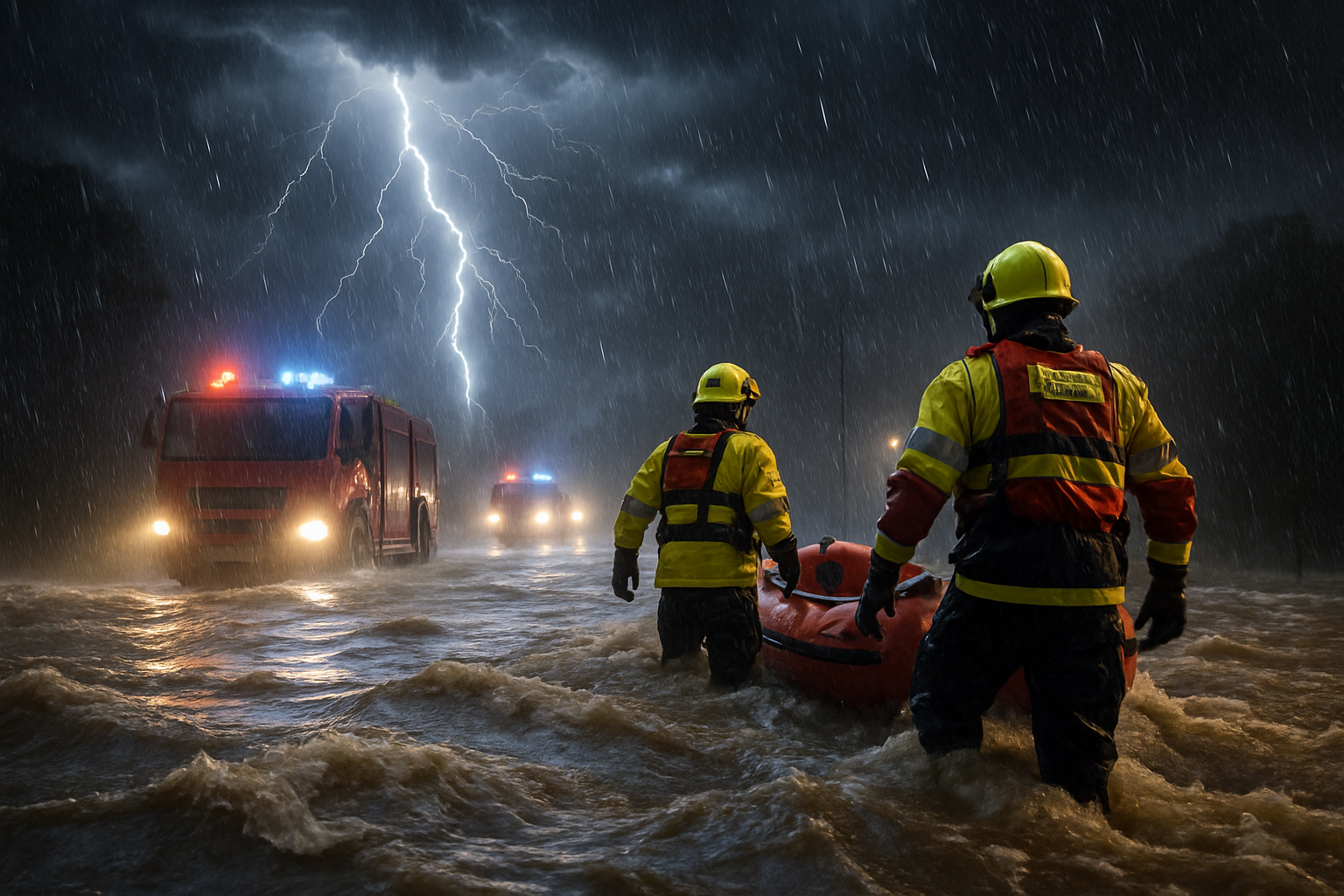
Severe flooding and heavy rainfall have killed at least 179 people across Afghanistan while multiple Pacific nations brace for dangerous storm systems, marking another devastating chapter in what experts describe as unprecedented global weather volatility during the longest sustained warming period in recorded history.
Afghanistan's disaster management authorities report 236 people injured since late March, with 22 additional deaths recorded in the past 24 hours alone. The crisis represents one of the deadliest weather events in recent Afghan history, overwhelming emergency response capabilities already stretched by ongoing humanitarian challenges.
Pacific Storm Systems Converge
Simultaneously, the Pacific basin faces multiple severe weather threats. Typhoon Sinlaku (04W) threatens Micronesia, Guam, and the Commonwealth of the Northern Mariana Islands (CNMI), prompting Governor Arnold Apatang to request emergency declarations from President Trump. The system has forced widespread evacuations and business closures, including Bank of Guam branches across Guam and CNMI territories.
New Zealand's MetService has issued urgent warnings as Category 2 Cyclone Vaianu approaches the North Island, potentially bringing life-threatening conditions to Auckland, Hamilton, and Tauranga regions. The storm threatens flood-saturated Northland, which remains particularly vulnerable after repeated extreme weather events throughout 2026.
Papua New Guinea's Milne Bay province faces its own crisis as Cyclone Maila approaches, forcing authorities to delay school classes for one week and issue comprehensive safety warnings for coastal communities.
Record-Breaking Climate Context
These disasters occur during what climate scientists confirm is the 23rd consecutive month of global temperatures exceeding 1.5°C above pre-industrial levels—the longest sustained extreme warming period in recorded human history. January 2026 remains the hottest month ever recorded, with human-induced climate change completely overriding natural cooling mechanisms.
"We're witnessing a fundamental shift from isolated regional disasters to what we call 'compound disasters'—multiple emergency types occurring simultaneously across vast geographic areas."
— Australian Fire and Emergency Services Authority (AFAC)
The World Meteorological Organization reports a 50-60% probability of El Niño development during July-September 2026, which could drive unprecedented global temperatures by combining baseline warming with natural cycle amplification.
Emergency Response Systems Overwhelmed
Traditional mutual aid mechanisms designed for sequential regional disasters are proving inadequate for simultaneous multi-continental emergencies. Emergency services across multiple countries report operating at or beyond capacity limits, while transportation networks, power grids, and communication systems repeatedly fail as extreme weather exceeds their operational parameters.
Emergency Minister Mark Mitchell in New Zealand acknowledged the severity, stating it was "good news" that Cyclone Vaianu hadn't brought the full intensity officials had prepared for, highlighting the stretched nature of response capabilities across the Pacific region.
The European Union's Civil Protection Mechanism has been repeatedly activated throughout 2026, including a €246 million assistance package for Sweden and Denmark—the largest coordinated European weather response on record. However, experts note this scale remains insufficient for the current level of global simultaneity.
Infrastructure Breaking Point
The convergence of extreme weather events exposes critical vulnerabilities in infrastructure designed for historical climate patterns. Recovery timelines have fundamentally shifted from weeks to months or years, representing a paradigmatic change in disaster response planning.
"Building back better" has evolved from an optional enhancement to an essential survival strategy as communities face the reality of permanent climate volatility. Traditional seasonal patterns that guided infrastructure design, agricultural planning, and emergency preparedness for centuries are no longer reliable frameworks.

Economic and Social Devastation
The economic toll continues mounting across affected regions. Agricultural operations face billions in losses from destroyed crops and disrupted supply chains during critical growing seasons. Tourism industries suffer extended cancellations and infrastructure damage during peak revenue periods.
Mental health services report increased demand for climate anxiety support as families face the prospect of losing generational homes multiple times within a decade. Vulnerable populations, including elderly residents and children with respiratory conditions, face disproportionate impacts from repeated extreme weather trauma.
International Cooperation Under Strain
Environmental challenges increasingly transcend political boundaries as atmospheric and ocean systems transport climate effects globally, regardless of borders. The simultaneity of disasters tests cooperation mechanisms developed under the assumption that stable regions could assist others during isolated emergencies.
Success stories emerge from sophisticated integration of cutting-edge technology with traditional ecological knowledge. Estonia's combination of agricultural wisdom with advanced climate monitoring, and Australia's fusion of Indigenous fire management with modern meteorological forecasting, provide templates for broader adaptation strategies.
Critical Adaptation Window
Climate experts describe April 2026 as a watershed moment requiring a choice between reactive crisis management and transformative infrastructure adaptation. The current conditions preview what could become routine in the 2030s without comprehensive climate adaptation investment.
The climate action window continues narrowing as ecological systems approach critical thresholds that could trigger irreversible changes to global food security, climate stability, and human settlement patterns. Additional weather systems developing across the Atlantic and Pacific suggest this crisis pattern may persist, potentially establishing a "new normal" of extreme weather frequency and intensity.
Strategic Implications
The convergence of extreme weather, infrastructure vulnerabilities, and emergency response limitations underscores the urgent need for coordinated international action. While the tools, knowledge, and cooperation frameworks exist for comprehensive environmental protection, success depends on unprecedented speed and coordination in sustained international cooperation.
"The question is no longer whether transformative action is needed, but whether humanity can organize and implement solutions rapidly enough to maintain planetary habitability during Earth's most environmentally challenging period in recorded history."
— International Climate Experts
As Afghanistan continues recovery efforts and Pacific nations prepare for potentially devastating impacts, the global community faces a defining moment in climate adaptation and emergency response evolution. The choices made in the coming weeks and months may prove decisive for global climate resilience strategies affecting generations to come.