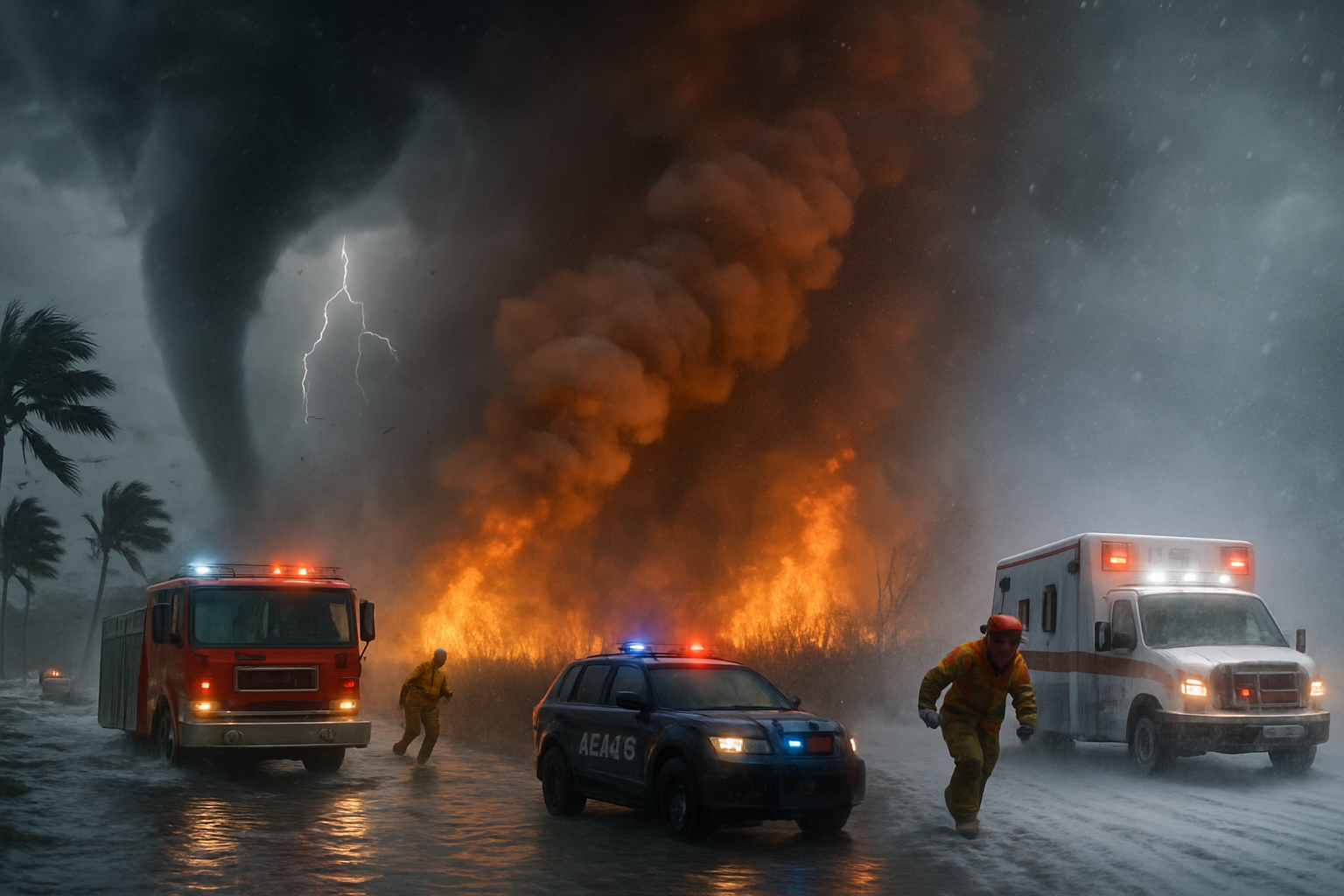
A convergence of extreme weather disasters across multiple continents is overwhelming emergency services on February 11, 2026, as simultaneous cyclones, wildfires, flooding, and severe storms affect millions of people from the Indian Ocean to the Mediterranean.
Madagascar Devastated by Cyclone Gezani
Cyclone Gezani struck Madagascar's eastern coast with devastating intensity, marking the second major tropical cyclone to hit the island in just 11 days. The intense tropical cyclone made landfall near Toamasina Tuesday evening around 19:30 local time, plunging the economic capital into what residents described as "a night of terror."
At least two people have been confirmed dead, including a three-year-old child who perished when a house collapsed under the cyclone's fury. A rickshaw driver also lost his life, according to local residents' reports. The Bureau national de gestion des risques et des catastrophes (BNGRC) has not yet released official casualty figures, with their last communication coming before the cyclone reached its peak intensity.
The timing of Gezani's impact is particularly devastating, coming just 11 days after Cyclone Fytia killed 12 people and displaced 31,000 in northwestern Madagascar. This rapid succession of powerful storms highlights the increasing frequency of extreme weather events affecting the island nation.
Australia Battles Extreme Fire Conditions
Simultaneously, Australia is facing its own emergency as extreme fire danger conditions grip multiple states. Victoria has declared a Total Fire Ban amid the driest conditions in 20 years, with over 260 firefighters battling out-of-control grassfires near Melbourne.
A rapidly expanding grassfire near Sunbury, approximately 40 kilometers northwest of Melbourne's CBD, has already burned through more than 250 hectares. The blaze escalated to emergency level after a dangerous wind change, prompting authorities to issue stark warnings to residents in affected areas.
"It is too late to leave and residents must take shelter immediately."
— VicEmergency Alert
Multiple Melbourne suburbs including Beveridge, Bolinda, Clarkefield, Darraweit Guim, Mickleham, Oaklands Junction, Sunbury, and Wildwood are under emergency warnings. The fire has been exacerbated by extreme weather conditions and prolonged drought, creating a perfect storm for rapid fire spread.
European Weather Crisis Continues
Europe remains in the grip of a multi-week weather emergency that has already claimed dozens of lives and caused billions in damages. Strong winds continue to batter Algeria's northern provinces, with meteorological services warning of continued dangerous conditions through Thursday.
In Algeria, 20 provinces are under alert for powerful winds reaching dangerous velocities. The affected areas include El Naama, El Bayadh, Tiaret, Laghouat, Biskra, Batna, Tebessa, Tizi Ouzou, Bejaia, Jijel, Skikda, Annaba, and El Tarf.
Cyprus is experiencing a complex weather pattern with scattered showers building toward more severe storms later in the week. Weather services predict rough seas and gusty winds, with temperatures reaching 19°C inland and 21°C on coastal areas. Snow and sleet are expected on Mount Troodos, while fine dust particles will linger in the atmosphere.
France faces flood warnings across 13 departments on its western facade, with authorities placing regions including Morbihan, Loire-Atlantique, Maine-et-Loire, and Vendée under orange vigilance as Storm Nils approaches.
Greece Prepares for Weather Onslaught
Greek meteorologists warn that severe weather will strike the country in three distinct waves through Sunday. The complex weather system promises to bring heavy rainfall and thunderstorms across multiple regions, testing the country's emergency response capabilities already strained by previous weather events.
Historical Context and Climate Implications
These simultaneous disasters occur against the backdrop of January 2026 being confirmed as the hottest month in recorded history—the 18th consecutive month to exceed 1.5°C above pre-industrial levels. This unprecedented warming trend is creating conditions that enable more frequent and intense extreme weather events.
The current crisis builds upon weeks of devastating weather across Europe, including the succession of Storms Kristin, Leonardo, and Marta that killed 14 people in Portugal and Spain alone. The European response has required the largest peacetime rescue operation in Portuguese history, with 26,500 personnel deployed.
Emergency Response at Breaking Point
Emergency services across multiple continents are reporting capacity strains as simultaneous disasters stretch resources thin. The traditional model of regional mutual aid becomes complicated when neighboring countries face their own emergencies.
International coordination mechanisms are being activated, including the EU Civil Protection Mechanism and various Pacific regional cooperation frameworks. However, the scope and simultaneity of current events represent an unprecedented test of global disaster response capabilities.
The economic implications are staggering, with agricultural sectors, tourism industries, and infrastructure systems facing billions in damages. Recovery timelines are expected to extend into months or years in some regions, particularly where critical infrastructure has been severely damaged.
Adaptation and Future Preparedness
The current global weather emergency is providing stark lessons about the need for enhanced climate adaptation strategies. Traditional emergency planning, based on historical weather patterns, is proving inadequate for the new climate reality where extreme events occur with greater frequency and intensity.
Countries are beginning to implement "build back better" approaches to reconstruction, incorporating climate resilience into infrastructure planning. However, the speed and scale of current changes are outpacing adaptation efforts in many regions.
The crisis also highlights the importance of early warning systems, improved building codes, and enhanced international cooperation for disaster response. As climate change accelerates, the need for coordinated global action becomes increasingly urgent.
Looking Ahead
Weather forecasters warn that the current pattern of extreme events is likely to continue throughout February, with additional storm systems developing in the Atlantic and ongoing cyclone activity expected in the Indian Ocean.
Recovery efforts in Madagascar will need to contend with potential additional tropical cyclones, while Australia faces an extended fire season due to persistent drought conditions. Europe's storm-battered infrastructure requires massive reconstruction efforts even as new weather systems approach.
The events of February 11, 2026, may well be remembered as a watershed moment when the reality of climate change became undeniably apparent through simultaneous global disasters. The international community's response to this crisis will likely shape disaster management policies and climate adaptation strategies for years to come.