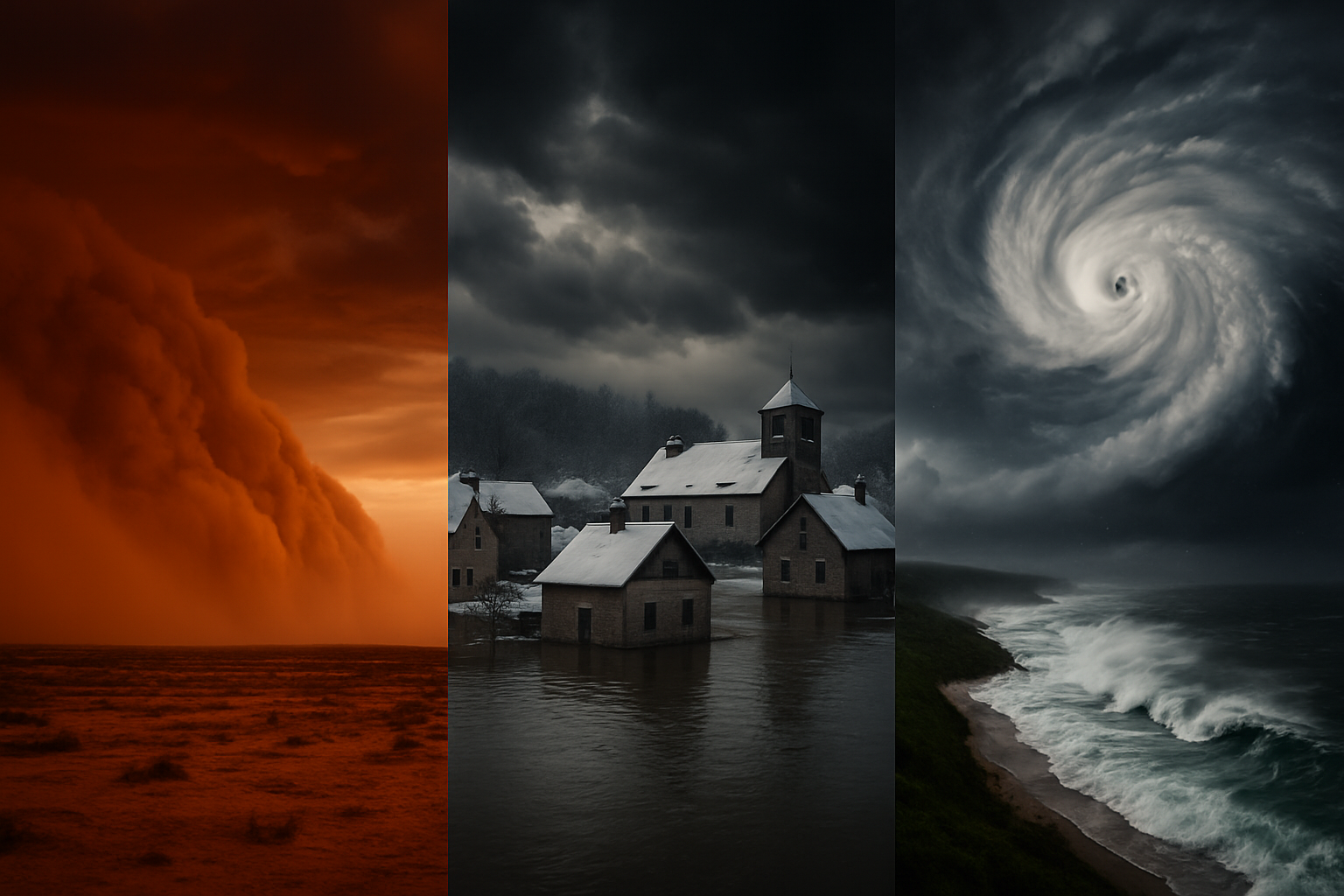
An unprecedented global extreme weather crisis is unfolding across 15 nations simultaneously, overwhelming emergency services and exposing critical gaps in disaster preparedness systems as Earth experiences its 22nd consecutive month of temperatures exceeding 1.5°C above pre-industrial levels—the longest sustained warming streak in recorded human history.
From Algeria's triple threat of thunderstorms, mountain snow, and dust storms to New Zealand's catastrophic flooding forcing mass evacuations, the convergence of extreme weather events across multiple continents represents a fundamental shift from isolated regional disasters to concurrent global emergencies that are testing the limits of international cooperation and infrastructure resilience.
Simultaneous Disasters Strain Global Response
The current crisis spans continents, with each region facing distinct yet interconnected challenges. Cyprus meteorological authorities issued rare yellow warnings for severe thunderstorms capable of producing 35-55mm of rainfall per hour, while the Troodos mountains experienced unprecedented March snowfall—conditions virtually unknown for the Mediterranean island at this time of year.
In Iceland, meteorological services issued an extraordinary 14 separate weather warnings covering the entire country for the first time in recent memory, with southeast storms generating winds of 20-28 m/s and conditions reaching 40 m/s elsewhere. Authorities warned against all travel as blizzard conditions engulfed the capital region and South Iceland.
"We are witnessing a breakdown of traditional emergency response systems designed for sequential regional disasters, not concurrent global crises,"
— Emergency Management Expert, Australian Fire Emergency Services Authority
New Zealand faces perhaps the most severe immediate threat, with MetService issuing red heavy rain warnings for Northland as residents are urged to evacuate if feeling unsafe. The deep subtropical low approaching the North Island threatens to deliver catastrophic rainfall across Northland, Auckland, Coromandel, and Bay of Plenty regions.
Infrastructure Buckling Under Unprecedented Pressure
The simultaneity of these weather events has exposed critical vulnerabilities in global infrastructure. Transportation networks designed for historical climate patterns are repeatedly failing as extreme weather exceeds operational parameters. Power grids are positioning additional crews in anticipation of widespread outages, while shipping routes implement delays and route modifications to avoid dangerous conditions.
Sweden experienced a particularly dramatic example when five people were engulfed by an avalanche at "Rubens vägg" in Riksgränsen, with three injured in what incident commander Erik Lidström described as "quite chaotic" conditions. The avalanche emergency highlights how traditional seasonal patterns can no longer be relied upon for safety planning.
Agricultural sectors are mounting massive losses as extreme weather destroys crops and disrupts supply chains during critical growing seasons. Tourism industries face extended cancellations and infrastructure damage during what should be peak revenue periods, while families risk losing generational homes to floods and storms.
Climate Science Confirms Unprecedented Warming
The current crisis unfolds against the backdrop of the 22nd consecutive month of global temperatures exceeding the critical 1.5°C threshold above pre-industrial levels. January 2026 remains the hottest month ever recorded, demonstrating how human-induced climate change is now fundamentally overriding natural cooling mechanisms, including La Niña effects.
The World Meteorological Organization indicates a 50-60% probability of El Niño development during July-September 2026, which could potentially drive unprecedented temperatures by combining baseline warming with natural cycle amplification. This creates what scientists term the "climate volatility paradox"—sustained global warming that enables both heat records and devastating regional extremes through disrupted atmospheric circulation and polar vortex patterns.
The crisis builds upon the devastating February 2026 Atlantic storm succession of Kristin-Leonardo-Marta-Nils-Pedro, which claimed 35+ lives across Portugal, Spain, and France, requiring 26,500 emergency personnel in Portugal's largest peacetime operation. The European Union activated its Civil Protection Mechanism, with Sweden and Denmark providing €246 million in assistance—the largest coordinated European weather response on record.
Economic and Social Devastation Mounts
The economic toll continues to escalate, with agricultural operations facing billions in losses as extreme weather destroys crops and disrupts supply chains during critical growing seasons. The psychological impact is equally severe, with mental health services reporting increased demand for support related to climate anxiety and repeated trauma.
Recovery timelines have fundamentally shifted from weeks to months or even years, representing a fundamental change in disaster response approaches. The concept of "building back better" with climate-resilient infrastructure has evolved from an optional enhancement to an essential survival strategy for communities facing repeated extreme weather events.
Traditional seasonal patterns that have guided infrastructure design, agricultural planning, and emergency preparedness for centuries are no longer reliable frameworks. Current conditions provide a preview of what may become routine in the 2030s without significant climate adaptation investment.
International Cooperation at Breaking Point
Environmental challenges transcend national boundaries, as atmospheric systems and ocean currents transport climate effects globally regardless of borders. The simultaneity of disasters is testing international cooperation mechanisms that were developed assuming stable regions could assist others during isolated emergencies.
Traditional mutual aid mechanisms are proving inadequate when multiple continents face disasters simultaneously, preventing the regional compensation that has historically helped manage localized extreme weather events. Emergency services are operating at or beyond capacity limits globally, requiring fundamental restructuring for what experts term the "permanent climate volatility era."
Success now requires unprecedented international cooperation, enhanced multi-sector coordination, and financial commitments that recognize environmental protection as essential infrastructure rather than an optional consideration.
The March 2026 Watershed Moment
Climate scientists and emergency management experts identify March 2026 as a potential watershed moment in global climate preparedness—a critical juncture that forces a choice between reactive crisis management and transformative infrastructure adaptation.
The window for effective climate action is narrowing as ecological systems approach critical thresholds that could trigger irreversible changes affecting global food security, climate stability, and human settlements. Additional weather systems are developing in the Atlantic and Pacific regions, with authorities maintaining high alert status globally.
The current crisis may establish a "new normal" characterized by extreme weather frequency and intensity that permanently challenges traditional emergency response frameworks. The convergence of extreme weather, infrastructure vulnerabilities, and emergency response limitations underscores the urgent need for coordinated international action.
"The question is no longer whether transformative action is needed, but whether humanity can organize and implement solutions rapidly enough to maintain planetary habitability during Earth's most environmentally challenging period in recorded history,"
— Climate Research Scientist, World Meteorological Organization
Tools, knowledge, and cooperation frameworks exist for comprehensive environmental protection, but success depends on unprecedented speed and coordination through sustained international cooperation, political commitment, and recognition that environmental protection is essential infrastructure for human prosperity and planetary sustainability.
As rescue operations continue across multiple continents and authorities prepare for additional weather systems, the March 2026 crisis serves as both a preview of future conditions and a critical test of humanity's capacity to respond to unprecedented environmental change during what many consider the decisive climate action decade.