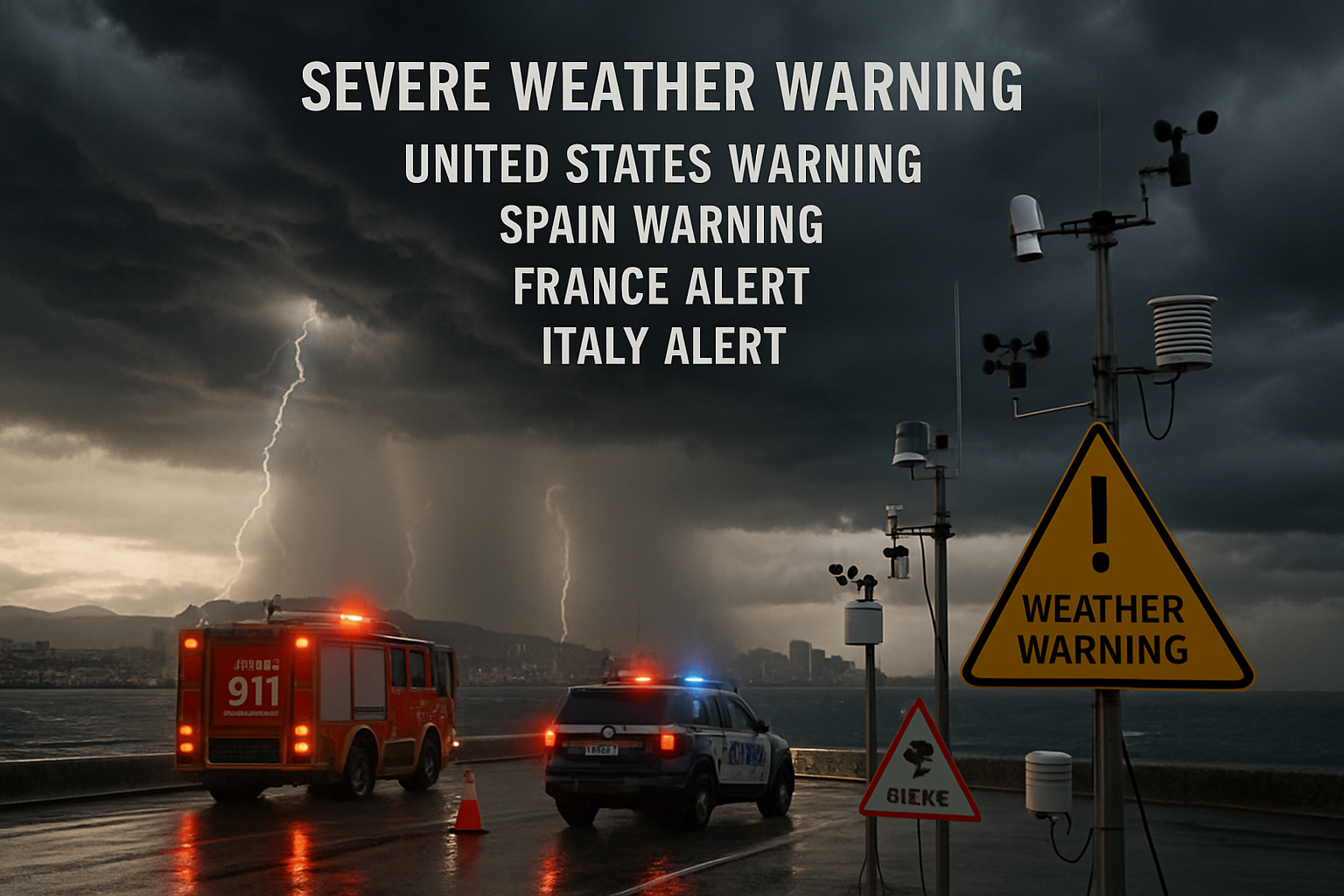
An unprecedented global weather emergency is unfolding across five nations as Algeria battles dangerous wind storms, Cyprus confronts severe weather warnings, Guyana implements nationwide flood response, and New Zealand faces heavy rainfall threats—all occurring during the 22nd consecutive month of global temperatures exceeding 1.5°C above pre-industrial levels, marking the longest sustained extreme warming period in recorded human history.
The simultaneous extreme weather events across multiple continents represent a critical test of international disaster response capabilities, as traditional mutual aid mechanisms designed for sequential regional emergencies prove inadequate when multiple nations face concurrent crises.
Algeria Under Triple Weather Threat
Algeria's meteorological services have issued urgent warnings for powerful atmospheric disturbance affecting 16 provinces, with dangerous winds exceeding 100 km/h striking coastal areas and northern Sahara regions. The National Meteorological Office reports thunderstorms with hail exceeding 50mm across multiple provinces including Blida, Boumerdès, Tizi Ouzou, and Béjaïa, accompanied by mountain snowfall above 1,100 meters in western and central highlands.
"The system threatens widespread infrastructure damage across northern Algeria, northern Sahara, oases, and southwestern areas with unprecedented March intensity."
— Algeria National Meteorological Office
Civil protection teams have rescued 11 people trapped by flooding in Béchar and Béni Abbès provinces, as dangerous dust storms create respiratory hazards across affected regions. The combination of extreme rainfall, mountain snow, and hurricane-force winds represents an unusual triple threat that challenges traditional emergency response protocols.
Cyprus Faces Mediterranean Weather Anomaly
The Cyprus Meteorological Department has issued yellow warnings for severe thunderstorms, hail, and winds reaching 35-55mm per hour rainfall intensity. Rare snow and sleet conditions affecting the Troodos mountains create hazardous driving conditions unprecedented for Mediterranean March weather patterns.
Temperatures range dramatically from 17°C at coastal areas to 3°C at mountain peaks, with force 5-6 winds affecting southern coasts. The unusual weather represents a significant departure from typical Mediterranean climate conditions, demonstrating the "climate volatility paradox" where sustained global warming enables extreme regional weather variations.
Guyana Mobilizes Nationwide Flood Response
The Guyanese government has activated a comprehensive nationwide flood response as persistent heavy rainfall continues to impact communities across multiple regions. Ministers have been deployed across regions to assess conditions, engage residents, and ensure critical drainage and emergency systems remain operational.
Georgetown City Hall faces criticism for poor management of pumps and sluices as sections of the capital experience flooding. The Mayor and City Council cite staff shortages as the reason for failure to open key sluices during critical flooding periods, highlighting infrastructure vulnerabilities that compound natural weather challenges.
Emergency response teams report widespread impacts affecting transportation networks, with 90 families in temporary shelters and significant infrastructure damage documented across affected regions.
New Zealand Braces for Heavy Rainfall
MetService has issued heavy rain watches for Auckland, Waikato, Taupō, and Taumarunui regions, while a local warning affects storm-hit and saturated parts of Northland. The warnings come as complex weather systems converge from the north, potentially bringing dangerous flooding conditions to areas still recovering from previous weather events.
The weather service warns of "impactful weather events" as strong winds and heavy rainfall threaten infrastructure already stressed by previous extreme weather episodes. Emergency services remain on high alert as the subtropical weather system tracks southward across the North Island.
Infrastructure Crisis Exposes Global Vulnerabilities
The simultaneous disasters reveal critical weaknesses in global disaster preparedness systems designed for sequential rather than concurrent multi-continental emergencies. Traditional mutual aid mechanisms prove inadequate when multiple regions face simultaneous disasters, preventing the regional compensation historically used to manage localized emergencies.
Emergency services across all affected nations report operating at or beyond capacity limits. Transportation networks, power grids, and communication systems designed for historical climate patterns repeatedly fail as extreme weather exceeds operational parameters established for previous weather patterns.
"Emergency services are experiencing cascading failures as conditions exceed the operational thresholds our infrastructure was designed to handle."
— Emergency Management Expert
Economic and Social Devastation Mounting
The economic implications extend far beyond immediate emergency response costs. Agricultural sectors face mounting losses as extreme weather destroys crops and disrupts supply chains during critical growing seasons. Tourism industries experience extended cancellations and infrastructure damage during what should be peak revenue periods.
Families across affected regions face the prospect of losing generational homes, while businesses confront extinction threats from repeated disruptions. Mental health services report increased demand as communities struggle with climate anxiety and repeated trauma from extreme weather events.
Climate Context: Unprecedented Warming Streak
The current crisis occurs during the 22nd consecutive month of global temperatures exceeding the critical 1.5°C threshold above pre-industrial levels. January 2026 remains the hottest month ever recorded, with human-induced climate change fundamentally overriding natural cooling mechanisms, including La Niña effects.
The World Meteorological Organization indicates a 50-60% probability of El Niño development during July-September 2026, potentially driving unprecedented temperatures through a combination of baseline warming and natural cycle amplification.
The Climate Volatility Paradox
Scientists describe the current situation as a "climate volatility paradox" where sustained global warming enables both heat records and devastating regional extremes through disrupted atmospheric circulation and polar vortex patterns. This phenomenon allows for simultaneous extreme weather events across diverse geographic regions, challenging traditional emergency response frameworks.
International Cooperation Under Strain
The simultaneity of disasters across multiple continents tests international cooperation frameworks designed for sequential regional emergencies. Environmental challenges transcend boundaries as atmospheric systems and ocean currents transport climate effects globally, making unilateral adaptation efforts insufficient for comprehensive resilience.
Previous crisis responses, including the EU Civil Protection activation with €246 million in Sweden-Denmark assistance—the largest coordinated European weather response on record—prove insufficient for the scale and simultaneity of current challenges.
Emergency Response Evolution Required
Emergency management experts emphasize that response strategies require fundamental restructuring for a "permanent climate volatility era." Traditional frameworks that assume stable regions can assist others during isolated emergencies break down when multiple continents face simultaneous disasters.
The crisis demonstrates the urgent need for enhanced international cooperation frameworks, shared technical expertise, and coordinated resource deployment when traditional support mechanisms become unavailable.
Adaptation Imperatives: A Watershed Moment
March 2026 represents a potential watershed moment for global climate preparedness, forcing a choice between reactive crisis management and transformative infrastructure adaptation. "Building back better" with climate-resilient infrastructure has evolved from an optional enhancement to an essential survival strategy.
Traditional seasonal patterns that provided guidance for infrastructure design, agricultural planning, and emergency preparedness for centuries no longer offer reliable frameworks for current conditions. Infrastructure systems require fundamental reassessment for a "new normal" of extreme weather volatility.
"Current conditions provide a preview of routine 2030s circumstances without comprehensive climate adaptation investment."
— Climate Adaptation Specialist
Technology-Tradition Integration Success
Successful emergency responses increasingly demonstrate sophisticated synthesis of cutting-edge technology with traditional ecological knowledge and community-based management. Hybrid approaches provide resilience through multiple pathways for addressing complex, interconnected challenges.
Examples include advanced meteorological forecasting combined with Indigenous weather knowledge, modern climate monitoring integrated with traditional agricultural wisdom, and satellite imagery enhanced by local community expertise in disaster response operations.
Strategic Significance for Global Climate Action
The convergence of extreme weather events, infrastructure vulnerabilities, and emergency response limitations underscores the urgent need for coordinated international action. The window for effective climate action continues to narrow as ecological systems approach critical thresholds that could trigger irreversible changes to global food security, climate stability, and human settlements.
Tools, knowledge, and cooperation frameworks exist for comprehensive environmental protection, but success depends on unprecedented speed and coordination through sustained international cooperation and political commitment to environmental protection as essential infrastructure for human prosperity and planetary sustainability.
Future Trajectory Critical
Additional weather systems are developing across Atlantic and Pacific regions, with authorities maintaining high alert status globally. The persistence of crisis conditions may establish a "new normal" characterized by extreme weather frequency and intensity that permanently challenges traditional emergency response frameworks.
The fundamental question facing humanity is whether we can organize and implement solutions rapidly enough to maintain planetary habitability during what experts describe as Earth's most environmentally challenging period in recorded history.
Immediate Response and Recovery Challenges
Recovery timelines have fundamentally shifted from traditional expectations of weeks to months or years, representing a fundamental change in disaster response approaches. The frequency and intensity of extreme weather events provide insufficient time for complete recovery between successive impacts.
Emergency services note the shift from isolated regional disasters to multiple simultaneous incidents requiring different specialties, fundamentally straining response capabilities designed for historical weather patterns.
The current crisis tests humanity's capacity to respond to unprecedented environmental change during what climate scientists call a decisive decade for climate action. Success requires unprecedented coordination between government agencies, infrastructure providers, and communities building resilience for an uncertain climate future.