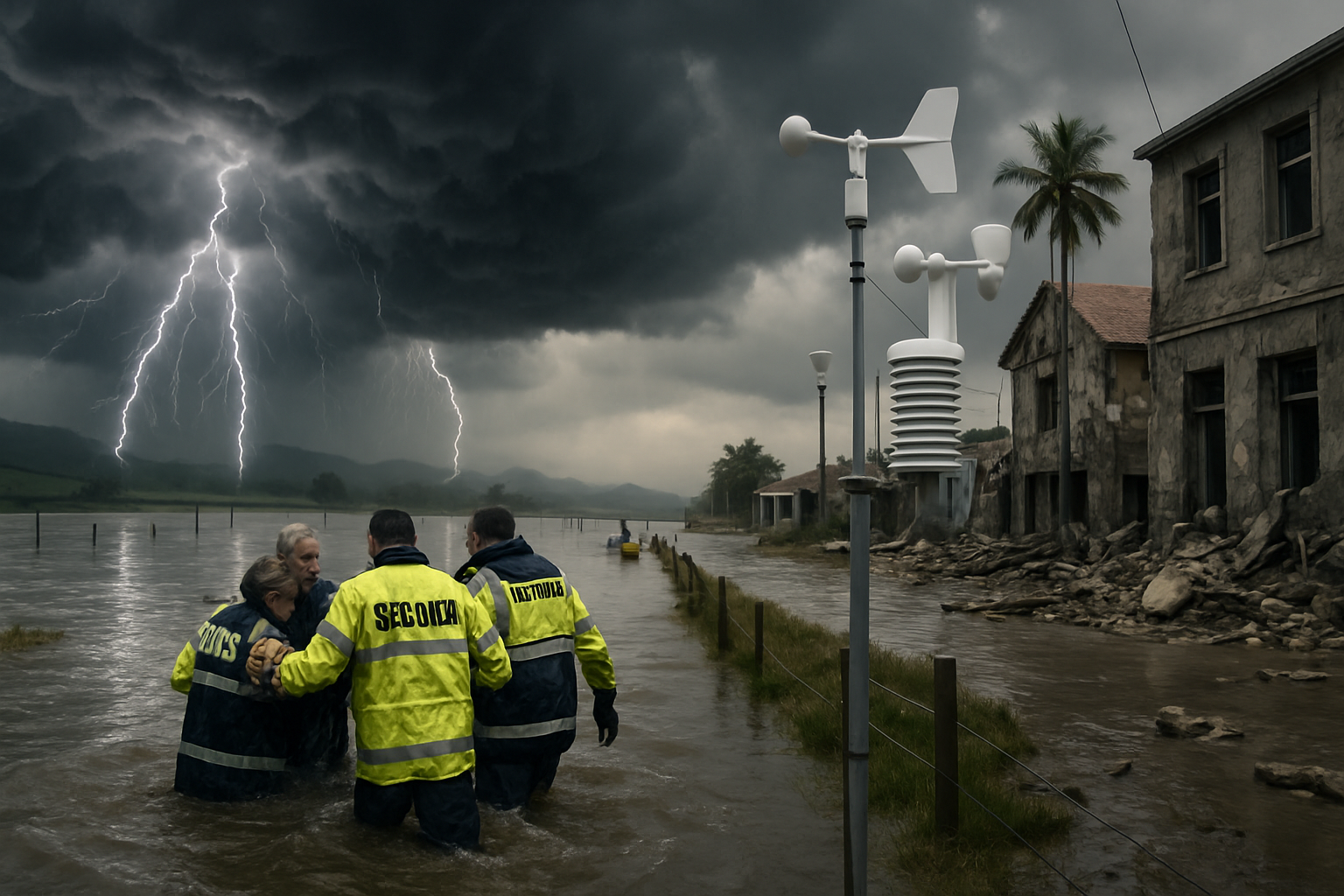
Emergency services across multiple continents are struggling to cope with an unprecedented convergence of severe weather disasters, as New Zealand declares states of emergency for flooding, France braces for Storm Nils, and a magnitude 6.3-6.5 earthquake rocks Vanuatu in what experts are calling one of the most challenging global weather crises in recent memory.
The simultaneous disasters, occurring across three separate regions, have prompted international emergency coordination efforts and highlighted the increasing frequency of extreme weather events as global climate patterns continue to intensify.
New Zealand's Flooding Emergency
The hardest-hit region is New Zealand's North Island, where the Ōtorohanga District declared a week-long state of emergency after being battered by severe thunderstorms and flooding overnight. Local residents awoke to scenes of devastation, with some areas experiencing waist-deep water that forced dramatic evacuations.
Colin Payne, a local resident, described being rescued from three-meter-high floodwaters after losing everything in his home except his medication. "I'm totally and utterly devastated watching appliances float in my house," he told emergency responders during his rescue.
The flooding has claimed at least one life, with a man dying after his car became submerged on State Highway 39. The tragedy underscores the deadly nature of what farmer Murray Orr described as unprecedented conditions. "I've never seen rain like yesterday's deluge, and I've been here 70 years," said Orr, who has been helping motorists navigate floodwaters on Te Kawa Road.
Cultural institutions have not been spared, with the Ōtorohanga Museum suffering damage to its precious taonga (cultural treasures) collection. The loss represents not just material damage but a significant blow to New Zealand's cultural heritage preservation efforts.
Storm Nils Threatens Western Europe
Meanwhile, across the Pacific, western France is preparing for what meteorologists are calling the fourth consecutive major Atlantic storm in February 2026. Storm Nils is approaching with violent winds expected to exceed 100 km/h and significant flood risks for already saturated regions.
French authorities have issued red alerts for Gironde and Lot-et-Garonne departments for potential flooding, while violent wind warnings remain in effect for Aude and Pyrénées-Orientales. The storm represents a continuation of devastating weather that has already tested European emergency systems to their limits throughout February.
Lucie Chadourne-Facon, director of Vigicrues, France's flood monitoring service, warned that the incoming weather systems would "re-fuel the floods. We are absolutely not in a logic of returning to normal in the coming days." The statement reflects growing concerns about the compounding nature of the current weather crisis.
The storm follows a succession of Atlantic weather systems - Kristin, Leonardo, and Marta - that have killed more than 14 people across Portugal and Spain since early February, requiring the deployment of 26,500 rescue personnel in what Portugal described as its largest peacetime rescue operation in history.
Vanuatu Earthquake Adds to Pacific Concerns
Adding to the regional crisis, a significant earthquake with magnitude between 6.3 and 6.5 has struck off the coast of northern Vanuatu in the Pacific Ocean. While no immediate tsunami warnings were issued, the seismic event has raised additional concerns for Pacific island communities already dealing with extreme weather patterns.
The earthquake's timing, coinciding with severe weather across multiple continents, highlights the complex nature of current global environmental stresses affecting vulnerable Pacific island nations.
Wellington's Ongoing Environmental Crisis
New Zealand's capital continues to grapple with environmental challenges beyond the flooding emergency. Wellington's south coast remains under official advisory to avoid contact with seawater for two days following rainfall, due to concerns about wastewater system impacts and water contamination.
Strong wind and heavy swell warnings have been issued for the Wellington region, adding to the challenges facing emergency services already stretched thin by the flooding emergency in other parts of the country.
Global Climate Context
The current crisis occurs against a backdrop of unprecedented global climate patterns. January 2026 was confirmed as the hottest month in recorded history, marking the 18th consecutive month to exceed 1.5°C above pre-industrial levels. This warming trend has been overriding natural cooling patterns, including La Niña conditions, demonstrating the accelerating impact of climate change on global weather systems.
Climate scientists have repeatedly warned that the frequency and intensity of extreme weather events are expected to increase as global temperatures continue to rise. The simultaneous nature of the current disasters - spanning from the Pacific to Europe - represents a stark illustration of how climate change is creating cascading global impacts.
Emergency Response and International Cooperation
The scale of the current crisis has prompted unprecedented levels of international emergency cooperation. The European Union's Civil Protection Mechanism has been activated, with Sweden and Denmark providing a €246 million assistance package to affected regions.
Emergency services across all affected regions report operating at or near capacity limits, with traditional regional aid mechanisms strained by the simultaneous nature of the disasters. This has forced authorities to develop new approaches to resource sharing and emergency coordination.
In New Zealand, the Defence Force remains on standby to provide additional support as recovery operations continue. The country's emergency management systems, which have been tested repeatedly by natural disasters in recent years, are once again demonstrating both their capabilities and their limitations.
Infrastructure and Economic Impact
The economic implications of the current weather emergency are expected to be substantial. In Europe, preliminary assessments suggest billions of euros in damage to agriculture, tourism, and infrastructure sectors. Spanish reservoirs have surged to 67.3% capacity with 31 at 100%, while transportation networks across multiple countries face ongoing disruptions.
New Zealand's agricultural sector, already impacted by previous extreme weather events, faces additional challenges from the latest flooding. The country's economy, heavily dependent on agricultural exports and tourism, is particularly vulnerable to extended periods of severe weather.
Recovery timelines across all affected regions are expected to extend from months to years, representing a significant shift from previous weather emergencies that typically required only weeks for initial recovery efforts.
Looking Forward: Adaptation and Resilience
The current crisis has reinforced calls for enhanced climate adaptation strategies and infrastructure resilience measures. Experts emphasize that the simultaneous nature of the current disasters represents a preview of conditions that may become routine by the 2030s without significant climate action.
The events have also highlighted the need for improved international coordination mechanisms specifically designed for multi-regional climate emergencies. Traditional disaster response systems, designed for localized events, are proving insufficient for the scale and complexity of current global weather patterns.
As communities across New Zealand, France, and the broader Pacific region continue recovery efforts, the focus is increasingly shifting toward "building back better" with climate-resilient infrastructure designed for the realities of an increasingly volatile climate system.
The ongoing crisis serves as a stark reminder that climate change impacts are no longer confined to gradual, long-term changes but are manifesting as acute, simultaneous emergencies that challenge the fundamental assumptions underlying current emergency management systems worldwide.