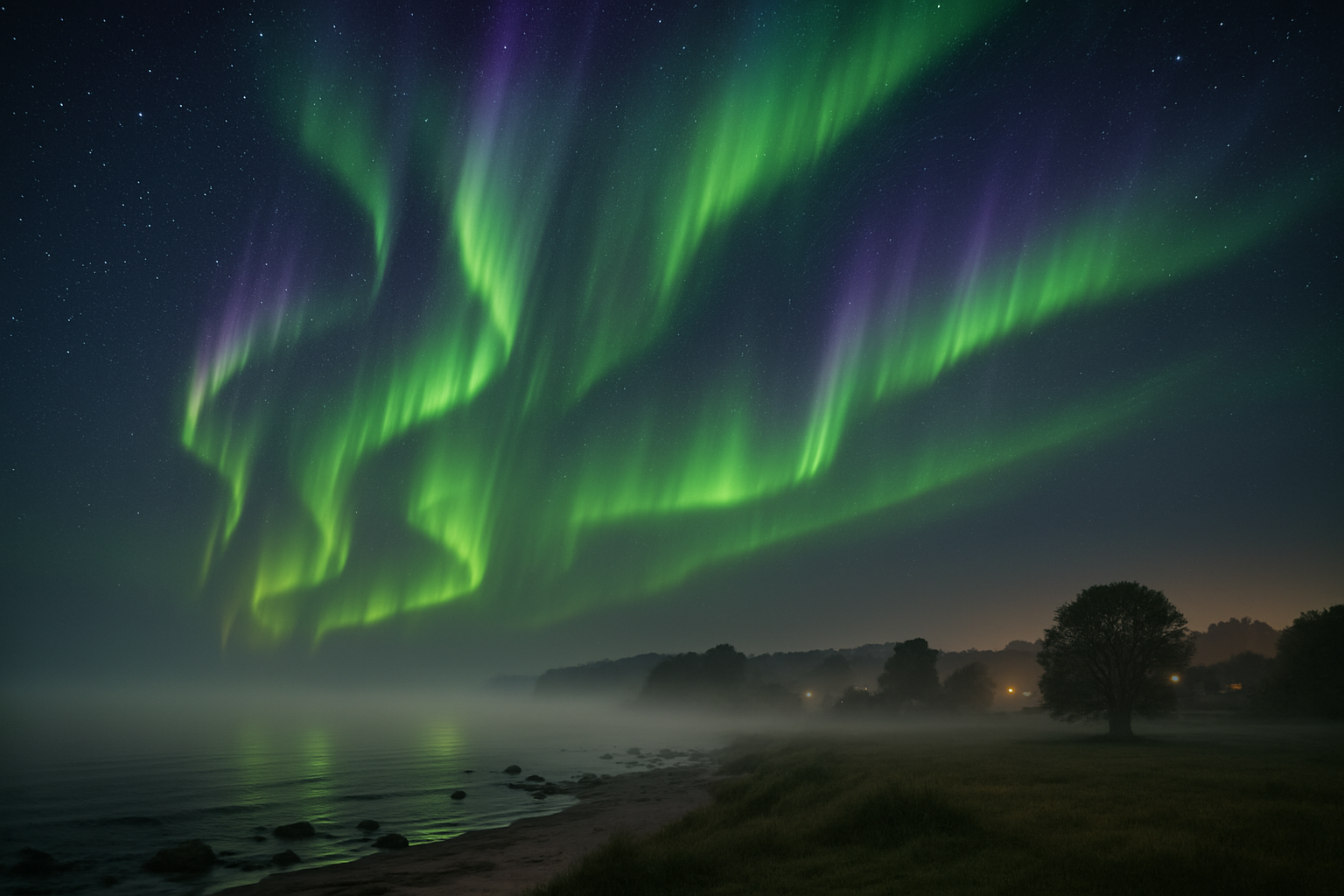
A powerful magnetic storm with K-index 5 activity struck Earth as spectacular aurora phenomena lit up skies across New Zealand, while dense fog created hazardous conditions along Latvia's coastline and Storm Dave battered Ireland with hurricane-force winds.
The convergence of these diverse atmospheric phenomena during early April 2026 demonstrates the complex interplay of space weather, terrestrial conditions, and ongoing climate volatility affecting regions worldwide. From the Baltic Sea to the Southern Hemisphere, these events highlight both the beauty and danger of our planet's dynamic atmospheric systems.
Magnetic Storm Impacts and Health Warnings
Bulgarian meteorological experts have issued comprehensive warnings as a powerful magnetic storm reached "red level" activity with a K-index rating of 5. The geomagnetic disturbance is expected to persist for several days before gradually weakening by the end of the week.
"During magnetic storms, people may experience headaches, fatigue, or drops in blood pressure. We recommend more rest, avoiding stress, drinking sufficient water, and not overloading the body."
— Bulgarian Weather Service Advisory
The magnetic storm represents a significant space weather event that can affect not only human health but also technological systems including GPS navigation, satellite communications, and power grid stability. Health officials recommend vulnerable populations, particularly those with cardiovascular conditions, take extra precautions during the heightened magnetic activity period.
Aurora Australis Spectacular Display
In stark contrast to the concerning health implications of magnetic storms, New Zealand residents were treated to an extraordinary natural light show as the Aurora Australis painted the sky in brilliant purple hues over Wānaka. The southern lights phenomenon provided one of the most spectacular displays in recent years.
The aurora activity coincides with enhanced solar wind conditions and optimal magnetic field alignment, creating particularly intense displays visible far beyond their usual polar boundaries. Modern smartphone technology and improved space weather forecasting have enabled widespread documentation of these celestial events, making them accessible to millions of observers.
This aurora display represents part of what scientists describe as a "golden age of astronomical observation," following extraordinary 2026 cosmic phenomena including February's rare six-planet alignment and March's total lunar eclipse.
Dense Fog Creates Maritime Hazards
Meanwhile, the Latvia Environment, Geology and Meteorology Center issued critical warnings as dense fog developed along the country's coastal regions Thursday evening. Visibility dropped dramatically to just 200-500 meters, creating extremely hazardous conditions for both maritime and ground transportation.
The fog formation, expected to persist until Friday morning, demonstrates the ongoing atmospheric instability affecting the Baltic region. These conditions pose significant risks to shipping, aviation, and ground transportation networks already strained by months of extreme weather events.
The Latvian meteorological service emphasized that such dense fog events have become increasingly frequent and intense, reflecting broader patterns of atmospheric volatility affecting Northern Europe throughout 2026.
Storm Dave Threatens British Isles
Compounding the regional weather challenges, Storm Dave approaches the British Isles as the fourth named storm of 2026, bringing potentially devastating winds up to 90 mph across Scotland, Northern Ireland, Wales, and northern England. Irish authorities have issued status yellow wind warnings for all counties ahead of the Easter weekend.
The storm represents part of an ongoing pattern of Atlantic weather systems that have repeatedly battered Western Europe throughout 2026. Met Éireann forecasters warn of potential fallen trees, wave overtopping along coastlines, and extremely difficult travel conditions across affected regions.
Emergency services across the British Isles have positioned additional resources in anticipation of widespread disruptions, building on lessons learned from previous storms that have tested the limits of traditional emergency response capabilities.
Climate Context and System Strain
These simultaneous weather phenomena occur during what scientists confirm as the 23rd consecutive month of global temperatures exceeding 1.5°C above pre-industrial levels—the longest sustained extreme warming period in recorded human history. This ongoing climate volatility creates the atmospheric conditions enabling such diverse and intense weather events.
The convergence of space weather effects, terrestrial storm systems, and local atmospheric phenomena demonstrates what researchers call the "climate volatility paradox"—where sustained global warming enables both temperature records and devastating regional extremes through disrupted atmospheric circulation patterns.
Emergency Response and Infrastructure Challenges
Traditional emergency response systems designed for sequential, regional disasters continue to strain under the pressure of simultaneous, multi-type weather events. From health advisories for magnetic storm effects to maritime safety warnings for dense fog and wind damage preparations for Storm Dave, authorities across multiple countries must coordinate responses to entirely different types of atmospheric threats.
Transportation networks, power grids, and communication systems face unprecedented challenges as they encounter conditions repeatedly exceeding their design parameters. The diversity of simultaneous threats—from space weather affecting satellites to terrestrial storms disrupting ground transportation—highlights the need for more resilient, adaptive infrastructure systems.
Scientific Monitoring and Public Safety
Advanced space weather monitoring systems, including NASA's DAGGER AI technology, now provide 30-minute geomagnetic storm predictions with unprecedented accuracy, transforming public safety capabilities. However, the challenge lies in coordinating responses to multiple, simultaneous atmospheric threats affecting different sectors and regions.
Modern forecasting systems demonstrate remarkable capabilities in predicting individual phenomena—from aurora visibility to fog formation patterns—but the increasing frequency of concurrent events tests the limits of traditional emergency management frameworks.
Looking Forward: Adaptation Imperatives
The April 2026 convergence of magnetic storms, dense fog, aurora displays, and Atlantic storms represents more than isolated weather events—it exemplifies the new reality of atmospheric volatility that communities worldwide must adapt to survive and thrive.
As these phenomena continue to develop across multiple continents, they underscore the urgent need for enhanced international cooperation in weather monitoring, improved emergency response coordination, and infrastructure systems designed for permanent climate volatility rather than historical weather patterns.
The window for effective climate adaptation continues to narrow as ecological and atmospheric systems approach critical thresholds. Success in managing these challenges will determine humanity's ability to maintain safety and prosperity during Earth's most environmentally challenging period in recorded history.