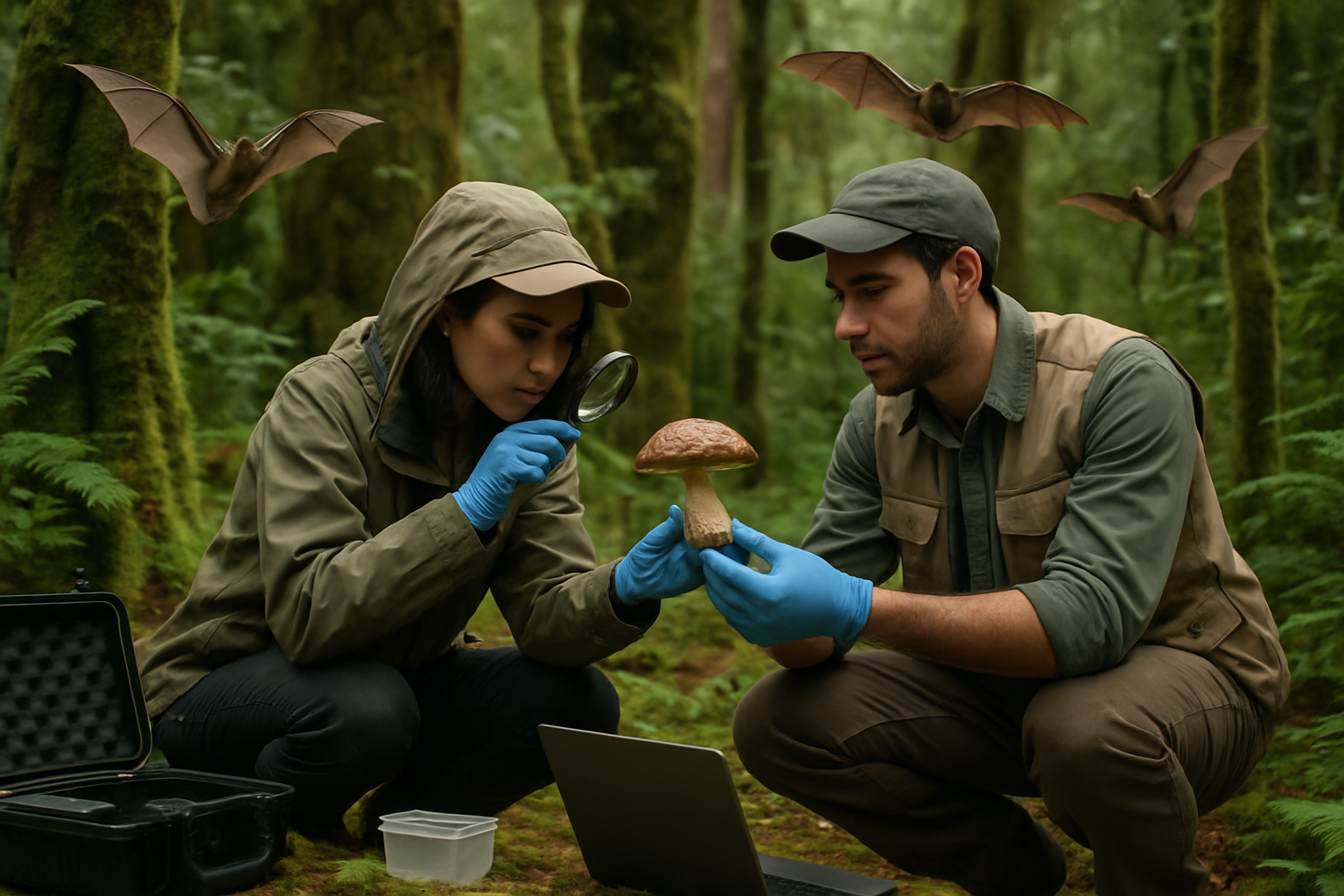
European wildlife conservation efforts are achieving significant breakthroughs with groundbreaking species discoveries in Croatia and innovative citizen-science monitoring programs in Estonia, demonstrating the continent's commitment to biodiversity protection and scientific advancement.
Croatia's renowned Krka National Park has once again proven its exceptional natural value following the discovery of eleven previously unknown fungi species, while Estonia launches pioneering bat conservation initiatives that engage private property owners in national wildlife monitoring efforts.
Krka National Park: A Biodiversity Hotspot Reveals Hidden Treasures
Scientists working in Croatia's Krka National Park have identified eleven fungi species new to the country's documented biodiversity, reinforcing the protected area's status as one of Europe's most significant natural laboratories. The discovery, which includes species like Inocybe griseolilacina, highlights the ongoing potential for scientific breakthroughs within well-established conservation zones.
The findings underscore the critical importance of maintaining protected natural areas, as these environments continue to yield previously unknown species decades after their initial designation. Krka National Park, established in 1985, encompasses 109 square kilometers of the Krka River's most valuable natural and cultural features, including its famous waterfalls and diverse ecosystems.
This discovery adds to Croatia's growing catalog of documented species and demonstrates how systematic scientific research within protected areas continues to reveal the true extent of European biodiversity. The fungi discoveries are particularly significant as these organisms play crucial roles in forest ecosystem health and nutrient cycling.
Estonia's Innovative Approach to Bat Conservation
Meanwhile, in Estonia, wildlife researchers are pioneering a new approach to bat conservation by acknowledging gaps in traditional monitoring systems. Current national bat surveys focus primarily on public buildings and known hibernation sites, but researchers recognize that many bats spend winter months in private cellars and basements across the country.
This oversight in monitoring coverage has prompted scientists to develop citizen-science initiatives that engage private property owners as active participants in wildlife conservation. By involving residents who have access to spaces where bats hibernate, researchers aim to create a more comprehensive picture of Estonia's wintering bat populations.
The initiative represents a significant shift in conservation methodology, recognizing that effective wildlife protection requires collaboration between professional researchers and local communities. Bats play essential roles in ecosystem health as natural pest controllers, making their population monitoring crucial for broader environmental management.
"Understanding how our bat populations are truly faring requires looking beyond traditional monitoring locations. Private properties often provide critical hibernation sites that we've been unable to assess through conventional surveys."
— Estonian Wildlife Researcher
Building on Recent Conservation Successes
These developments build upon a growing momentum in European wildlife conservation efforts. Recent initiatives across the continent have demonstrated increasingly sophisticated approaches to species protection, from Finland's advanced winter animal care programs at Korkeasaari Zoo to Namibia's wetland conservation efforts highlighted during World Wetlands Day celebrations.
The Croatian and Estonian projects exemplify how modern conservation science combines traditional field research with innovative community engagement strategies. This dual approach maximizes both scientific rigor and practical conservation outcomes while building stronger connections between researchers and local communities.
Implications for Future Conservation Strategies
The success of these varied initiatives suggests that effective wildlife conservation in the 21st century requires adaptable, location-specific strategies rather than one-size-fits-all approaches. Croatia's species discovery work demonstrates the continued value of systematic biodiversity documentation, while Estonia's citizen-science bat monitoring shows how expanding research networks can fill critical knowledge gaps.
These programs also highlight the importance of long-term investment in protected areas and research infrastructure. Krka National Park's continued yield of new species discoveries validates decades of conservation investment, while Estonia's innovative monitoring approach shows how creative thinking can enhance existing conservation frameworks.
Looking Forward: Expanding Conservation Horizons
As climate change and habitat loss continue to threaten global biodiversity, the European examples of Croatia and Estonia provide valuable models for conservation efforts worldwide. The integration of rigorous scientific research with community engagement creates sustainable approaches that can adapt to changing environmental conditions while maintaining strong local support.
Both initiatives demonstrate how modern conservation success depends on recognizing previously overlooked resources – whether hidden species in established parks or untapped citizen-science opportunities in private spaces. This expanded vision for conservation research and community engagement may prove essential for protecting biodiversity in an increasingly complex environmental landscape.
The discoveries in Croatia and monitoring innovations in Estonia represent more than isolated conservation successes; they exemplify the evolving face of European wildlife protection, where scientific excellence meets community collaboration to achieve lasting conservation outcomes.