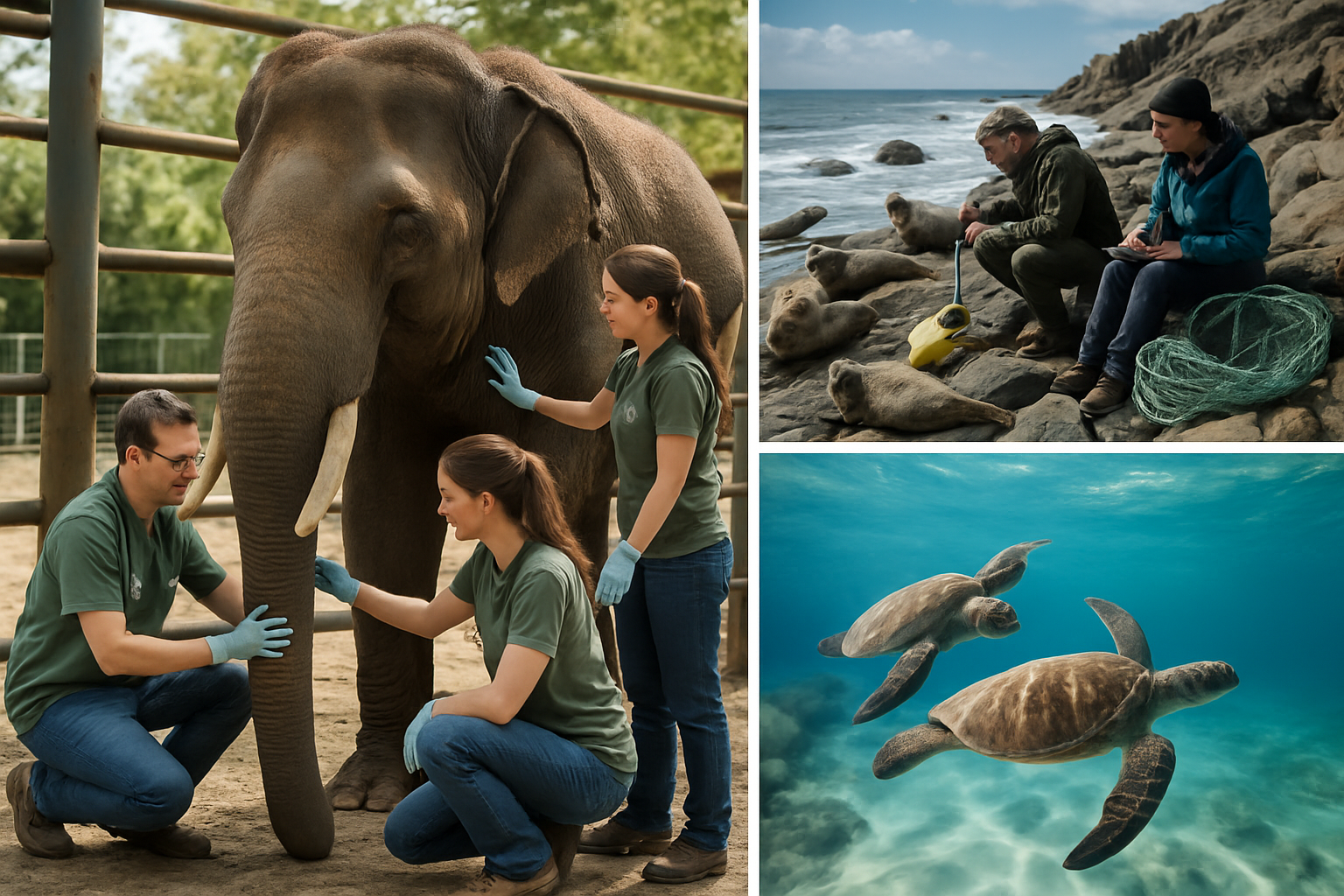
A tragic elephant death in India following an artistic photography session has sparked international outrage over wildlife welfare, while conservation teams across multiple continents grapple with unprecedented challenges as environmental pressures intensify during what scientists confirm as the 21st consecutive month of global temperatures exceeding 1.5°C above pre-industrial levels.
The convergence of wildlife crises across five continents reveals the complex intersection of human activity, artistic expression, and conservation efforts during Earth's most challenging environmental period in recorded history. From the Baltic Sea to the Pacific islands, conservationists are employing increasingly sophisticated techniques to protect species facing mounting pressures from climate change, human encroachment, and direct intervention.
Indian Elephant Death Sparks International Investigation
Indian authorities have launched a comprehensive investigation following the death of Chanchal, a 65-year-old female elephant, six months after she was painted bright pink by Russian conceptual photographer Julia Buruleva for an art installation in Jaipur, Rajasthan. The elephant's death has ignited fierce debate about the ethics of using wildlife in artistic expression and the long-term health impacts of such interventions.
Animal rights activists have condemned Buruleva's use of the elephant as a living canvas, despite the artist's claims that the paint was "ecological" and safe for animal use. The incident has prompted broader discussions about wildlife welfare in entertainment and artistic contexts, with conservationists arguing that even supposedly harmless interventions can cause significant stress and health complications for wild animals.
"This represents a fundamental misunderstanding of wildlife welfare and the stress that such unnatural interventions place on these magnificent creatures,"
— International Wildlife Protection Coalition
Marine Conservation Breakthroughs in Northern Europe
In stark contrast to the Indian tragedy, Baltic Sea regions have witnessed remarkable success in marine mammal rescue operations. Finnish authorities successfully rescued and rehabilitated multiple seal pups that had become stranded on coastal areas near Kokkola and Helsinki. The operations demonstrate the sophisticated marine conservation infrastructure that has developed across Nordic countries.
Dr. Elena Virtanen, a marine veterinarian involved in the rescue operations, emphasized that healthy, plump seal pups can safely rest on beaches without intervention, but malnourished individuals require immediate rehabilitation before being returned to the sea. The success of these operations relies on advanced monitoring systems, specialized veterinary care, and coordinated response protocols developed over decades of marine conservation experience.
Indigenous Rights and Sea Turtle Recovery in the Pacific
The Commonwealth of the Northern Mariana Islands (CNMI) is witnessing a significant conservation milestone as the indigenous Refaluwasch community seeks greater involvement in green sea turtle recovery discussions with the Western Pacific Regional Fishery Management Council. Melvin L.O. Faisao, senior advisor to the URAALI Refaluwasch Association, has formally requested that the council recognize indigenous communities' deep cultural and historical connections to marine conservation.
The initiative represents a growing global trend toward integrating traditional ecological knowledge with modern conservation science. For Pacific island communities, green sea turtles hold profound cultural significance beyond their ecological importance, serving as symbols of marine ecosystem health and traditional navigation knowledge passed down through generations.
The Refaluwasch community's engagement comes at a critical time when Pacific marine ecosystems face unprecedented pressures from climate change, including rising sea temperatures, ocean acidification, and altered current patterns that disrupt traditional turtle nesting and feeding behaviors.
Latin American Conservation Challenges Escalate
Colombia continues to grapple with severe animal welfare crises, as recent incidents highlight the inadequacy of current legal frameworks to address wildlife protection. A horrific case in Nariño department saw restaurant staff pour boiling water on a hungry street dog, which subsequently died after being struck by a vehicle while fleeing. The incident has prompted animal rights defenders to denounce the insufficient penalties for animal cruelty despite existing protective legislation.
The case exemplifies broader challenges facing Latin American countries in balancing rapid urban development with wildlife protection. Environmental advocates argue that while laws exist on paper, enforcement mechanisms remain weak and penalties insufficient to deter animal abuse.
Global Climate Context Intensifies Conservation Urgency
These conservation challenges unfold against an unprecedented climate backdrop. January 2026 marked the hottest month in recorded history, extending a 21-month streak of global temperatures exceeding critical warming thresholds. This sustained warming has completely overridden natural climate variability, including La Niña cooling effects that would typically moderate global temperatures.
The climate crisis creates compound environmental effects that traditional conservation approaches struggle to address effectively. Rising sea levels threaten coastal ecosystems where marine mammals breed and feed, changing precipitation patterns affect forest regeneration crucial for elephant habitats, and increased extreme weather frequency disrupts marine food chains essential for sea turtle survival.
Technology-Tradition Integration Emerges as Key Strategy
The most successful conservation programs worldwide demonstrate sophisticated integration of cutting-edge technology with traditional ecological knowledge and community-based management systems. Environmental DNA sampling, satellite monitoring, and AI-powered analysis provide unprecedented capabilities for species tracking and habitat assessment, but maximum effectiveness requires combining these tools with generations of traditional knowledge and community stewardship practices.
This synthesis represents a fundamental evolution in conservation methodology, moving beyond either purely technological or purely traditional approaches toward comprehensive frameworks that combine scientific rigor with cultural sensitivity and community ownership.
Economic Dimensions of Environmental Protection
Modern conservation increasingly functions as an economic development strategy rather than a regulatory burden. Countries implementing comprehensive wildlife protection demonstrate greater economic resilience and attract sustainable investment across multiple sectors including eco-tourism, environmental technology manufacturing, and green services.
The economic benefits extend beyond direct tourism revenue. Ecosystem services provided by intact natural systems—including water purification, carbon sequestration, and climate regulation—support agricultural productivity, reduce infrastructure costs through natural disaster prevention, and enhance international competitiveness through environmental credentials.
International Cooperation Imperative
The transnational nature of environmental challenges demands unprecedented cooperation. Ocean currents transport marine pollution across continents, atmospheric systems carry particulate matter globally, and species migrations connect ecosystems regardless of political boundaries, making unilateral conservation efforts insufficient.
Success increasingly depends on coordinated policy frameworks, shared monitoring systems, collaborative enforcement mechanisms, and innovative financing that recognizes the economic value of ecosystem services. Knowledge sharing creates global networks that strengthen local capacity while contributing to planetary sustainability.
Critical Action Window Narrows
April 2026 represents a critical juncture in global environmental protection, presenting a choice between reactive crisis management and proactive ecosystem service management. Environmental scientists warn that the window for effective action is narrowing rapidly as ecological systems approach critical thresholds that could trigger irreversible changes affecting global food security, climate stability, and human settlements.
The tools, knowledge, and cooperation frameworks exist for comprehensive environmental protection, as demonstrated by diverse international initiatives achieving remarkable results during Earth's most challenging environmental period. However, success depends on sustained international cooperation, enhanced multi-sector coordination, and increased financial commitments recognizing environmental protection as essential infrastructure for human prosperity and planetary sustainability.
Future Implications
The conservation developments of 2026 may prove decisive for environmental protection approaches in the decades ahead, potentially influencing global biodiversity protection, climate adaptation, and sustainable development strategies for generations. The convergence of individual animal welfare cases, community-based conservation initiatives, and international cooperation frameworks offers both hope and urgent templates for the massive coordinated effort required to maintain planetary habitability during the longest sustained warming streak in human history.
Success will ultimately depend on whether humanity can organize and implement solutions rapidly enough to match the pace of environmental change while protecting the natural systems upon which human prosperity depends. The stakes have never been higher, but the growing sophistication of conservation approaches and international cooperation provides reason for cautious optimism during this critical period of environmental action.