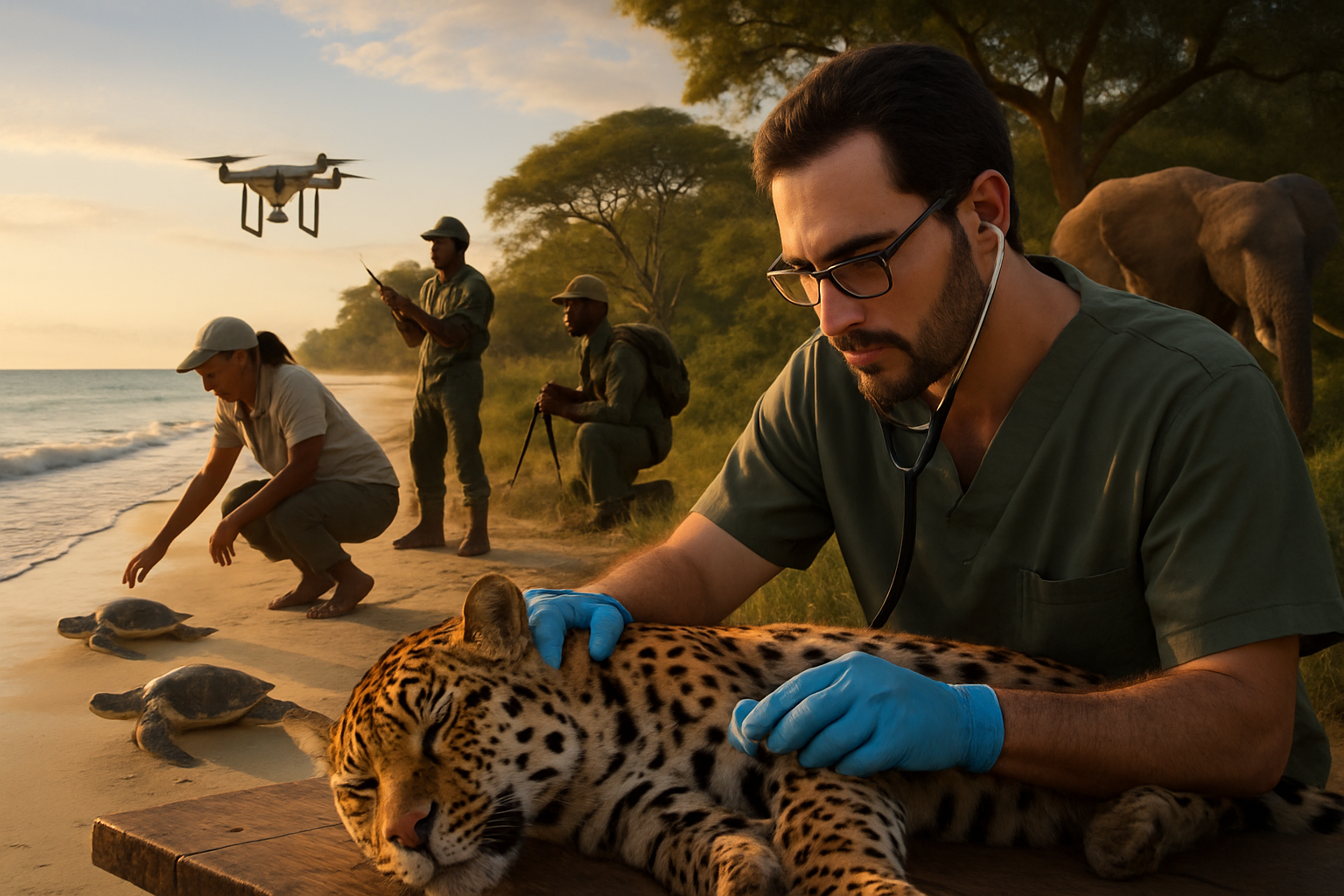
March 2026 marks a pivotal moment for global wildlife conservation as the world navigates unprecedented environmental challenges, security breaches at major wildlife facilities, and remarkable conservation breakthroughs across six nations during the 20th consecutive month of temperatures exceeding 1.5°C above pre-industrial levels.
From a shocking trespass incident involving Thailand's viral hippo sensation to community-led jaguar management concerns in Belize, the past week has highlighted both the vulnerabilities and resilience of global wildlife protection efforts. These developments occur against the backdrop of what scientists are calling the most sustained period of extreme warming in recorded human history.
Security Crisis at Thailand's Premier Zoo
The conservation world was shaken when a Thai national breached security at Khao Kheow Open Zoo in Chonburi, illegally entering the enclosure of Moo Deng, the pygmy hippopotamus that has captured global attention. The March 17 incident, which occurred around 5 PM during routine animal care operations, exposed critical gaps in zoo security protocols.
"The individual took advantage of a moment when staff were carrying out routine animal care to enter a restricted area designated as both a private and animal display zone," zoo officials stated. While Moo Deng was unharmed but "slightly startled," the incident has prompted serious questions about visitor safety and animal welfare at zoological facilities worldwide.
"Strict enforcement is necessary to uphold safety standards and animal welfare."
— Khao Kheow Open Zoo Official Statement
The trespasser was immediately detained by security personnel and handed over to police for investigation. The incident gained international coverage, with Norwegian media reporting that the man was arrested after climbing into the viral dwarf hippo's enclosure and beginning to film.
Community Jaguar Management Challenges in Belize
Meanwhile, in Belize's Lemonal Village, residents are grappling with a different kind of wildlife crisis. Despite the Belize Forest Department's confirmation that a female jaguar was captured in the area, community members fear the wrong animal may have been taken, leaving the true predator responsible for livestock attacks still at large.
Village Chairlady Miss Banner raised these concerns publicly, highlighting the complex challenges of human-wildlife conflict management. The situation underscores the delicate balance between protecting both livestock and critically endangered jaguars, which play essential roles as apex predators in Central American ecosystems.
Acting Chief Forestry Officer John Pinelo had initially reported the capture as a success, but subsequent developments have left the farming community uncertain about their safety and that of their cattle. This case exemplifies the sophisticated approaches needed for effective wildlife management that protects both human livelihoods and endangered species.
Rising Conservation Technology and Innovation
Despite these challenges, remarkable conservation breakthroughs continue worldwide. Serbia's Šar Planina National Park in North Macedonia recently documented two new Balkan lynx individuals through sophisticated trap-camera technology, representing hope for one of Europe's most endangered big cats.
These technological advances reflect a broader evolution in conservation methodology, integrating cutting-edge monitoring systems with traditional ecological knowledge. Environmental DNA sampling, satellite tracking, and AI-powered threat detection are increasingly combined with community-based stewardship practices that have protected wildlife for generations.
Small Island States Leading Conservation Finance Innovation
Uganda's coverage of how small island developing states are revolutionizing conservation financing through tourism provides a compelling model for sustainable environmental protection. These nations, which require approximately $12 billion annually for climate adaptation but receive only $2 billion in international public finance, are pioneering innovative approaches to bridge this critical funding gap.
The Maldives exemplifies this trend, implementing a "green tax" that leverages the country's pristine beaches and marine ecosystems to fund environmental conservation. This model transforms tourism from a potential environmental threat into a conservation financing mechanism, creating sustainable funding streams while protecting the very ecosystems that attract visitors.
"Island economies need about US$12 billion a year for climate adaptation but receive just over US$2 billion in international public finance."
— Conservation Finance Analysis
Climate Crisis Amplifying Conservation Urgency
These developments unfold during an unprecedented period of global warming. January 2026 was confirmed as the hottest month in recorded history, marking the 20th consecutive month that temperatures have exceeded the critical 1.5°C threshold above pre-industrial levels. This sustained warming is overriding natural climate variability, including La Niña cooling effects, demonstrating that human-induced climate change has fundamentally altered Earth's atmospheric systems.
The climate crisis is creating compound environmental effects that traditional conservation approaches struggle to address. Rising sea levels threaten coastal ecosystems, changing precipitation patterns affect forest regeneration, and increased extreme weather events disrupt marine food chains. These pressures are forcing wildlife into closer contact with human populations, creating the very conflicts witnessed in Thailand and Belize.
Economic Dimensions of Environmental Protection
Modern conservation increasingly functions as an economic development strategy rather than a regulatory burden. Countries implementing comprehensive wildlife protection demonstrate greater economic resilience and attract sustainable investment across multiple sectors, from eco-tourism to environmental technology manufacturing.
The economic multiplier effects of environmental protection extend beyond direct conservation benefits. Ecosystem services such as water purification, carbon sequestration, and climate regulation support agricultural productivity while reducing infrastructure costs. Thailand's zoo tourism, Belize's jaguar-watching eco-tourism, and the Maldives' marine conservation all generate substantial revenue while protecting biodiversity.
Technology-Tradition Integration: The Future of Conservation
The most successful contemporary conservation programs demonstrate sophisticated integration of cutting-edge technology with traditional ecological knowledge and community-based management. This represents a fundamental evolution in conservation methodology, moving beyond purely technological or traditional approaches toward comprehensive frameworks that combine scientific rigor with cultural sensitivity.
Thailand's zoo security systems now employ advanced monitoring alongside community education programs. Belize's jaguar management requires both GPS tracking technology and traditional Maya knowledge of wildlife behavior. Small island states use satellite monitoring and digital financing platforms while respecting traditional marine stewardship practices.
International Cooperation at a Critical Juncture
The transnational nature of environmental challenges demands unprecedented international cooperation. Wildlife migrations, ocean currents, and atmospheric systems cross political boundaries, making unilateral conservation efforts insufficient. Success increasingly depends on coordinated policy frameworks, shared monitoring systems, collaborative enforcement, and innovative financing mechanisms that recognize the economic value of ecosystem services.
The diversity of conservation approaches across different contexts provides resilience against single-solution dependencies, offering multiple pathways for addressing complex environmental challenges. Knowledge sharing between Thai zoo management, Belizean community conservation, and Maldivian marine protection creates global networks that strengthen local capacity while contributing to planetary sustainability.
Implementation Challenges and Success Factors
Despite remarkable progress, significant implementation challenges remain. Funding sustainability remains critical for developing nations where immediate economic pressures often override long-term environmental considerations. Technical capacity building requires sustained investment in education, training, and institutional development. Climate change is disrupting project timelines and requiring adaptive management strategies that can respond to rapidly changing conditions.
Success factors consistently include community ownership and engagement, transparent governance frameworks, economic incentives that make protection financially viable, and integration of traditional ecological knowledge with modern conservation science. The most effective programs create opportunities rather than imposing costs, demonstrating that environmental protection can enhance rather than constrain economic development.
A Critical Action Window
March 2026 represents a critical juncture between reactive crisis management and proactive ecosystem service management. The environmental action window is narrowing rapidly as ecological systems approach critical thresholds that could trigger potentially irreversible changes affecting global food security, climate stability, and human settlement patterns.
However, the tools, knowledge, and cooperation frameworks exist for comprehensive environmental protection. The challenge lies in implementing these solutions with sufficient speed and coordination. The incidents in Thailand and Belize, alongside the innovations in small island states, provide both warnings and templates for scaling conservation efforts globally.
Success will depend on sustained international cooperation, enhanced multi-sector coordination, and increased financial commitments that recognize environmental protection as essential infrastructure for human prosperity and planetary sustainability. The convergence of innovation, cooperation, and political commitment evident in March 2026 offers hope for maintaining planetary habitability during what may prove to be Earth's most environmentally challenging period.
As we navigate this critical decade for climate action, the wildlife conservation community is demonstrating that extraordinary results are achievable when scientific excellence, community engagement, technological innovation, and international cooperation converge. The question remains whether these efforts can be scaled rapidly enough to match the pace of accelerating environmental change.