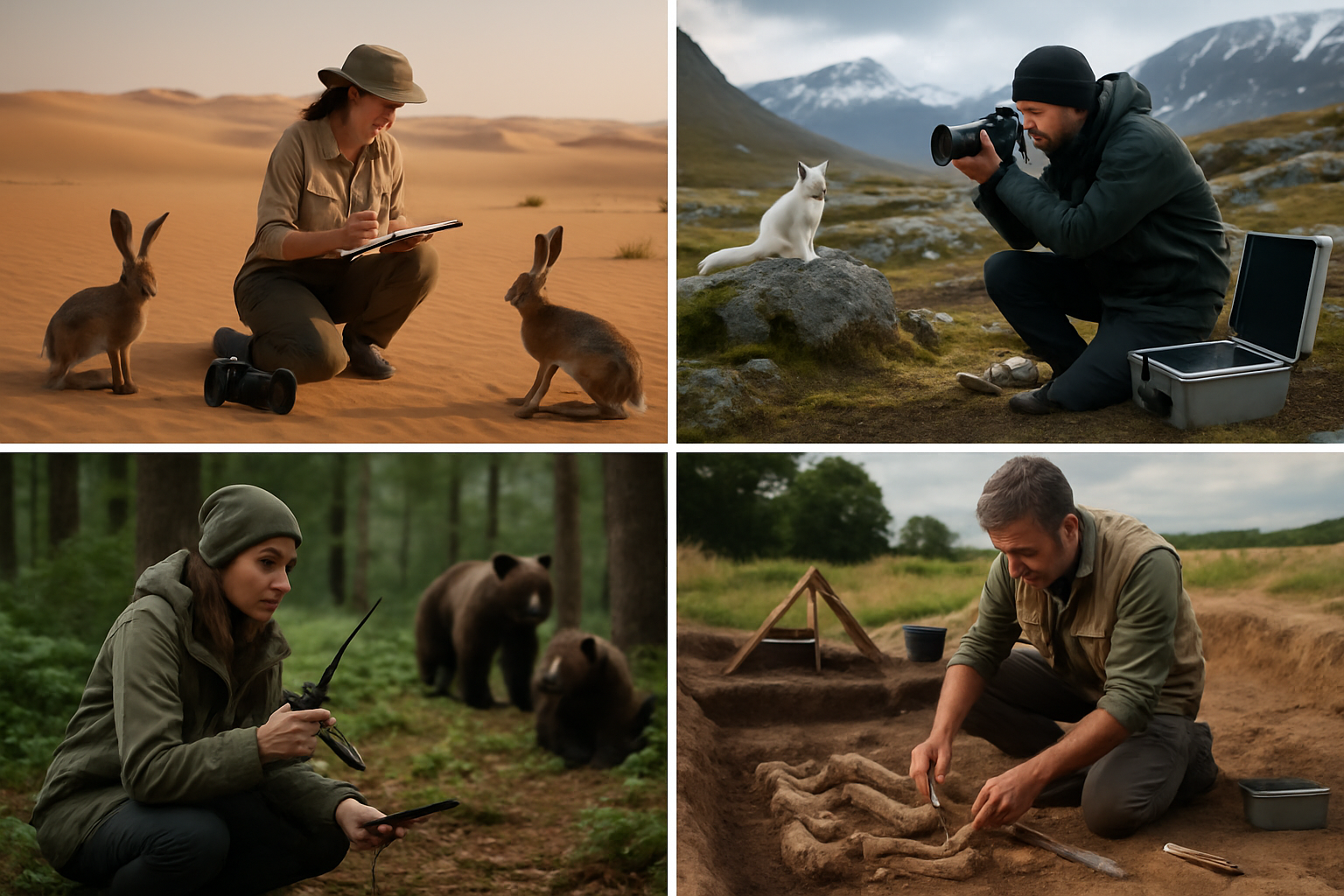
A coordinated surge of wildlife conservation initiatives across four nations demonstrates unprecedented global commitment to species protection, as Saudi Arabia celebrates its 14th successful reintroduction under the Rewilding Arabia program, while Norway, Poland, and Denmark reveal critical developments in Arctic fox monitoring, brown bear human-wildlife interactions, and ancient species discoveries.
These developments emerge during a pivotal period for global conservation efforts, as January 2026 marked the 18th consecutive month of global temperatures exceeding 1.5°C above pre-industrial levels, creating additional urgency for wildlife protection measures worldwide.
Saudi Arabia's Rewilding Arabia Program Achieves Major Milestone
The Prince Mohammed bin Salman Royal Reserve has successfully reintroduced the Arabian hare (Lepus capensis) as part of its comprehensive "Rewilding Arabia" initiative, marking the 14th native species restored since the program's launch in winter 2022. This achievement represents a significant milestone in one of the world's most ambitious desert ecosystem restoration projects.
Reserve CEO Andrew Zaloumis emphasized that the initiative extends far beyond simple population restoration. "Rewilding is not just about restoring species numbers, but reinstating ecological processes," Zaloumis explained, highlighting the Arabian hare's critical role as a primary consumer in desert food webs.
The Arabian hare serves multiple ecological functions as both a grazing herbivore and seed distributor, helping manage plant growth while serving as essential prey for jackals, foxes, wildcats, and hyenas. Twenty individuals were carefully selected to enhance genetic diversity, with the animals expected to rebuild energy transfer networks essential for comprehensive desert ecosystem recovery.
This success builds on Saudi Arabia's broader conservation leadership, including recent marine conservation breakthroughs with rare leatherback sea turtle sightings in the Red Sea and the kingdom's commitment to protecting 30% of its territory under the Saudi Green Initiative.
Arctic Fox Conservation Breakthrough in Norway
Norwegian conservation authorities reported a rare sighting of the critically endangered Arctic fox (Vulpes lagopus) in Flekkefjord, representing an extremely rare observation of one of Europe's most threatened mammals. The sighting, captured by wildlife photographers who exchanged hunting rifles for cameras, underscores the species' precarious status and the importance of continued protection efforts.
Statens naturoppsyn (Norway's Nature Surveillance) has issued advisories to hunters urging extreme caution in areas where Arctic foxes might be present. The species enjoys complete protection under Norwegian law, with severe penalties for any harm to these critically endangered animals.
Arctic foxes face mounting challenges from climate change, as warming temperatures allow red foxes to expand their range northward, competing with and sometimes displacing their Arctic relatives. The Scandinavian Arctic fox population has declined to critically low levels, making every individual crucial for species survival.
Norway's approach represents sophisticated modern conservation methodology, combining advanced tracking technology with community engagement and strict legal protection frameworks to protect remaining populations while working toward habitat restoration.
Poland's Complex Human-Wildlife Coexistence
In Poland's Bieszczady Mountains, a family of brown bears was captured on camera visiting a residential bird feeder, consuming all available bird food in an early morning encounter. The incident, recorded by wildlife cameras near a Reporter24 journalist's home, illustrates the complex dynamics of human-wildlife coexistence in Central Europe's recovering forest ecosystems.
The bear family's behavior demonstrates both the species' adaptability and the challenges of living alongside large carnivores as their populations recover from near-extinction in many European regions. Brown bears have been successfully recolonizing areas of their historic range across the Carpathian Mountains, with Poland's population showing encouraging growth trends.
Such encounters require sophisticated management approaches balancing species protection with human safety and property concerns. Wildlife officials emphasize the importance of proper food storage and bird feeder management to reduce attractants that might draw bears into residential areas.
The incident reflects broader European success stories in large carnivore recovery, including wolf population expansion across multiple countries and the gradual return of lynx to suitable habitats. However, it also highlights the ongoing need for community education and adaptive management strategies.
Denmark's Archaeological Wildlife Discovery
Danish researchers have made significant archaeological discoveries involving ancient predator remains, providing crucial insights into historical ecosystem dynamics and the long-term relationships between apex predators and their prey species. The discovery of mummified cheetah remains in Saudi Arabian caves, reported through Danish research networks, offers unprecedented glimpses into ancient Middle Eastern biodiversity.
These archaeological findings complement modern conservation efforts by providing historical baselines for ecosystem restoration projects. Understanding the full range of species that historically inhabited regions now undergoing rewilding efforts helps guide contemporary conservation strategies and target species selection.
The discoveries also highlight the importance of international scientific collaboration in conservation research, with Danish expertise contributing to broader understanding of historical species distributions and ecosystem functions across multiple continents.
Technology Integration Revolutionizing Conservation
Modern wildlife conservation increasingly relies on sophisticated technology integration with traditional ecological knowledge. Saudi Arabia's rewilding program utilizes advanced genetic analysis, satellite monitoring, and digital tracking systems while respecting traditional Bedouin knowledge of desert ecosystems.
Norway employs cutting-edge camera trap networks, GPS collar technology, and environmental DNA sampling to monitor Arctic fox populations across vast northern territories. These technological tools enable real-time population monitoring and habitat assessment while minimizing human disturbance to sensitive species.
In Poland, automated wildlife monitoring systems provide continuous data on bear behavior patterns, helping researchers understand seasonal movements, foraging strategies, and human-wildlife interaction risks. This information proves essential for developing effective coexistence strategies.
Climate Change Adaptation Challenges
All four conservation initiatives operate within the context of accelerating climate change, requiring adaptive management approaches that account for rapidly shifting environmental conditions. The 18th consecutive month of global temperatures exceeding 1.5°C above pre-industrial levels creates additional stresses on wildlife populations already facing habitat fragmentation and human encroachment.
Desert species like the Arabian hare must cope with increasing temperatures and changing precipitation patterns that affect vegetation availability and water sources. Arctic species face even more severe challenges as warming temperatures fundamentally alter their specialized cold-adapted habitats.
Successful conservation programs increasingly emphasize climate resilience, incorporating climate projections into habitat restoration planning and species management decisions. This proactive approach helps ensure conservation investments remain viable as environmental conditions continue changing.
International Cooperation and Knowledge Sharing
The diverse conservation approaches across these four nations demonstrate the importance of international cooperation and knowledge sharing in addressing global wildlife challenges. Successful techniques developed in one region often provide templates for application in similar ecosystems worldwide.
Saudi Arabia's desert restoration methodology offers potential applications across other arid regions facing similar conservation challenges. Norway's Arctic species monitoring techniques inform polar bear and other Arctic wildlife conservation efforts across the circumpolar north. Poland's large carnivore coexistence strategies provide models for other European countries experiencing similar wildlife recovery.
These programs contribute to broader global conservation momentum including marine protection initiatives, renewable energy expansion reducing habitat pressure, and wetland restoration projects that collectively address multiple environmental challenges simultaneously.
Economic Dimensions of Conservation Success
Modern conservation programs increasingly demonstrate economic benefits that extend far beyond environmental protection. Saudi Arabia's rewilding initiative supports eco-tourism development, research collaboration, and international environmental leadership that enhances the kingdom's global reputation and attracts sustainable investment.
Norway's Arctic fox protection contributes to the country's environmental leadership credentials while supporting research tourism and international scientific partnerships. Poland's bear monitoring generates valuable data for ecosystem management while supporting rural economies through wildlife tourism and research activities.
These economic returns help justify conservation investments and build political support for long-term protection measures, creating sustainable financing models that extend beyond traditional conservation funding sources.
Future Implications and Scaling Strategies
The coordinated conservation surge across these four nations provides crucial templates for scaling wildlife protection efforts globally. Success factors include community engagement, international cooperation, technological innovation, economic sustainability, and adaptive management capabilities.
As the window for effective environmental action continues narrowing amid accelerating climate change, these conservation successes demonstrate that comprehensive species protection remains achievable through coordinated international response and innovative approaches combining traditional knowledge with modern scientific methods.
The diversity of conservation approaches—from desert rewilding to Arctic species monitoring to large carnivore coexistence—provides resilience against single-solution dependencies while offering multiple pathways for addressing complex environmental challenges across different geographical and ecological contexts.
These initiatives represent fundamental evolution from reactive crisis management toward proactive ecosystem service management, emphasizing community participation, technological integration, and economic viability as essential foundations for sustainable wildlife protection in an era of unprecedented environmental change.