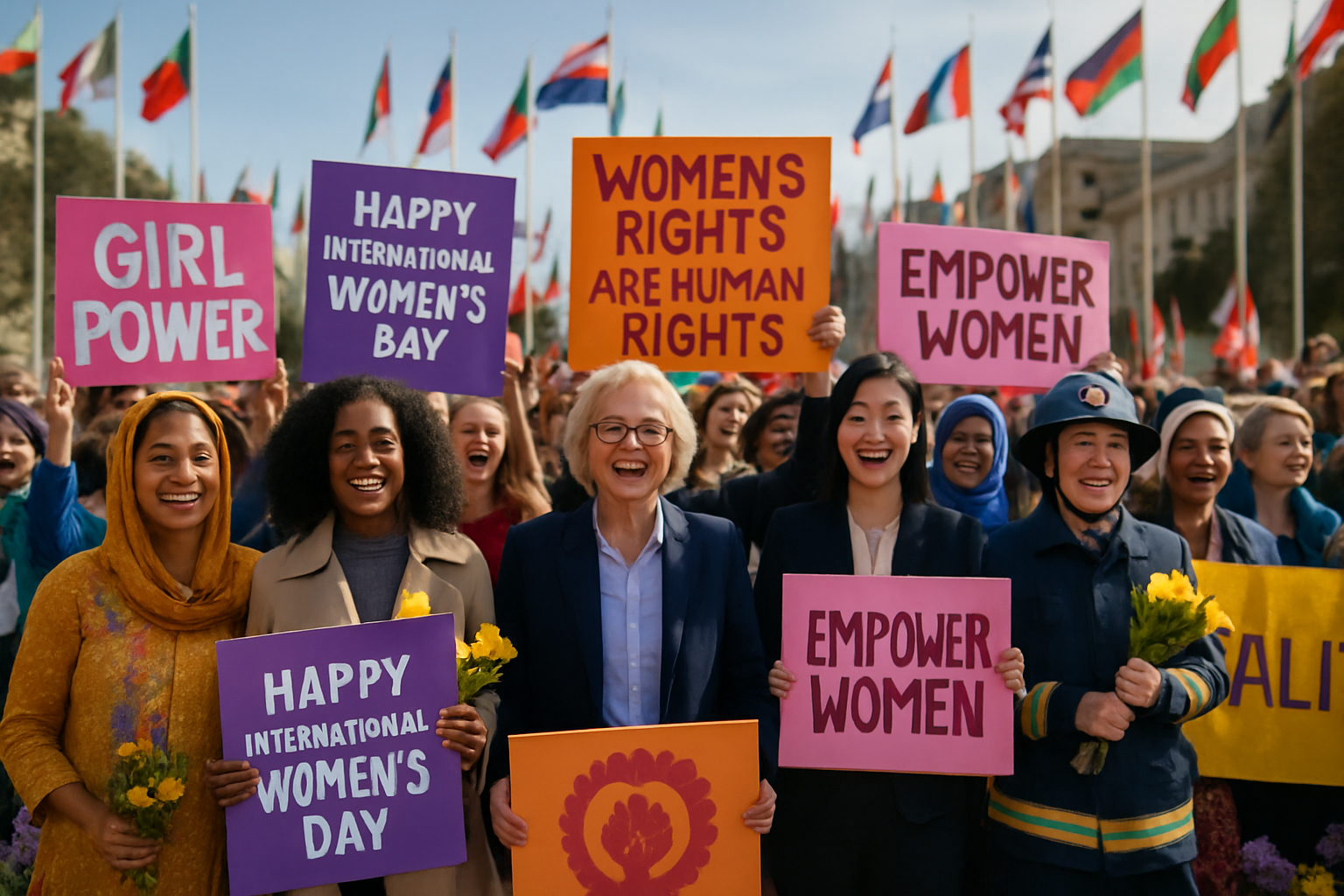
Countries across six continents marked International Women's Day 2026 with a powerful combination of policy announcements, grassroots activism, and record-breaking economic achievements, highlighting both remarkable progress and persistent challenges in the global fight for gender equality.
From Austria's groundbreaking demands for violence protection and pension equity to Dominican Republic's historic financial inclusion milestone, this year's commemorations demonstrated unprecedented international coordination while addressing diverse regional priorities. The celebrations occurred against a backdrop of both inspiring progress and sobering reminders of setbacks, including Afghanistan's continued ranking as the world's worst country for women's rights.
European Leadership: Austria Demands Comprehensive Change
Austrian President Birgit Gerstorfer led European voices calling for fundamental reforms, specifically demanding protection from violence, fair pensions, and expanded opportunities for women over 50. Her message that "women must be able to age without fear" resonated across Austria's political landscape as the country grapples with systemic barriers affecting older women in the workforce.
Austria's commitment to change reflects broader European trends toward addressing intersectional challenges facing women at different life stages. The focus on women over 50 represents a crucial shift from youth-centered gender equality narratives to recognizing the accumulated disadvantages that compound throughout women's lives.
"Women must be able to age without fear, with dignity and economic security that reflects their lifelong contributions to society."
— President Birgit Gerstorfer, Austria
African Innovations: Burkina Faso's Community-Centered Approach
In West Africa, Burkina Faso demonstrated innovative approaches to women's empowerment through community engagement. The Ministry of Family and Solidarity organized "Women Peacebuilders" activities on Thomas Sankara Boulevard in Ouagadougou, combining commemoration with practical beautification projects.
This model reflects broader African trends toward integrating women's rights advocacy with community development, recognizing that sustainable gender equality requires embedding women's leadership in daily civic life rather than limiting it to symbolic annual observances.
Burkina Faso's approach also included comprehensive public discourse, with citizens sharing perspectives on meaningful actions needed beyond March 8th celebrations. The emphasis on "what concrete actions should be prioritized" demonstrated sophisticated understanding that lasting change requires sustained community commitment.
Caribbean Economic Breakthrough: Dominican Republic Leads Financial Inclusion
The Dominican Republic achieved a historic milestone in women's economic empowerment, with female access to formal credit increasing from 925,670 in January 2021 to 1,311,792 in January 2026—a remarkable 42% increase representing 386,655 additional women gaining financial access.
Most significantly, November 2025 marked the first time women borrowers surpassed men in the country's banking system, a trend that continued through January 2026. Women now represent 50.4% of new borrowers compared to men's 49.6%, according to the Dominican Banking Market Information System (SIMBAD).
This achievement represents more than statistical progress—it demonstrates fundamental shifts in economic power structures and women's ability to participate equally in formal financial systems, providing a model for other Caribbean and Latin American nations.
South American Vision: Guyana Focuses on Future Architects
Guyana's Minister of Home Affairs, Oneidge Walrond, articulated a forward-looking vision during the Fourth National Assembly of Girls, emphasizing that "women are central architects, not spectators, in Guyana's transformation." Her message positioned women's empowerment as a national development priority rather than a social welfare issue.
Minister Walrond's approach reflects evolving discourse that positions women's equal participation as essential for national competitiveness and innovation rather than merely addressing historical injustices. This framing has proven effective in building broader political coalitions supporting gender equality initiatives.
European Activism: Italy and Malta's Sustained Mobilization
Italy witnessed extensive mobilization with "Non una di meno" (Not One Less) organizing what they described as a "long weekend of struggle and strike" on March 8-9. The movement coordinated protests across 60 cities, addressing issues from legislative proposals on sexual violence to women's roles in conflict resolution.
Meanwhile, Malta's activists adopted the powerful slogan "Women's Day Every Day" for their Sunday march, emphasizing that gender equality requires daily attention rather than annual symbolic recognition. This message reflects growing sophistication among grassroots movements that understand structural change requires sustained pressure and visibility.
The Italian and Maltese approaches demonstrate the evolution of European feminist organizing from single-issue campaigns to comprehensive social justice movements linking gender equality with broader democratic participation and peace-building efforts.
Global Challenges: Afghanistan Crisis Provides Stark Contrast
The celebrations occurred against the sobering backdrop of Afghanistan's continued deterioration. The Georgetown Institute for Women, Peace and Security ranked Afghanistan 181st out of 181 countries in their Women, Peace and Security Index, with 88% of female-headed households unable to meet minimum living requirements under Taliban restrictions.
This crisis serves as a crucial reminder that global progress on women's rights remains fragile and uneven. While countries like the Dominican Republic and Austria achieve significant milestones, Afghan women face what international observers describe as "gender apartheid."
Economic Empowerment: Mixed Progress with Persistent Barriers
Beyond the Dominican Republic's success, other nations reported mixed economic indicators. Previous coverage revealed that Austria achieved its first-ever higher education gender parity, with more women than men enrolled in university programs for the first time in the country's history.
However, challenges persist. Data from multiple countries shows that 40% of women continue considering leaving employment due to inadequate compensation, while migrant women face additional barriers stemming from traditional gender role expectations within families.
The contrast between formal educational achievement and workplace equity demonstrates that educational parity alone cannot address systematic economic discrimination without comprehensive policy interventions.
Prevention-First Revolution: Health and Safety Innovation
International Women's Day 2026 highlighted growing emphasis on prevention-focused approaches to women's health and safety. Countries implementing comprehensive prevention programs report superior cost-effectiveness compared to crisis-response models.
This shift represents fundamental rethinking of how societies approach gender-based challenges, moving from addressing problems after they occur to creating systems that prevent discrimination, violence, and health disparities from developing.
International Cooperation Despite Challenges
Despite funding challenges facing traditional multilateral organizations, International Women's Day 2026 demonstrated innovative bilateral partnerships and regional collaboration networks enabling knowledge sharing and resource coordination.
These distributed cooperation models allow culturally responsive approaches while maintaining evidence-based standards and universal human rights commitments. The success suggests that international solidarity on women's rights can adapt to changing geopolitical realities while preserving core commitments to gender equality.
Looking Forward: Daily Commitment Over Annual Recognition
The most significant theme emerging from International Women's Day 2026 was the shift from annual symbolic recognition to sustained daily commitment. Advocates across all regions emphasized that gender equality requires treating women's rights as "fundamental community infrastructure" rather than individual crisis management.
Success factors identified across countries include sustained political commitment, adequate resource allocation, comprehensive professional training, robust community engagement, and continued international cooperation. The evidence suggests that meaningful progress requires embedding gender equality considerations into all policy decisions rather than treating it as a separate issue.
"Gender equality must be treated as fundamental community infrastructure, requiring daily attention and sustained investment, not just annual commemorations."
— International Gender Policy Experts
International Women's Day 2026 revealed both the remarkable progress possible when societies commit to gender equality and the extensive work remaining. From Austria's focus on older women to the Dominican Republic's financial inclusion breakthrough, from Burkina Faso's community engagement to Guyana's national development vision, the diversity of approaches demonstrates that while challenges are universal, solutions must be locally adapted.
The path forward requires vigilance against backsliding, innovative solutions to persistent challenges, and the transformation of annual recognition into sustained daily commitments to creating more equitable societies. As events in Afghanistan remind us, progress on women's rights is neither automatic nor irreversible, making international solidarity and sustained domestic commitment more crucial than ever.
The convergence of evidence-based prevention strategies, technological innovation, and unprecedented international cooperation provides a foundation for comprehensive women's empowerment that could determine whether societies organize around human flourishing rather than merely addressing periodic crises. The true measure of progress will be whether the commitments made on March 8, 2026, translate into sustained policy implementation, institutional change, and cultural transformation creating genuinely equitable societies worldwide.