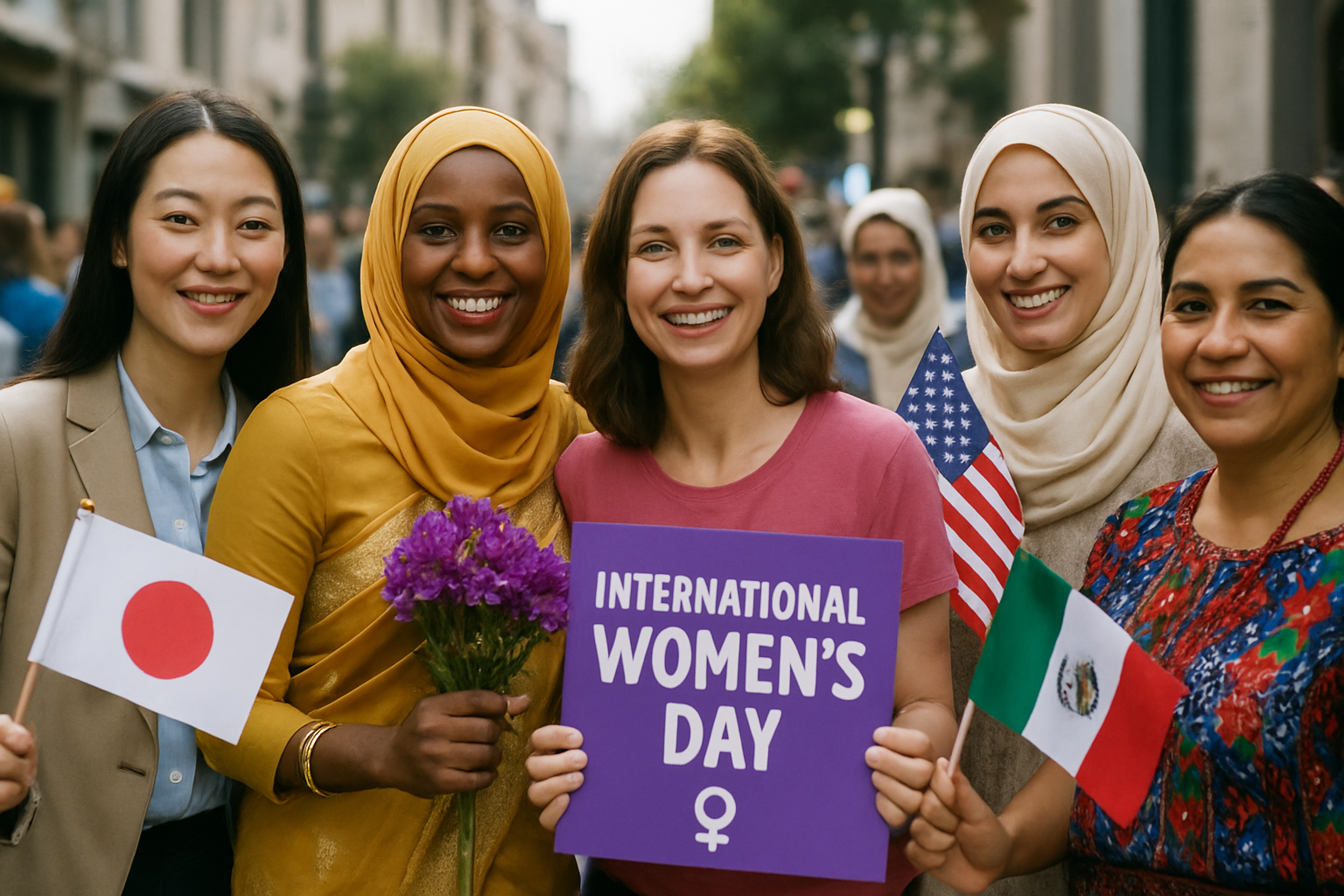
International Women's Day 2026 witnessed an unprecedented wave of government-led initiatives across six countries, as world leaders from Algeria to Croatia launched comprehensive programs celebrating women's achievements and expanding opportunities for female leadership in politics, economics, and civil society.
Presidential Recognition and Constitutional Progress
Algeria's leadership demonstrated exceptional commitment to women's advancement through high-level government recognition. President Abdelmadjid Tebboune issued a significant message to Algerian women emphasizing their enhanced role in the national project, particularly through assuming "the highest responsibilities, positions, and ranks." The President noted that Algerian women now record "the highest presence in government since independence," marking a historic milestone in the country's political development.
Azzou Nasri, President of the Council of the Nation, complemented this recognition with a congratulatory message highlighting women's outstanding contributions across various sectors and their prominent role in nation-building. The message emphasized that Algerian women continue to contribute through their "determination and competence" to embodying the aspiration of "Victorious Algeria" through their active presence in different sectors and participation in driving the development process.
"The state is proud of you and is moving in this phase to establish women's right to full integration in the dynamics of current transformations towards building a modern state."
— President Abdelmadjid Tebboune, Algeria
United Nations Campaign Addresses Legal Disparities
The global context for these celebrations was shaped by the United Nations' launch of its 2026 International Women's Day campaign in New York, which designated "Rights. Justice. Action." as the official theme. UN data revealed stark global disparities, showing that women worldwide have only 64% of the legal protections afforded to men.
The statistics paint a concerning picture of ongoing challenges: 54% of nations lack consent-based definitions of rape, and nearly 75% of countries permit child marriage. Most alarmingly, 676 million women and girls live within 50 kilometers of active conflict zones where justice systems are largely absent, highlighting the urgent need for the kind of government leadership demonstrated across multiple countries this year.
Innovative Community Engagement Models
Bosnia and Herzegovina showcased a unique approach to International Women's Day celebrations through the Station of Mountain Guides Sarajevo's annual "100 Women on Trebević" manifestation. This hiking event, scheduled for March 8th, planned to have participants ascend the peak of Sofa (1,629 meters above sea level) via the route from Ravna to Dobra Voda.
The mountaineering celebration, running since 2014, has evolved into a powerful symbol of women's strength and community solidarity. Led by experienced guides Jasmina Tabaković-Đugum, Amira Nalo, and Ajna Hodžić, the event attracts women of various ages who "gift themselves" clean air, movement, time in nature, and fellowship. This grassroots approach demonstrates how governments can support authentic cultural expressions of women's empowerment.
International Diplomatic Recognition
Croatia's approach emphasized global networking and professional development through the Croatian Women's Network's 10-year anniversary conference in Zagreb. The gathering brought together prominent leaders from Croatia and around the world, including former US Ambassador to Croatia Nathalie Rayes, demonstrating how diplomatic connections can advance women's causes internationally.
This network model represents a sophisticated understanding of how women's advancement requires both domestic policy changes and international cooperation, creating platforms for knowledge sharing and professional mentorship across borders.
Parliamentary Representation and Political Progress
Gabon's analysis of women's parliamentary representation provided important context for global progress. Research into the presence of women in parliament revealed both advancement and concerning trends, with worldwide progress showing signs of stagnation. The data suggests that while significant strides have been made in recent decades, sustained political commitment is required to prevent backsliding on women's political participation.
The parliamentary representation trends align with broader themes emerging from the 70th Session of the Commission on the Status of Women, scheduled to convene March 9-19 at UN Headquarters, where these issues will receive focused international attention.
Economic Empowerment Through Policy Innovation
Drawing from historical context documented in recent Planet News coverage, 2026's celebrations built upon remarkable economic empowerment achievements. Previous reporting revealed that countries investing in comprehensive women's empowerment initiatives report substantial benefits including stronger economic growth, increased innovation capacity, and more resilient community structures.
The Austrian model, achieving first-ever higher education gender parity with more women than men enrolled in university programs, demonstrates the long-term impact of sustained policy commitment. Similarly, the Dominican Republic's historic milestone of women borrowers surpassing men in formal financial systems (50.4% vs 49.6%) provides evidence that systematic barriers can be overcome through targeted interventions.
Addressing Persistent Global Challenges
The celebrations occurred against the sobering backdrop of Afghanistan's continued ranking as 181st out of 181 countries in the Women, Peace and Security Index. The contrast between countries celebrating women's achievements and the systematic exclusion of women from public life under Taliban rule underscores the fragility of progress and the need for continued international solidarity.
Georgetown Institute data showing that 88% of female-headed households in Afghanistan cannot meet minimum living requirements serves as a stark reminder that International Women's Day celebrations must translate into concrete action for the world's most vulnerable women.
Technology and Innovation in Women's Advancement
The 2026 celebrations increasingly incorporated digital platforms and innovative approaches to expand reach and impact. From virtual reality experiences showcasing women's historical contributions to data analytics helping organizations identify and address pay gaps, technology served as an enhancement rather than replacement for traditional advocacy approaches.
This technological integration reflects broader trends toward evidence-based gender equality strategies, where data-driven approaches complement grassroots organizing and policy advocacy to create more effective interventions.
Looking Toward Sustained Implementation
The most significant development across all countries was the emphasis on transforming annual recognition into sustained daily commitment. Leaders consistently emphasized that gender equality requires "fundamental community infrastructure" rather than individual crisis management, reflecting a mature understanding of systematic change requirements.
Success factors identified across the six countries include sustained political commitment, comprehensive professional training, robust community engagement, and continued international cooperation. The template emerging from 2026 suggests that effective implementation must address interconnected challenges including healthcare access, legal protection, economic opportunity, and cultural transformation simultaneously.
"Gender equality requires daily commitment versus annual observance. Success depends on treating women's rights as fundamental community infrastructure rather than periodic crisis response."
— UN Women Analysis, March 2026
As the 70th Session of the Commission on the Status of Women approaches, the government initiatives launched across Algeria, Bolivia, Bosnia and Herzegovina, Croatia, and Gabon provide concrete examples of how political leadership can translate International Women's Day recognition into systematic policy advancement. The challenge now lies in sustaining this momentum throughout the year and ensuring that symbolic recognition evolves into measurable improvements in women's lives worldwide.
The convergence of evidence-based prevention strategies, international cooperation, and political commitment demonstrated in 2026 provides an unprecedented foundation for comprehensive women's empowerment that could determine whether societies organize around human flourishing rather than merely addressing periodic crises.