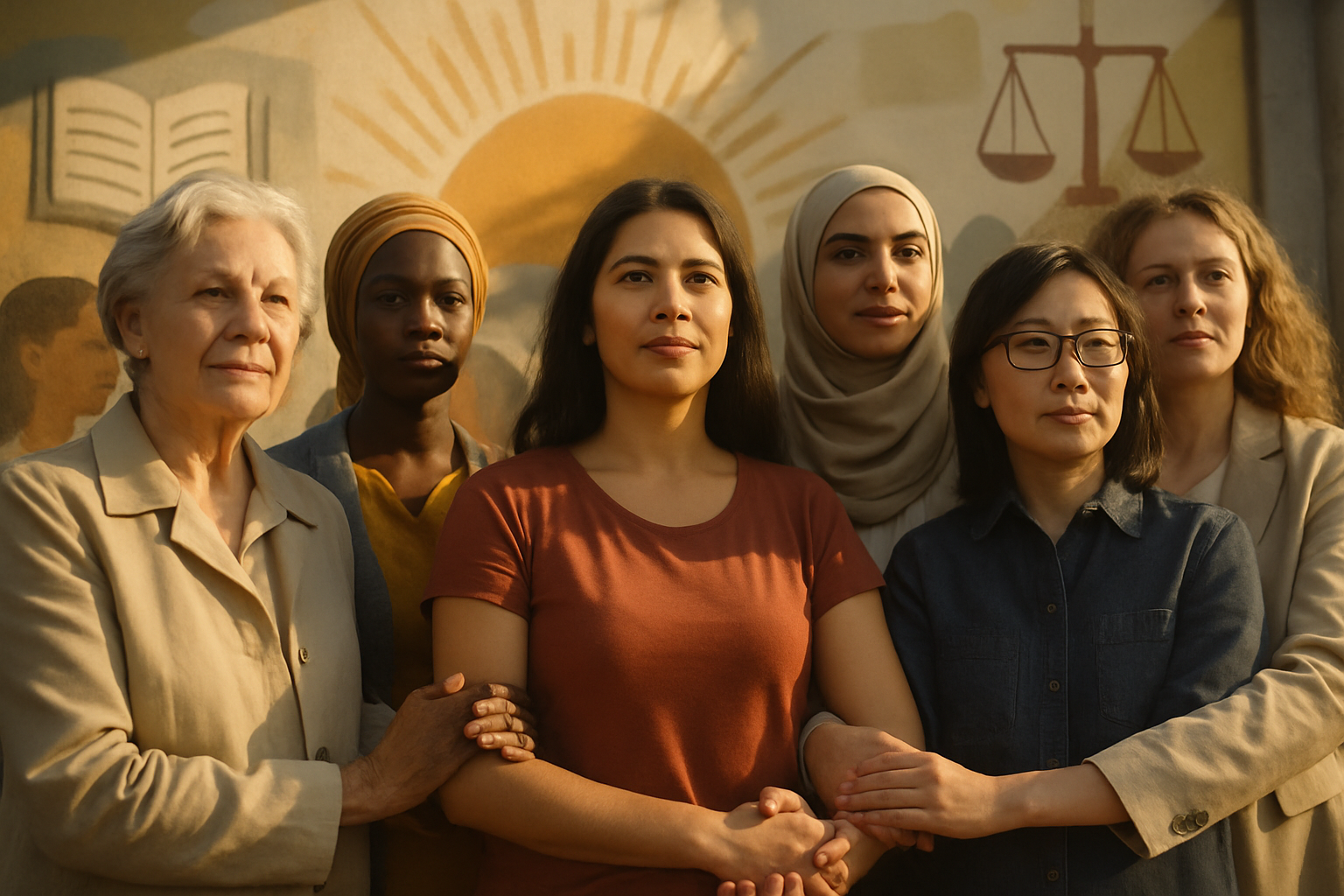
International Women's Day 2026 demonstrated a transformative evolution in the global women's rights movement, shifting from symbolic annual recognition to sustained daily commitment for gender equality, as evidenced by groundbreaking initiatives across five countries spanning three continents.
The celebrations this year revealed both remarkable progress and persistent challenges, with countries implementing innovative approaches to women's empowerment while confronting systemic barriers that continue to limit female participation in economic, political, and social spheres.
Armenia Honors Cultural Heritage and Legal Legacy
In Armenia, the commemoration took on particular cultural significance, celebrating the "precious heritage of the Armenian woman" and recognizing the foundational role women have played throughout the nation's history. The Armenian Weekly highlighted how Armenian women have served as "the anchor of the family, the iron ore of stability and the eagle of inspiration" for thousands of years.
The celebration acknowledged historical figures like Queen Parandzem, Diana Apcar, Zabel Yesayan, Sose Mayrig, and Silva Kaputikyan, while emphasizing the contributions of contemporary mothers and grandmothers who have ensured cultural continuity. During Women's History Month, the legal profession specifically reflected on the leadership roles Armenian women have assumed in advancing justice and equality.
"Throughout Armenian history, the Armenian woman has been the anchor of the family, the iron ore of stability and the eagle of inspiration. Simply said, without her we could not be; we would not be."
— The Armenian Weekly
Nicaragua Focuses on Evolution and Protagonism
Nicaragua organized a comprehensive congress examining the "protagonism and evolution of Nicaraguan women," bringing together representatives from diverse sectors to share experiences about women's rights. The event, hosted by Canal 2, emphasized the multifaceted roles women play in national development and the ongoing efforts to strengthen their participation across all areas of society.
The congress served as a platform for discussing both achievements and challenges, with participants sharing practical experiences about advancing women's rights in various professional and social contexts. This approach reflected a growing trend toward evidence-based discussions about gender equality progress.
Palestine Solidarity and Resistance
Palestinian women marked International Women's Day with demonstrations of solidarity for female prisoners, organizing a sit-in outside the International Committee of the Red Cross office in Tulkarm in the northern West Bank. The General Union of Palestinian Women emphasized women's struggle as an essential component of the national liberation movement.
Union President Nada Tuwair affirmed the Palestinian people's right to self-determination and ending occupation, highlighting how Palestinian women's resistance represents a fundamental part of achieving independence and justice. The demonstration underscored the intersection between women's rights and broader struggles for national liberation.
The sit-in served as a powerful reminder that women's rights cannot be separated from broader human rights and political contexts, particularly in regions experiencing conflict and occupation.
Philippines Calls for Global Unity Against Violence
Philippine President Marcos delivered a significant address calling on United Nations member states to maintain unity in confronting violence against women in all its forms. His statement acknowledged that "the journey toward full equality around the world is far from complete," emphasizing the need for continued international cooperation.
The Philippines' focus on global unity reflected a mature understanding that women's rights transcend national boundaries and require coordinated international action. This approach aligned with broader UN initiatives promoting comprehensive strategies to address gender-based violence and discrimination.
President Marcos' call resonated with international efforts to strengthen multilateral cooperation on women's rights, particularly in addressing violence that affects women regardless of geographic, cultural, or economic contexts.
Uganda Addresses Economic Barriers in Blue-Collar Labor
Uganda's BrighterMonday labor market study revealed complex dynamics affecting women's participation in blue-collar industries. While women are increasingly entering these sectors seeking economic independence, they face significant obstacles including entrenched gender norms, limited access to finance, and weak labor protections.
The research, launched in partnership with the American Chamber of Commerce Uganda during the chamber's annual Women's Business Network event, provided concrete evidence of both progress and persistent challenges. Women demonstrated determination to pursue economic opportunities despite systemic barriers.
"Women are steadily entering Uganda's blue-collar labour market in search of income and economic independence, but entrenched gender norms, limited access to finance and weak labour protections continue to slow their progress."
— BrighterMonday Uganda Study
The study highlighted the need for comprehensive approaches that address not only access to employment but also the underlying social and financial structures that determine women's economic participation. This included examining how traditional gender roles within families can limit women's career advancement even when legal barriers have been removed.
Global Context and Historical Perspective
These five countries' celebrations occurred within a broader global context of evolving approaches to women's rights. Based on historical analysis from previous International Women's Day observations, several key themes emerged that shaped 2026's commemorations:
The shift from annual symbolic recognition to sustained daily commitment represented the most significant development. Countries worldwide increasingly recognized that gender equality requires "fundamental community infrastructure" rather than individual crisis management approaches.
Economic empowerment emerged as a central focus, with evidence from multiple countries showing that comprehensive women's empowerment programs generate stronger economic growth, increased innovation capacity, and more resilient communities. This economic argument complemented traditional human rights justifications for gender equality.
Persistent Global Challenges
Despite progress, significant challenges remained evident across all regions. The global context included troubling developments such as Afghanistan ranking 181st out of 181 countries on the Georgetown Institute Women, Peace and Security Index, with 88% of female-headed households unable to meet minimum living requirements under Taliban restrictions.
Concerning trends also emerged regarding generational attitudes, with international surveys revealing that significant portions of Generation Z men believe "enough has been done for gender equality" and that "men are being discriminated against." This suggests that progress cannot be assumed to be linear or permanent.
Economic inequality persisted, with data showing that in various countries, 40% of women consider quitting jobs due to inadequate salaries. Migrant women faced additional barriers, encountering both structural employment discrimination and traditional gender role expectations within families.
Prevention-First Approaches and International Cooperation
Successful initiatives increasingly emphasized prevention-focused strategies over reactive approaches. Countries implementing comprehensive prevention programs reported superior cost-effectiveness compared to treatment-focused models, achieving better outcomes through reduced crisis interventions while building stronger community resilience.
International cooperation continued evolving despite multilateral funding challenges. Bilateral partnerships and regional collaboration networks enabled knowledge sharing and resource coordination through distributed cooperation models that allowed culturally responsive approaches while maintaining evidence-based standards.
Technology Integration and Cultural Adaptation
Successful programs demonstrated how technology could enhance rather than replace traditional advocacy methods. Digital platforms enabled women entrepreneurs to access global markets, while data analytics helped organizations identify and address pay gaps more effectively.
However, experts warned that technology could exacerbate inequalities without thoughtful implementation. Equal access to digital literacy training, tech sector employment, and decision-making roles emerged as essential for preventing technological advancement from widening gender gaps.
Cultural adaptation proved crucial for success. Evidence-based practices yielded better outcomes when integrated with local wisdom, cultural values, and community structures rather than imposing standardized Western frameworks globally.
Looking Forward: The Template for Sustained Change
International Women's Day 2026 established a template for future gender equality advancement combining governmental recognition, grassroots activism, economic empowerment, and cultural transformation. The convergence of evidence-based prevention strategies, technological innovation, and international cooperation provided unprecedented opportunities for comprehensive women's empowerment.
Success factors identified across multiple countries included sustained political commitment beyond electoral cycles, comprehensive professional training, robust community engagement, and continued international cooperation. Most importantly, gender equality was increasingly treated as fundamental community infrastructure requiring daily attention rather than annual observance.
The path forward requires vigilance against backsliding, innovative solutions to persistent challenges, and transformation of annual recognition into sustained daily commitments to justice, safety, and empowerment for all women and girls worldwide.
As the global movement continues evolving, the examples from Armenia, Nicaragua, Palestine, the Philippines, and Uganda demonstrate that while challenges remain universal, solutions must be locally adapted while maintaining international cooperation and accountability mechanisms to ensure gender equality becomes a fundamental component of just and prosperous societies worldwide.