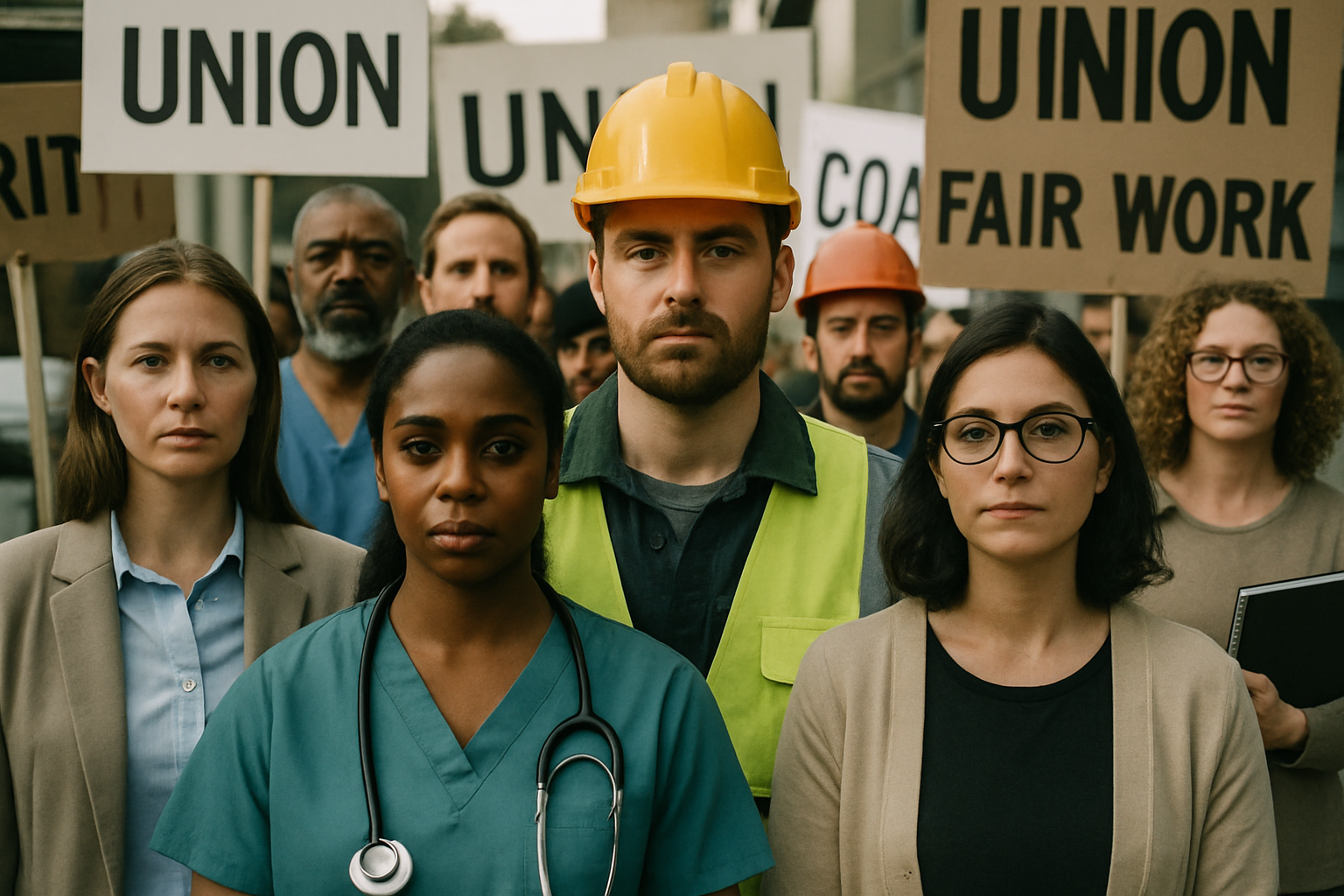
A cascading wave of labor disputes and workplace dissatisfaction is sweeping across multiple continents, as workers from Australia to Portugal mobilize against deteriorating conditions, pension cuts, and inadequate protections in what experts are calling an unprecedented global labor crisis.
The scope of workplace unrest extends from individual career pivots—exemplified by Australian corporate workers abandoning high-stress jobs for manual labor—to massive coordinated strikes threatening entire national economies. This comprehensive analysis reveals the interconnected nature of modern workplace challenges and their far-reaching implications for global economic stability.
Australia's "Great Burnout" Phenomenon
In Australia, a striking trend has emerged that employment experts have labeled "The Great Burnout." Scott, a former corporate executive, exemplifies this movement by leaving his high-paying corporate position to become a cleaner—a decision that reflects growing dissatisfaction with corporate work culture across the continent.
This phenomenon represents more than individual career changes; it signals a fundamental shift in how workers value work-life balance versus traditional career advancement. The trend highlights systemic issues within corporate Australia, including excessive work demands, inadequate mental health support, and a culture that prioritizes productivity over employee wellbeing.
Portugal's Public Sector Uprising
Portugal faces multiple simultaneous labor crises affecting critical public services. The General Confederation of Portuguese Workers (CGTP) has organized widespread protests against proposed changes to labor laws, with strikes potentially disrupting schools, health centers, hospitals, commerce, restaurants, and hotels.
The situation has been further complicated by specific sector grievances:
- Police forces are protesting pension cuts that could reduce retirement benefits by up to 200 euros monthly, with approximately 1,000 elements from PSP, GNR, prison guards, and Maritime Police demonstrating outside the Prime Minister's residence
- Civil registry workers have given the government a 10-day ultimatum to address salary disparities and severe staffing shortages, with some registries operating at less than 75% capacity
- The broader labor reform negotiations have reached a critical juncture after eight months of discussions, with the Labor Minister stating negotiations will conclude "in the coming days, with or without agreement"
Slovakia's Union Protection Initiative
Slovakia is advancing new legislation to strengthen protections for union leaders following high-profile dismissal cases, particularly involving Amazon. This legislative response demonstrates how multinational corporations' labor practices are driving national policy changes to protect worker representation rights.
The Slovak initiative reflects broader European concerns about corporate attempts to suppress union organizing, particularly in sectors dominated by international companies with varying labor standards across different jurisdictions.
Norway's Overtime Compensation Crisis
In Norway, part-time employees demanding overtime compensation face a critical situation. According to a Coop union representative, affected workers "cannot afford to wait" for a Supreme Court decision, highlighting the immediate financial pressures facing workers while legal processes slowly unfold.
This case illustrates the tension between legal resolution timelines and workers' immediate economic needs, demonstrating how procedural delays can effectively deny workers fair compensation even when their claims may ultimately prove valid.
Venezuela's Political-Economic Protests
Venezuelan workers and unions marched to the United States Embassy in Caracas, representing a unique intersection of labor rights and political demands. Their comprehensive agenda includes salary improvements, compliance with the Organic Labor Law, restoration of labor rights, release of political prisoners, and free elections.
This demonstration reflects how labor issues in politically unstable environments become intertwined with broader governance and human rights concerns, complicating traditional labor-management negotiations.
Historical Context and Global Patterns
The current workplace crisis builds upon months of escalating labor tensions documented globally. Previous major events include Argentina's sustained general strikes costing hundreds of millions in economic disruption, European transportation strikes affecting millions of passengers, and the emergence of sophisticated international union coordination strategies.
"We're seeing a fundamental shift from traditional social partnership models toward more confrontational labor relations across multiple continents,"
— Labor Relations Expert (based on analysis of recent strikes)
The pattern suggests that workers are increasingly willing to accept short-term economic costs to demand long-term systemic changes, moving beyond wage negotiations to challenge fundamental workplace structures and power relationships.
Economic Implications and Market Responses
The global nature of these workplace disputes creates significant economic implications extending beyond immediate productivity losses. Supply chain disruptions, reduced consumer spending power, and investment uncertainty combine to create broader economic headwinds.
Key economic indicators showing strain include:
- Reduced public service capacity affecting education and healthcare systems
- Transportation disruptions affecting international trade and tourism
- Increased litigation costs as workplace disputes move through legal systems
- Corporate adaptation expenses for businesses implementing enhanced worker protections
Technological and Social Transformation Pressures
Many of these labor disputes occur against the backdrop of rapid technological change and evolving social expectations about work. Workers increasingly demand not just fair compensation, but meaningful work, mental health support, flexible arrangements, and protection from technological displacement.
The convergence of AI implementation, post-pandemic work arrangement changes, and generational shifts in workplace values creates a complex environment where traditional labor-management frameworks struggle to address evolving worker needs and expectations.
Government and Institutional Responses
Governments worldwide are implementing varied approaches to address workplace crises, from legislative changes strengthening union protections to comprehensive labor law reforms. However, the international nature of modern commerce means that purely national solutions often prove insufficient.
International organizations, including the International Labour Organization, are monitoring these developments as potential indicators of broader shifts in global employment patterns and worker rights expectations.
Looking Forward: Systemic Change or Temporary Adjustment
The current wave of workplace disputes represents either a temporary adjustment period during economic and technological transition, or the beginning of a fundamental restructuring of employer-employee relationships globally.
Success in resolving these tensions will likely depend on stakeholders' willingness to move beyond traditional adversarial approaches toward collaborative frameworks that balance economic competitiveness with worker security and dignity. Countries implementing comprehensive policy responses—including infrastructure investment, educational reform, and systematic retraining programs—appear better positioned to navigate these transitions successfully.
The coming months will prove crucial in determining whether these workplace tensions escalate into broader economic and political instability, or evolve into sustainable frameworks for 21st-century employment relationships that serve both worker welfare and economic development objectives.