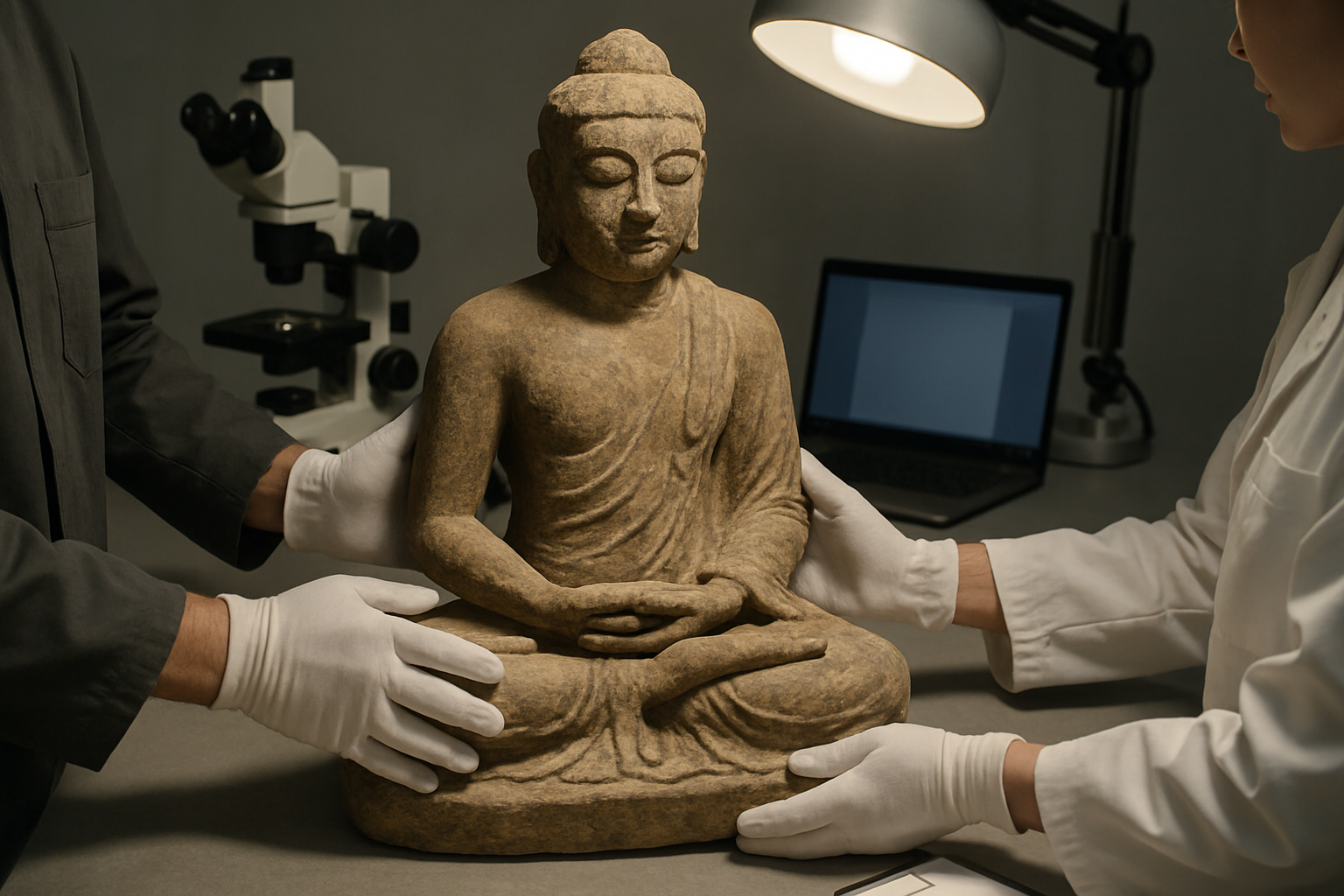
When the ancient bronze sculpture known in Thailand as the "Golden Boy" finally departed New York in 2024, it marked more than just the homecoming of a treasured artifact—it represented a watershed moment in the global rethinking of cultural heritage and museum ethics.
The Metropolitan Museum of Art's historic repatriation of 16 ancient Khmer sculptures that year—14 to Cambodia and two to Thailand—has become a defining case study in how major Western institutions are fundamentally reshaping their relationship with cultural heritage. The decision to remove all works linked to Douglas Latchford, the art dealer under investigation for trafficking, sent shockwaves through the international art world and established new standards for institutional accountability.
The Golden Boy's Journey Home
The bronze sculpture of Standing Shiva, revered in Thailand as the "Golden Boy," had resided in The Met's collection for decades before investigations revealed its problematic provenance. Dating to the Angkor period, the sculpture represents not merely artistic achievement but spiritual significance to Buddhist and Hindu communities across Southeast Asia.
"This return was about more than legal compliance," explains Dr. Sarah Chen, a cultural heritage specialist at Columbia University. "It represented a fundamental acknowledgment that cultural objects carry meaning beyond their aesthetic value—they embody the spiritual and cultural identity of communities."
The sculpture's repatriation marked the culmination of years of diplomatic negotiations between The Met, Thai authorities, and international legal experts specializing in cultural property law. The process established protocols that are now being adopted by museums worldwide.
A Global Movement Takes Shape
The Met's actions are part of a broader international renaissance in cultural heritage preservation and restitution. Recent developments across multiple continents demonstrate coordinated efforts to address historical injustices in museum collections:
- The Netherlands voluntarily returned a 3,500-year-old sculpture to Egypt following investigations that revealed theft during the Arab Spring unrest
- European institutions are increasingly proactive in investigating artifact provenance and facilitating voluntary repatriations
- Technology is enabling more sophisticated documentation and digital archiving, making heritage accessible globally while preserving physical artifacts locally
- International legal frameworks are evolving to support legitimate restitution claims while protecting good-faith acquisitions
The Netherlands Model
The Dutch government's approach has become a template for responsible restitution practices. By conducting thorough provenance research and engaging directly with source countries, the Netherlands has demonstrated that voluntary repatriation can strengthen rather than weaken international cultural relationships.
"We've learned that transparency and cooperation create stronger partnerships than defensive legal positions," notes Dr. Marieke van der Meer, Director of Cultural Policy at the Dutch Ministry of Culture. "When museums take initiative in addressing problematic acquisitions, it builds trust and enables future collaboration."
The Economics of Ethical Museums
Contrary to fears that restitution would diminish museum collections, institutions are discovering that ethical practices can enhance their reputation and visitor engagement. The Met's transparency about its restitution efforts has actually increased public interest in its Southeast Asian collections.
Museums are developing innovative approaches to fill gaps left by repatriated objects:
- Digital partnerships: High-resolution 3D documentation allows objects to be experienced in multiple locations simultaneously
- Cultural exchanges: Source countries are increasingly willing to loan objects to institutions that have demonstrated ethical practices
- Collaborative exhibitions: Joint curatorial projects are creating more authentic and comprehensive presentations
- Educational programming: Restitution stories themselves become powerful tools for teaching about cultural heritage and historical justice
Technology as a Bridge
Advanced technology is revolutionizing how museums approach cultural heritage. Digital documentation techniques developed at institutions like Singapore's Heritage Board are enabling unprecedented accuracy in recording artifacts before repatriation, ensuring knowledge preservation even as physical objects return home.
"We can now create digital twins of artifacts that preserve not just their appearance but their cultural context and significance. This technology allows us to share heritage globally while respecting cultural ownership."
— Dr. Rajesh Mehta, Digital Heritage Specialist
Virtual reality and augmented reality technologies are also enabling museums to present restitution stories in immersive ways, helping visitors understand both the objects' cultural significance and their complex histories.
Challenges and Complexities
The restitution movement faces significant challenges that require nuanced solutions. Legal frameworks vary dramatically between countries, and determining legitimate ownership can involve centuries-old transactions and colonial-era acquisitions that occurred under different legal and ethical standards.
Some critics argue that widespread restitution could fragment global collections that allow diverse audiences to experience world cultures. However, proponents contend that this view perpetuates colonial attitudes toward cultural ownership.
The Collaborative Solution
Leading institutions are finding that collaboration, rather than competition, offers the most promising path forward. The success of projects like Croatia's Gruž City Market renovation—which balances historical preservation with modern community needs—demonstrates how cultural heritage can serve both local authenticity and international appreciation.
Setting New Standards
The Met's Khmer restitution has established several principles that are being adopted globally:
- Proactive investigation: Museums are increasingly conducting their own provenance research rather than waiting for claims
- Transparent communication: Public acknowledgment of problematic acquisitions builds trust with source communities
- Comprehensive solutions: Addressing entire categories of questionable objects rather than case-by-case responses
- Ongoing relationships: Viewing restitution as the beginning of cultural partnerships rather than the end of museum involvement
Global Impact and Future Trends
The ripple effects of major restitutions are visible worldwide. In February 2026, museums across multiple continents have documented unprecedented cultural preservation activities, suggesting that The Met's actions have inspired a global movement toward more ethical practices.
From Finland's innovative library preservation initiatives to Malta's international art collaborations, cultural institutions are embracing their roles as stewards rather than owners of global heritage. This shift represents a fundamental evolution in museum philosophy—from acquisition-based models to partnership-based approaches that serve both preservation and access goals.
The Economic Multiplier Effect
Countries receiving repatriated objects are discovering significant economic benefits through cultural tourism and international recognition. Thailand's celebration of the Golden Boy's return generated substantial media attention and cultural pride, demonstrating that restitution can be economically positive for all parties involved.
Looking Forward: A New Museum Paradigm
As we move deeper into 2026, the transformation of global museum practice appears irreversible. The success of The Met's Khmer restitution has proved that ethical practices and institutional success are not only compatible but mutually reinforcing.
Museums worldwide are discovering that transparency, collaboration, and respect for cultural ownership create stronger, more meaningful connections with global audiences. Rather than diminishing their collections, ethical practices are enhancing museums' roles as bridges between cultures and guardians of human heritage.
The Golden Boy's journey from New York to Bangkok represents more than a single restitution—it symbolizes a fundamental shift toward viewing cultural heritage as a shared responsibility requiring international cooperation, technological innovation, and ethical leadership.
As other major institutions follow The Met's lead, we are witnessing the emergence of a new paradigm in which museums serve not as repositories of acquired treasures, but as facilitators of cultural understanding and preservation. This transformation promises to strengthen rather than diminish the role of museums in our interconnected world, ensuring that cultural heritage serves all humanity while respecting the rights and dignity of its creators and guardians.