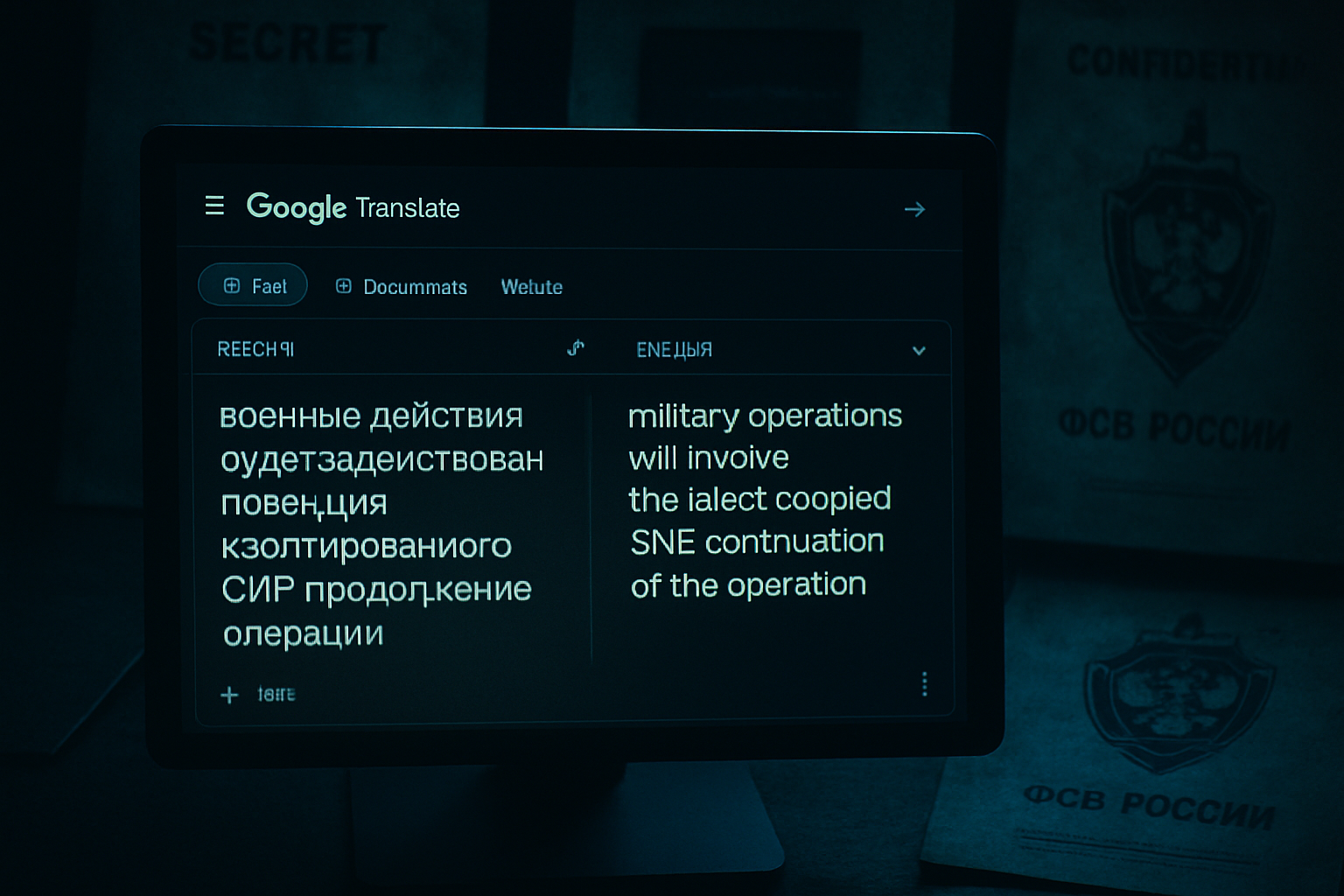
In what intelligence experts are calling one of Russia's most catastrophic security failures in decades, a secret Russian military intelligence unit conducting assassinations and covert operations worldwide has been exposed through the seemingly mundane use of Google Translate by one of its agents.
Investigative group The Insider revealed that Center 795, an elite Russian intelligence unit responsible for conducting assassinations and covert operations abroad, was compromised when one of its operatives used Google's translation service to communicate with foreign contacts. This digital breadcrumb trail allowed the FBI to monitor the unit's communications in real-time, potentially for months or even years.
The Center 795 Revelation
According to the investigation published by The Insider, Center 795 operated under the assumption that it was "untraceable" — a supposedly elite unit designed to conduct the most sensitive operations beyond the reach of foreign intelligence services. The unit's activities allegedly included targeted assassinations, sabotage operations, and other covert activities in foreign territories.
However, the unit's operational security was fatally compromised by what appears to be a basic digital hygiene failure. When one agent used Google Translate to convert Russian communications into foreign languages for operational purposes, the translation requests were logged and accessible to U.S. intelligence services.
"Have we just seen the most embarrassing intelligence failure Russia has suffered in years?" asked Jean-Emile Jammine during an interview with The Insider's Editor-in-chief Roman Dobrohotov. The question appears increasingly rhetorical as details of the breach emerge.
Digital Vulnerabilities in Modern Espionage
The Google Translate exposure highlights a fundamental challenge facing intelligence operations in the digital age. Modern espionage increasingly relies on digital communications and internet-based tools, each of which creates potential vulnerabilities that can be exploited by adversaries.
"So how did a supposedly 'untraceable' elite unit unravel so easily, and what does it tell us about Russia's modern espionage?"
— Jean-Emile Jammine, France 24
The incident reflects broader cybersecurity challenges that intelligence agencies worldwide are grappling with. As governments and intelligence services increasingly rely on commercial platforms and cloud-based services, they expose themselves to monitoring by the very companies — and by extension, the governments — they may be operating against.
FBI's Real-Time Intelligence Bonanza
The implications of the Google Translate breach extend far beyond a single compromised communication. According to The Insider's investigation, the FBI's access to the translation requests provided a window into Center 795's operational methods, target selection, and potentially the timing and location of planned activities.
This real-time intelligence access would have been invaluable for U.S. counterintelligence operations. The ability to monitor an active foreign intelligence unit's communications as they happened would have provided unprecedented insight into Russian operational capabilities, methodologies, and strategic priorities.
The breach also raises questions about the extent to which commercial technology platforms may be cooperating with intelligence services, either willingly or through legal compulsion. While Google has not commented on this specific case, the incident highlights the complex relationship between technology companies and national security agencies.
Context of Russian Intelligence Operations
The Center 795 exposure comes amid broader scrutiny of Russian intelligence operations abroad. In recent years, multiple Russian intelligence units have been linked to assassination attempts, cyber operations, and influence campaigns across Europe and beyond.
The revelation adds to a growing list of Russian intelligence failures that have been exposed through digital forensics and international cooperation. From the Skripal poisoning investigation to various cyber operations, Russian intelligence services have repeatedly been caught off-guard by the digital traces their operations leave behind.
This particular case is especially significant because it demonstrates how routine operational tools — something as basic as a translation service — can become critical vulnerabilities in the hands of intelligence operators who may not fully understand the digital footprints they're creating.
Broader Implications for Intelligence Operations
The Google Translate breach represents more than just a Russian intelligence failure; it illustrates the fundamental challenges facing all intelligence services operating in an interconnected digital world. Every digital tool, platform, and service represents both an operational opportunity and a potential vulnerability.
Intelligence experts note that this incident likely represents only the tip of the iceberg in terms of how commercial platforms might be exposing sensitive government and military communications. The global nature of major technology platforms means that intelligence services worldwide may be inadvertently sharing operational information with adversaries through their use of common digital tools.
Response and Damage Assessment
Russian officials have not publicly acknowledged the Center 795 exposure or responded to The Insider's investigation. This silence is typical of Russian responses to intelligence failures, but the lack of denial or clarification has been interpreted by some analysts as tacit confirmation of the investigation's accuracy.
The long-term consequences of this exposure remain unclear. If the FBI indeed had real-time access to Center 795 communications, it's likely that multiple ongoing operations were compromised, assets were exposed, and future operational capabilities were significantly degraded.
For international security more broadly, the incident serves as a stark reminder of the vulnerabilities inherent in modern intelligence operations and the need for more sophisticated digital security practices across all government agencies engaged in sensitive activities.
The Digital Age Intelligence Challenge
The Center 795 case exemplifies the paradox facing modern intelligence services: the same digital tools that enable more sophisticated and far-reaching operations also create new vulnerabilities that can catastrophically compromise those same operations.
As intelligence agencies worldwide grapple with these challenges, the Google Translate incident will likely serve as a case study in operational security failures. It demonstrates that in the digital age, the most advanced intelligence operations can be undone by the most basic digital missteps.
The incident also raises important questions about the responsibility of technology companies in protecting user privacy and the extent to which they should cooperate with intelligence services — questions that will only become more pressing as digital tools become even more central to global intelligence operations.