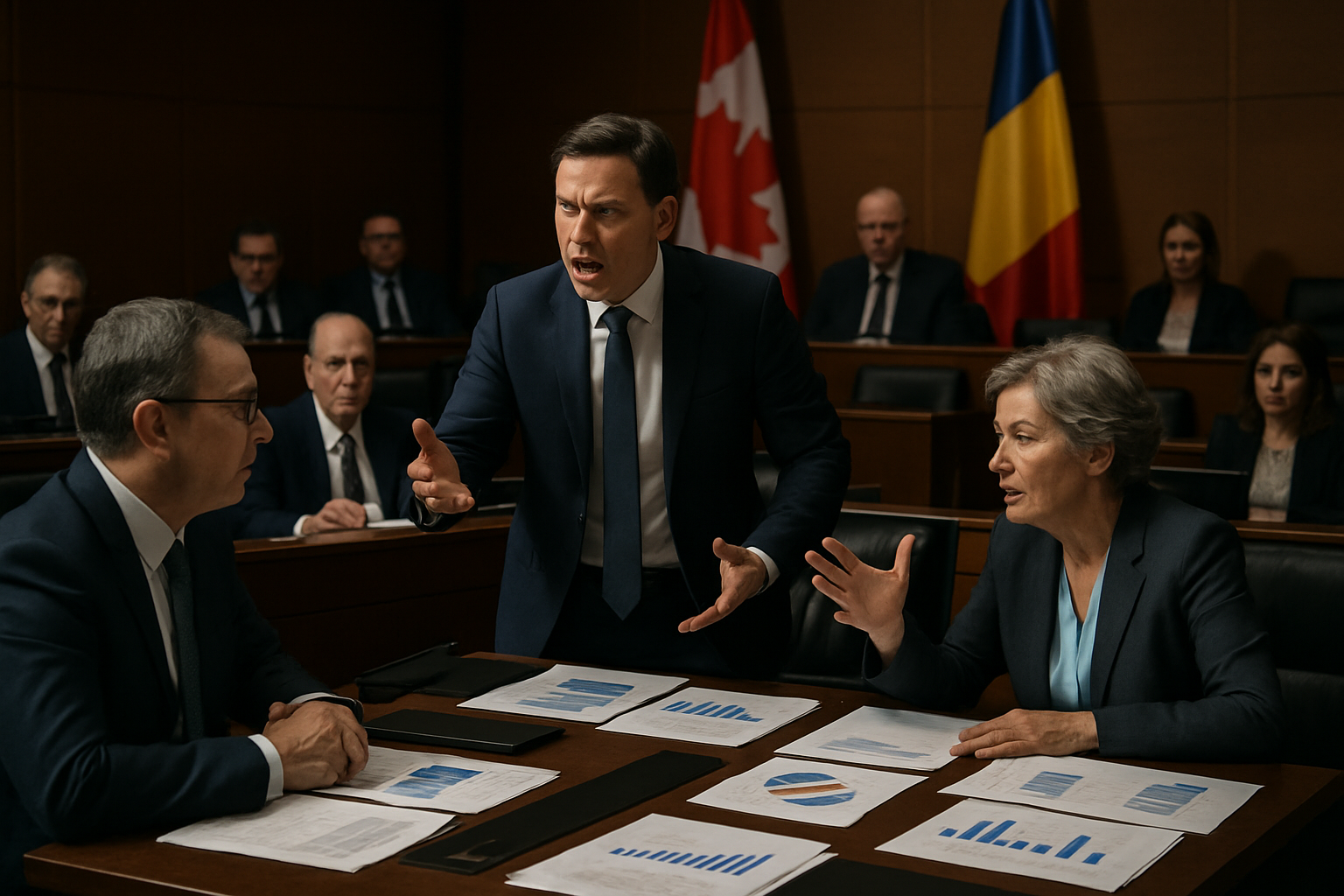
Governments across North America and Europe are confronting severe budgetary challenges as deficit spending reaches alarming levels, with political leaders facing unprecedented pressure to balance fiscal responsibility against mounting public service demands.
March 2026 has witnessed a cascade of budget crises spanning from Canada's Arctic territories to Romania's parliament halls, revealing a global pattern of fiscal strain that threatens governmental stability and policy implementation across democratic nations.
Canada's Yukon Territory Faces Historic Deficit
In a stark admission of fiscal mismanagement, Yukon Premier Currie Dixon delivered an unprecedented warning to the territorial legislature on March 19, declaring that the territory finds itself in a "dangerous financial position" after tabling a budget projecting an $82 million deficit.
Dixon's government's first full budget represents one of the most severe fiscal shortfalls in Yukon's modern history, with the Premier directly attributing the crisis to excessive spending by the previous administration. The deficit revelation comes at a critical time when the territory faces rising costs for essential services and infrastructure maintenance in Canada's harsh northern climate.
"The territory is spending more than it can afford, leaving it in a dangerous financial position."
— Currie Dixon, Premier of Yukon
The Yukon budget crisis reflects broader challenges facing sub-national governments across Canada, where federal-provincial fiscal arrangements are under increasing strain. The territory's reliance on federal transfers, combined with rising operational costs and limited revenue-generating capacity, exemplifies the structural budget challenges confronting smaller jurisdictions worldwide.
Romania's Parliamentary Battle Over Fiscal Priorities
Meanwhile, Romania's parliament became a theater of intense political confrontation as Prime Minister Ilie Bolojan defended his government's controversial 2026 budget amid fierce criticism from coalition partners and opposition parties.
In heated parliamentary debates on March 19, Bolojan warned that Romania faces potential economic catastrophe if fiscal discipline is not immediately imposed. His stark message to parliamentarians carried particular urgency: "If we don't put the brakes on now, in a few years the country will be crushed under the weight of interest payments."
The Romanian budget debates have exposed deep fractures within the governing coalition, with the Social Democratic Party (PSD) members drawing sharp criticism from their own Prime Minister. Bolojan's extraordinary admission that he was "ashamed" of his PSD colleagues reflects the severity of political divisions over fiscal policy.
Coalition Tensions Threaten Stability
The budget discussions revealed fundamental disagreements over spending priorities, with Bolojan implementing a controversial 10% reduction in municipal expenditures that has generated significant opposition from local governments. Despite acknowledging mayors' dissatisfaction, the Prime Minister insisted these cuts were "necessary" to prevent fiscal collapse.
Bolojan's approach represents a dramatic departure from previous Romanian budget practices, which he characterized as reflecting "only the political comfort of the governing parties" rather than economic reality. His warning about debt service costs consuming increasing portions of government revenue echoes concerns raised by fiscal experts across Europe.
Political Fragmentation Complicates Budget Adoption
The Romanian parliamentary debates highlighted how political fragmentation can complicate essential governance functions. Opposition parties leveraged the budget discussions to attack government credibility, with USR leader Cătălin Drulă delivering scathing criticism of the coalition's economic management.
Drulă's condemnation of what he termed "magical thinking" in economic policy reflects broader skepticism about governments' ability to address structural fiscal challenges through conventional approaches. His reference to Romania being "up to its neck in water, almost junk status" after previous administrations underscores the severity of the country's fiscal inheritance.
The Hungarian Democratic Union (UDMR) representative Miklos Zoltan provided a more measured assessment, praising record investment levels while criticizing structural inequalities in budget allocations. His concerns about Bucharest's special status and exclusion from solidarity funds illustrate how budget debates often expose regional disparities and competing territorial interests.
Populist Pressures on Fiscal Policy
The intervention of AUR party leader George Simion added another layer of complexity to Romania's budget discussions. His theatrical comparison of PSD leader Sorin Grindeanu to a "false Robin Hood" and accusations of benefiting special interests reflect how populist movements exploit budget debates to advance broader political narratives.
Simion's criticism of social policy cuts, particularly regarding child benefits and maternal health coverage, demonstrates how fiscal restraint measures often become flashpoints for broader ideological battles over the state's role in society.
Global Context of Fiscal Strain
The budget challenges facing Canada and Romania are representative of broader fiscal pressures affecting governments worldwide. Historical context from my analysis shows that similar patterns emerged during previous crisis periods, with governments struggling to balance competing demands while maintaining fiscal sustainability.
Recent memory reveals that European governments have faced recurring budget crises, with countries like France requiring multiple government changes to secure budget passage in early 2026. The Romanian situation echoes these broader patterns of coalition instability when confronted with difficult fiscal choices.
Structural Economic Pressures
The timing of these budget crises coincides with broader economic uncertainties, including energy market volatility and supply chain disruptions that have characterized early 2026. Governments face the dual challenge of maintaining essential services while managing debt service costs that consume increasing portions of public revenue.
The Yukon situation illustrates how smaller jurisdictions are particularly vulnerable to economic shocks, lacking the fiscal flexibility of larger governments to absorb unexpected expenditure increases or revenue shortfalls. This vulnerability extends to other sub-national governments across developed democracies.
Democratic Governance Under Fiscal Pressure
Both the Canadian and Romanian experiences demonstrate how fiscal crises can strain democratic governance mechanisms. In Yukon, the Premier's direct attribution of budgetary problems to predecessor governments reflects the challenges of maintaining policy continuity across electoral cycles.
Romania's experience shows how budget debates can become proxies for broader questions about coalition stability and governance effectiveness. The intensity of parliamentary exchanges suggests that fiscal policy disagreements often reflect deeper philosophical differences about the state's role and spending priorities.
Implications for Policy Implementation
The political conflicts surrounding budget adoption have significant implications for policy implementation and governmental effectiveness. When governing coalitions fracture over fiscal issues, their ability to implement coherent policy programs becomes compromised.
The Romanian case particularly illustrates how budget disagreements can undermine governmental authority and complicate relationships with local administrations responsible for service delivery. The 10% municipal spending cuts have created tensions that may persist throughout the budget cycle.
Looking Forward: Fiscal Sustainability Challenges
The March 2026 budget debates in Canada and Romania represent early indicators of broader fiscal sustainability challenges likely to persist throughout the year. Both governments face the fundamental challenge of reconciling public expectations for service delivery with fiscal constraints that limit spending flexibility.
For Yukon, the path forward requires difficult decisions about service levels and potential revenue increases in a jurisdiction with limited economic diversification. The territory's dependence on federal transfers creates additional constraints on autonomous fiscal policy making.
Romania's situation demands sustained political commitment to fiscal discipline while managing coalition dynamics that could threaten government stability. The success of Bolojan's approach will likely influence broader European discussions about fiscal policy coordination and deficit reduction strategies.
International Coordination Needs
The experiences of both countries underscore the need for enhanced international coordination on fiscal policy issues. Sub-national governments like Yukon require support mechanisms to address structural budget challenges, while countries like Romania benefit from EU frameworks that provide both constraints and support for fiscal consolidation efforts.
The March 2026 budget debates serve as important case studies for understanding how democratic governments navigate fiscal crises while maintaining political legitimacy and service delivery commitments. Their outcomes will influence broader discussions about fiscal sustainability and democratic governance in an era of increasing economic uncertainty.