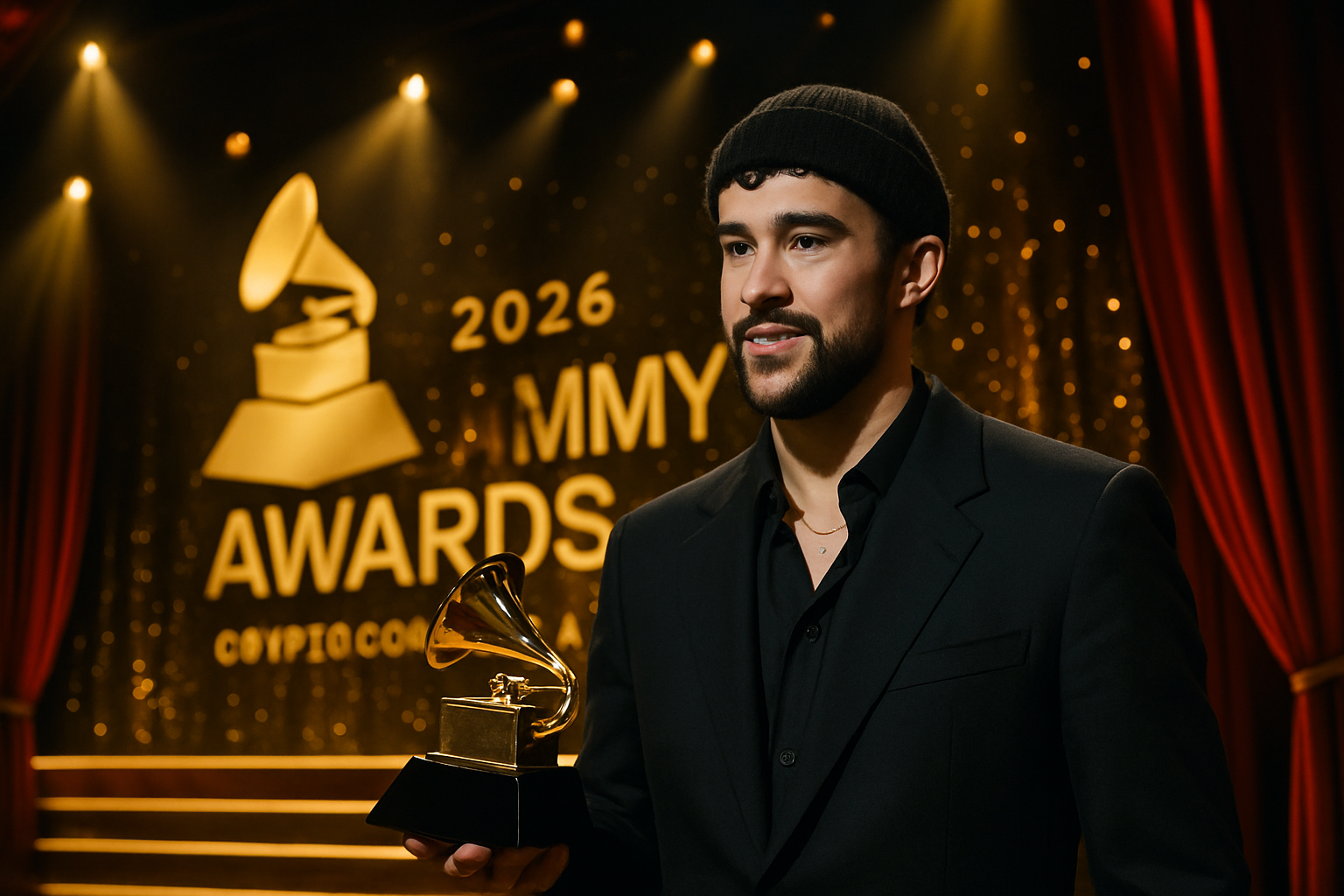
The 68th Grammy Awards at Los Angeles' Crypto.com Arena delivered a historic night that redefined the landscape of American music, with Bad Bunny becoming the first Latino artist to claim Album of the Year while Kendrick Lamar extended his record-breaking Grammy legacy with five additional wins.
Puerto Rican reggaeton superstar Bad Bunny achieved what many considered impossible when his album "Debí Tirar Más Fotos" (I Should Have Taken More Photos) won the Grammy's most prestigious award – the first Spanish-language album to capture Album of the Year in the ceremony's 68-year history. The victory represents a monumental breakthrough for Latino representation in mainstream American music.
"Puerto Rico," Bad Bunny began his emotional acceptance speech in Spanish, thanking those who believed in him and worked on the album. The win caps off a remarkable period that saw the artist not only dominate music charts but also use his platform for social activism.
Kendrick Lamar's Record-Breaking Achievement
While Bad Bunny made history with his Album of the Year victory, Kendrick Lamar emerged as the ceremony's biggest winner, collecting five Grammy awards to extend his career total to 27 – making him the most awarded rapper in Grammy history, surpassing Jay-Z's previous record of 25.
Lamar's wins included Best Rap Album for "GNX," Record of the Year for "Luther," Best Melodic Rap Performance for "Luther," Best Rap Song for "TV Off," and Best Rap Performance for "Eclipse's Chains & Whips." The achievement marks the second consecutive year Lamar has dominated the rap categories and makes him the first rapper to win Record of the Year twice.
"This recognition validates not just my work, but the entire hip-hop community's contribution to American culture," Lamar said during his acceptance speech.
— Kendrick Lamar, Multiple Grammy Winner
Political Undertones Define the Evening
The 2026 Grammy ceremony was marked by significant political activism, with multiple artists using their acceptance speeches to speak out against President Trump's immigration crackdown. Bad Bunny delivered particularly powerful remarks about immigration policy, declaring "Immigrants are the heartbeat of this country" and making direct anti-ICE statements that resonated throughout the arena.
Billie Eilish, who won Song of the Year for "WILDFLOWER," also used her platform to address immigration concerns, continuing a theme that ran throughout the evening's proceedings. The political atmosphere reflected the music industry's response to current federal immigration policies affecting Latino and immigrant communities.
Other Notable Winners and Moments
The ceremony featured several other significant achievements. Legendary filmmaker Steven Spielberg earned his first Grammy for "Music by John Williams," completing his EGOT status (Emmy, Grammy, Oscar, Tony). This recognition highlighted the intersection between film and music industries.
Portuguese guitarist Nuno Bettencourt won the Grammy for Best Rock Performance for his participation in "Changes (Live from Villa Park)," a collaboration performed at the final concert of heavy metal legend Ozzy Osbourne in Birmingham in 2025.
The evening was not without its controversial moments. Host Trevor Noah made jokes referencing Jeffrey Epstein that prompted President Trump to threaten legal action against the comedian, calling him a "pathetic, talentless" performer and labeling the ceremony "the worst." Trump's reaction added to the politically charged atmosphere of the evening.
Australia's Representation
International representation was also notable, with Tame Impala securing Australia's sole win of the evening. The victory demonstrated the global reach of the Grammy Awards while highlighting the ceremony's continued expansion beyond traditional American boundaries.
Cultural Significance and Future Impact
Bad Bunny's historic victory represents more than a single award – it signals a fundamental shift in how American music institutions recognize and celebrate diversity. The Album of the Year win for "Debí Tirar Más Fotos" validates Spanish-language music's commercial and artistic merit on the industry's biggest stage.
Industry analysts suggest this breakthrough could pave the way for increased recognition of non-English music across all Grammy categories. The victory comes at a time when Latino music has experienced unprecedented global success, with reggaeton and Latin trap influencing mainstream pop music worldwide.
Meanwhile, Kendrick Lamar's continued dominance reinforces hip-hop's position as America's most culturally significant musical genre. His record-breaking 27 Grammy wins span over a decade of consistently acclaimed work that has addressed social issues, personal struggles, and artistic innovation.
Ceremony Logistics and Production
Despite the political tensions and historic achievements, the ceremony itself proceeded smoothly at the Crypto.com Arena. The venue provided an appropriate backdrop for an evening that balanced celebration with activism, entertainment with social commentary.
The 2026 Grammy Awards will be remembered as a watershed moment for Latino representation in American music, while simultaneously cementing Kendrick Lamar's position as one of the most decorated artists in Grammy history. The evening demonstrated music's power to both reflect and influence cultural conversations about identity, representation, and social justice.
As the music industry continues to evolve, the 68th Grammy Awards established new benchmarks for diversity and artistic recognition that will likely influence future ceremonies and industry practices for years to come.