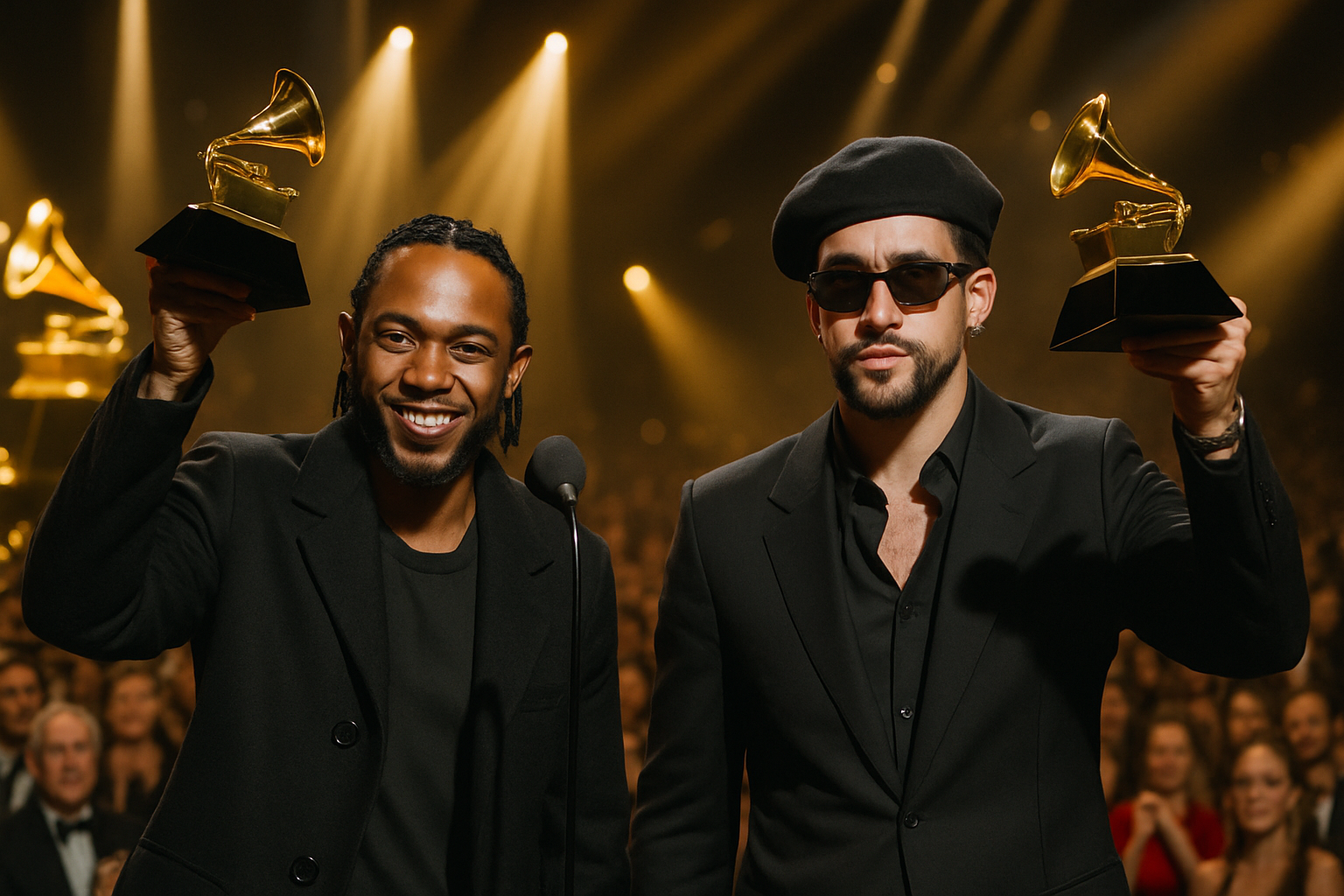
The 68th Grammy Awards held on February 1, 2026, at Los Angeles' Crypto.com Arena became a night of historic achievements and powerful political statements, with Kendrick Lamar breaking records and Bad Bunny making Grammy history while using the platform to defend immigrant rights.
Kendrick Lamar emerged as the evening's biggest winner, claiming five Grammy Awards and surpassing Jay-Z to become the most awarded rapper in Grammy history with 27 total wins. The Compton native entered the ceremony with 26 victories and needed just one more to break Jay-Z's long-standing record of 25 Grammy wins.
Kendrick Lamar's Record-Breaking Night
Lamar's historic evening began during the pre-telecast ceremony when he secured Best Rap Album for "GNX," officially breaking Jay-Z's record. By the end of the televised show, he had added four more trophies to his collection, including the prestigious Record of the Year for "Luther."
The rapper's five wins included Best Rap Album for "GNX," Record of the Year and Best Melodic Rap Performance for "Luther," Best Rap Song for "TV Off," and Best Rap Performance for "Eclipse's Chains & Whips." With his Record of the Year victory for "Luther," Lamar achieved another milestone, becoming the first rapper to claim the award twice and the first male artist and first rapper to win the category in consecutive years.
"This recognition represents more than personal achievement – it's validation for hip-hop as an art form that continues to evolve and inspire."
— Kendrick Lamar, during his acceptance speech
Bad Bunny Makes History and Politics
Puerto Rican superstar Bad Bunny created his own historic moment by becoming the first Latino artist to win Album of the Year, claiming the top prize for "Debí tirar más fotos" (I Should Have Taken More Photos). This marked the first time a Spanish-language album has won the Grammy's most prestigious category in the award show's 68-year history.
However, Bad Bunny's victory speech became the most talked-about moment of the evening when he used his platform to deliver a powerful message against U.S. Immigration and Customs Enforcement (ICE) and in defense of immigrant communities. The artist, who opened the ceremony with a vibrant performance blending reggaetón and traditional Caribbean rhythms, declared to the audience: "Immigrants are the heartbeat of this country."
His remarks included a pointed critique of ICE, the federal agency responsible for immigration enforcement, which has faced widespread criticism for its detention practices and deportation policies under the current administration. Bad Bunny's statement drew immediate applause inside the arena and sparked intense discussion across social media platforms.
Political Undercurrent Throughout the Ceremony
The Grammy Awards became unexpectedly political, with multiple artists using their moments on stage to address immigration policies. Billie Eilish, who won Song of the Year for "WILDFLOWER," echoed Bad Bunny's sentiments during her acceptance speech, making her own statement against ICE enforcement practices.
The political atmosphere was further heightened by host Trevor Noah's controversial jokes, including references to Jeffrey Epstein that prompted strong reactions from political figures. Former President Donald Trump responded on social media, calling the Grammy Awards "the worst" and threatening legal action over the comedy segments.
Other Notable Winners and Moments
The evening featured several other significant victories and moments. Steven Spielberg achieved a personal milestone, winning his first Grammy Award for "Music by John Williams," officially completing his EGOT (Emmy, Grammy, Oscar, Tony) status and joining the exclusive club of entertainers who have won all four major American entertainment awards.
The international music community was also represented, with various categories showcasing global talent. However, Peruvian nominees Flor Bromley and Ciro Hurtado were unable to secure wins in their respective categories, though the ceremony included a notable tribute to Tony Succar's contributions to Latin music.
Industry Impact and Cultural Significance
The 2026 Grammy Awards will be remembered not only for the records broken but for the platform it provided for political expression. Bad Bunny's historic Album of the Year win represents a significant breakthrough for Latino representation in the music industry's highest honors, potentially opening doors for future Spanish-language artists to receive mainstream recognition.
Kendrick Lamar's achievement as the most awarded rapper in Grammy history solidifies his position as one of hip-hop's most celebrated artists and demonstrates the genre's continued evolution and acceptance within the broader music industry establishment.
Broader Cultural Context
The ceremony took place against a backdrop of heightened political tensions regarding immigration policy in the United States. The artists' willingness to use their Grammy platform to address these issues reflects a growing trend of musicians engaging directly with social and political causes, even at risk of alienating portions of their audience.
The evening's events highlighted the Grammy Awards' role not just as a celebration of musical achievement, but as a cultural barometer reflecting the broader social conversations happening across America. The juxtaposition of historic artistic achievements with urgent political messaging created a ceremony that will likely be analyzed and discussed long after the final award was presented.
As the music industry continues to grapple with questions of representation, artistic freedom, and social responsibility, the 2026 Grammy Awards established a new precedent for how major entertainment events can serve as platforms for both celebration and activism. The night proved that music's power extends far beyond entertainment, serving as a vehicle for historical achievement and social commentary in equal measure.