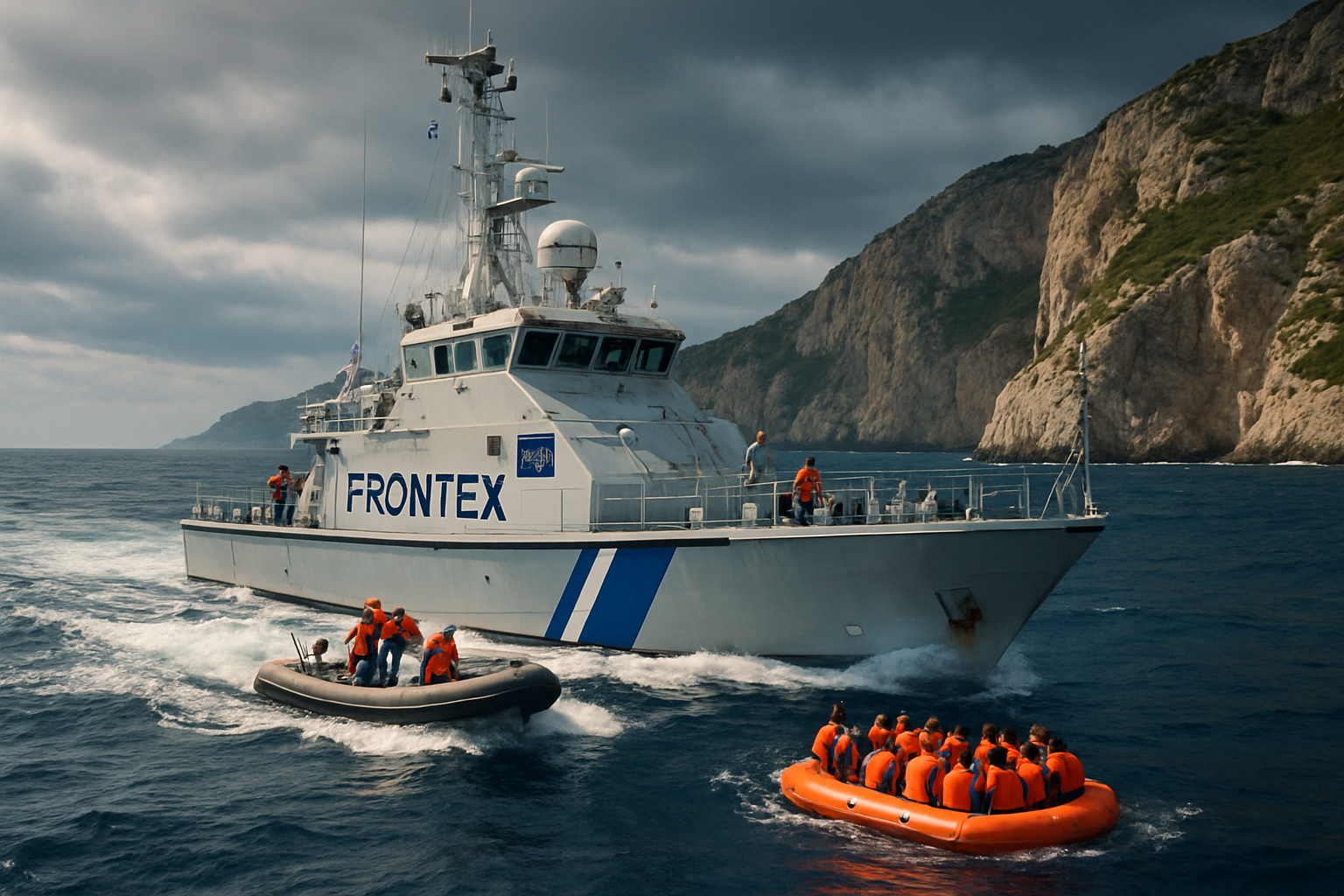
Greece confronted a serious dual security crisis on Monday as a Frontex maritime patrol vessel exploded near Kastellorizo island, injuring five crew members, while authorities simultaneously arrested a 58-year-old Polish national on espionage charges at the strategically vital Souda Bay naval base in Crete.
The incidents, occurring within hours of each other on March 16, 2026, underscore the mounting security challenges facing Greece as it maintains its critical position as guardian of the European Union's southeastern maritime borders while hosting crucial NATO Mediterranean operations.
Frontex Vessel Incident Details
The Estonian-flagged Frontex patrol vessel struck rocky terrain outside Kastellorizo's harbor during a routine maneuver, according to initial reports from TO VIMA. The vessel, carrying six crew members at the time of impact, subsequently experienced an explosion that injured five of the personnel aboard.
Three separate Greek news sources provided varying casualty figures, with TO VIMA reporting two injuries, while Naftemporiki confirmed five crew members were wounded in what they described as an "explosion" following the vessel's grounding. The discrepancy in casualty numbers highlights the developing nature of the emergency response and investigation.
Kastellorizo, Greece's easternmost island, sits just 2.5 kilometers from the Turkish coast and serves as a critical observation point for Frontex operations monitoring irregular migration and maritime security in the Eastern Mediterranean. The island's strategic location makes it a frequent staging ground for European border protection activities.
"The Estonian vessel struck a rocky point outside Megisti's harbor during a maneuver, leading to the explosion,"
— Initial Greek media reports
Emergency response teams were immediately dispatched to the scene, with Greek Coast Guard vessels and medical personnel coordinating the evacuation and treatment of injured crew members. The cause of the explosion following the grounding remains under investigation by both Greek authorities and Frontex officials.
Espionage Arrest at Souda Bay
Simultaneously, Greek authorities detained a 58-year-old Polish citizen at the Souda Bay naval base on Crete, charging him with espionage activities. The suspect, who maintained his innocence, claimed he was "on vacation" and had been "sending photographs to friends."
Despite his denials, a Greek court ordered the man's pre-trial detention pending a full investigation into his activities at one of the Mediterranean's most strategically important military installations. Souda Bay serves as a crucial NATO base hosting Greek, American, and allied naval operations, providing oversight of vital maritime routes connecting Europe, Africa, and the Middle East.
The timing of this arrest is particularly significant given the broader pattern of intelligence activities targeting European military installations. Historical context from previous memory records indicates this follows a February 2026 incident where Greek police arrested a 36-year-old Georgian national of Azerbaijani origin conducting systematic surveillance at the same Souda Bay facility.
Strategic Significance of Souda Bay
The Souda Bay naval base represents one of NATO's most valuable Mediterranean assets, recently hosting the USS Gerald R. Ford aircraft carrier during resupply operations. Its geographic position provides critical oversight of maritime routes between Europe, Africa, and the Middle East, making it an attractive target for foreign intelligence operations.
The facility's importance has only grown amid current Middle Eastern tensions and the strategic competition between major powers in the Mediterranean region. The base serves multiple functions: supporting NATO's southern flank operations, facilitating rapid deployment capabilities, and monitoring regional maritime security threats.
Security experts note that the professional nature of surveillance operations targeting Souda Bay suggests state-sponsored rather than amateur intelligence gathering. The systematic approach observed in recent incidents indicates sophisticated understanding of military operations, personnel movements, and security protocols.
Broader Security Context
These dual incidents occur against a backdrop of heightened security concerns across the Eastern Mediterranean and broader European region. Greece has emerged as a critical frontline state managing multiple security challenges: migration pressures, maritime border protection, counter-intelligence operations, and maintaining NATO commitments.
The Frontex vessel incident highlights the operational risks faced by European border protection personnel operating in challenging Mediterranean conditions. These crews routinely navigate treacherous waters, unpredictable weather, and complex geopolitical tensions while conducting life-saving search and rescue operations alongside border security missions.
Meanwhile, the espionage case represents part of a broader pattern of intelligence activities targeting European military installations. Similar cases have emerged across NATO countries, suggesting coordinated efforts to penetrate Western defense capabilities and gather intelligence on military operations, infrastructure vulnerabilities, and alliance coordination mechanisms.
International Implications
The Polish national's arrest raises complex diplomatic questions between EU and NATO allies. Poland and Greece maintain strong bilateral relations within both organizations, making espionage allegations particularly sensitive. The case will require careful handling to maintain alliance cohesion while protecting legitimate security interests.
For Frontex operations, the vessel incident demonstrates the inherent risks in maritime border protection missions. The agency has steadily expanded its presence in Greek waters as migration pressures and regional instability have intensified, requiring increasingly sophisticated vessels and personnel to operate in challenging conditions.
These incidents also underscore Greece's strategic importance as NATO's southeastern anchor. The country's geographic position, hosting critical military infrastructure while managing complex migration flows, places enormous security burdens on Greek authorities who must balance humanitarian responsibilities with national defense requirements.
Investigation and Response
Greek authorities have launched comprehensive investigations into both incidents. The Frontex vessel explosion will be examined by maritime safety officials, European border protection authorities, and international partners to determine the sequence of events leading from grounding to explosion.
The espionage investigation involves Greece's National Intelligence Service (EYP), which has demonstrated increasing sophistication in counter-intelligence operations. Digital evidence seized from the suspect will undergo forensic analysis, while investigators examine his activities, communications, and potential connections to foreign intelligence services.
Enhanced security measures are expected at critical installations across Greece, building on protocols developed following previous intelligence incidents. These may include increased surveillance, modified access procedures, and enhanced screening of personnel and visitors to sensitive facilities.
Regional Security Implications
The dual incidents highlight Greece's complex security environment at the intersection of European, Mediterranean, and Middle Eastern regional dynamics. As tensions persist across multiple theaters—from the ongoing Middle East crisis to broader strategic competition between major powers—Greece's strategic installations face mounting pressure from various threat vectors.
For European security architecture, these events demonstrate the need for enhanced cooperation between national intelligence services, improved information sharing protocols, and coordinated responses to state-sponsored intelligence operations. The pattern of targeting NATO facilities across different countries suggests systematic efforts requiring collective defense responses.
The incidents also reveal operational challenges facing European border protection efforts. Frontex operations in the Eastern Mediterranean must balance humanitarian rescue missions with security imperatives, often in dangerous conditions that expose personnel and equipment to significant risks.
Looking Forward
As investigations continue, both incidents will likely influence future security protocols and operational procedures. The Frontex vessel explosion may prompt enhanced safety measures for maritime patrol operations, while the espionage arrest will strengthen counter-intelligence procedures at sensitive military installations.
For Greece specifically, these events reinforce the country's position as a critical frontline state managing diverse security challenges. The government must continue balancing humanitarian obligations in migration assistance with national security imperatives in protecting strategic infrastructure and alliance partners' interests.
The international implications extend beyond immediate bilateral concerns to broader questions about alliance security, intelligence cooperation, and the protection of critical infrastructure in an era of increasing strategic competition. Success in addressing these challenges will require sustained cooperation between Greek authorities, European partners, and NATO allies to maintain regional stability and security.