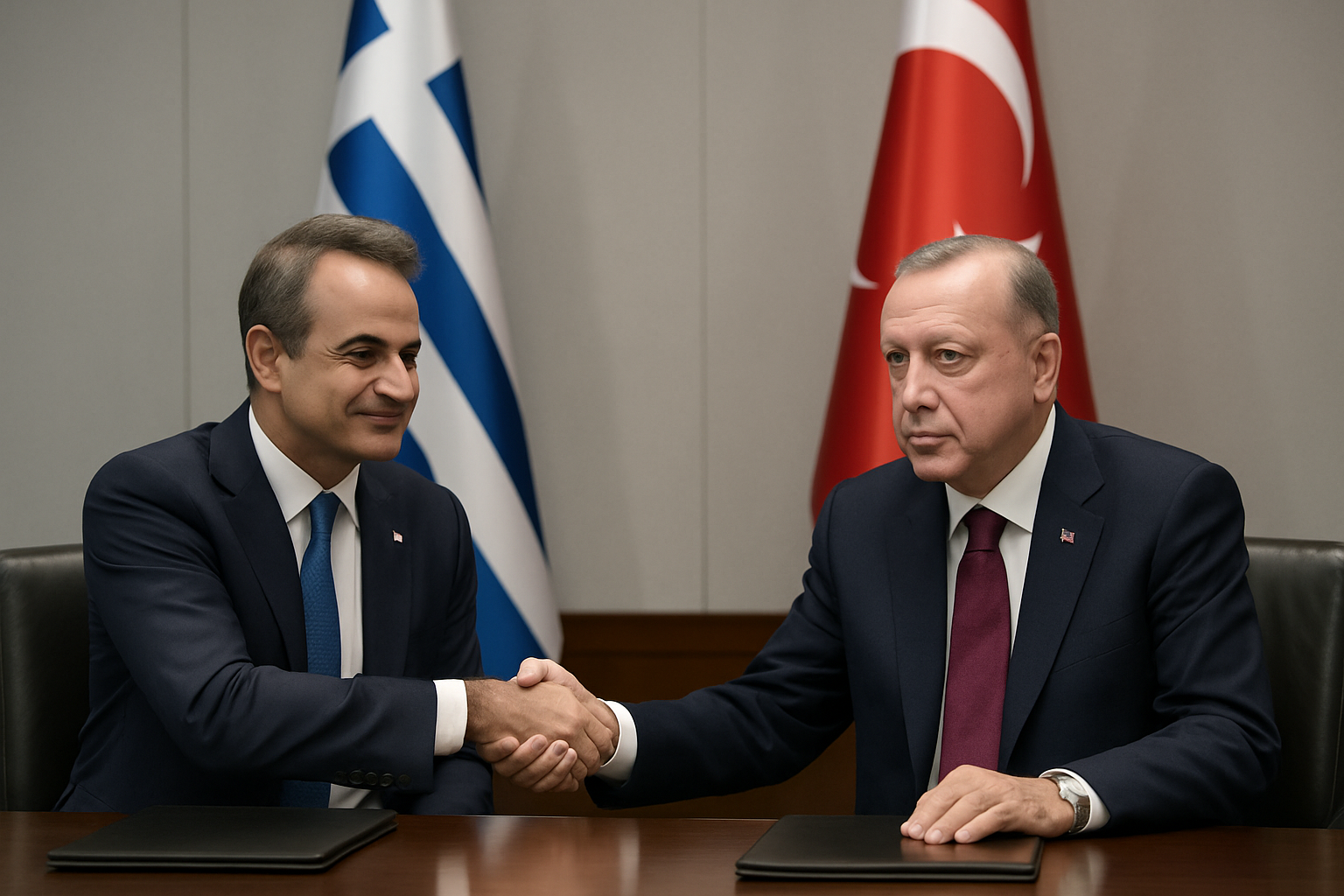
Greek Prime Minister Kyriakos Mitsotakis and Turkish President Recep Tayyip Erdogan signed seven comprehensive cooperation agreements on February 11, 2026, following high-level meetings in Ankara that marked the most significant diplomatic breakthrough between the two nations in years.
The agreements, concluded during the 6th High-Level Cooperation Council between Greece and Turkey, represent a coordinated effort to improve bilateral relations despite persistent disagreements over territorial issues in the Aegean Sea and Eastern Mediterranean.
Seven-Point Cooperation Framework
The signed agreements encompass a broad range of bilateral cooperation areas:
- Joint Declaration between the Government of the Hellenic Republic and the Government of the Republic of Turkey
- Cooperation framework for economic development and trade enhancement
- Educational and cultural exchange programs
- Environmental protection and climate change initiatives
- Tourism and transportation cooperation
- Energy sector collaboration agreements
- Scientific and technological partnership protocols
The comprehensive nature of these agreements demonstrates both countries' commitment to expanding cooperation beyond traditional diplomatic channels into practical areas affecting citizens' daily lives.
Calls for Reduced Regional Tensions
During joint statements following their meeting, Prime Minister Mitsotakis emphasized the importance of maintaining dialogue even during periods of disagreement. "Even when we disagree, it is important that we do not lead to crises and tensions," Mitsotakis stated, calling for an end to threats in bilateral relations.
"It is time to lift any threat that comes from the past in our relations. If not now, when?"
— Kyriakos Mitsotakis, Greek Prime Minister
The Greek leader's comments were widely interpreted as a reference to Turkey's casus belli declaration regarding potential Greek territorial water extensions, which has remained a source of tension between the two NATO allies.
President Erdogan responded with measured optimism, acknowledging the complexity of outstanding issues while expressing confidence in diplomatic solutions. "We had agreed from 2023 that we would continue our dialogue," Erdogan stated, referencing previous commitments to maintain diplomatic engagement.
"The issues in the Aegean and Eastern Mediterranean are thorny but not unsolvable, on the basis of international law."
— Recep Tayyip Erdogan, Turkish President
Strategic Timing and Context
The timing of these agreements is particularly significant, occurring just hours after President Erdogan executed a dramatic midnight cabinet reshuffle that replaced both Interior and Justice Ministers. Greek media characterized this as a "mini-reorganization" that appeared strategically timed to strengthen Turkey's negotiating position before the crucial bilateral discussions.
The meetings took place against the backdrop of broader regional diplomatic initiatives, with Turkey increasingly positioning itself as a key mediator in international conflicts. Turkey recently served as the venue for Iran-US nuclear talks and continues to facilitate various diplomatic processes across the Middle East.
Cyprus Question Addressed
In a notable development, Prime Minister Mitsotakis told President Erdogan that current conditions present a "window of opportunity" for progress on the Cyprus problem. Speaking during their joint press conference, Mitsotakis referenced UN Secretary-General Antonio Guterres' recent initiatives as creating favorable conditions for renewed dialogue.
"We discussed with the president the latest developments on the Cyprus problem, on which the Greek position remains clear," Mitsotakis stated. "United Nations Secretary-General Antonio Guterres' initiatives are creating a window of opportunity for the restart of substantive dialogue from where it left off in 2017."
The Greek Prime Minister emphasized that any Cyprus solution process "must always move within the bounds of the UN Security Council's resolutions," maintaining Greece's traditional position on the framework for any future settlement.
Economic and Trade Implications
The cooperation agreements are expected to significantly boost bilateral trade and economic partnerships between Greece and Turkey. Both countries have expressed interest in expanding commercial relationships, particularly in sectors such as energy, tourism, and technology.
The timing coincides with broader European economic initiatives and could position both nations to benefit from increased regional cooperation. Turkey's recent diplomatic successes, including major energy agreements with Saudi Arabia worth $2 billion for renewable energy projects, demonstrate Ankara's commitment to diversified international partnerships.
Regional and International Response
The breakthrough has been welcomed by international partners, particularly given both countries' NATO membership and strategic importance in southeastern Europe and the Eastern Mediterranean. The agreements represent a practical approach to managing persistent disputes while building constructive cooperation in areas of mutual benefit.
European Union officials have privately expressed support for improved Greece-Turkey relations, viewing the development as potentially stabilizing for broader regional security. The cooperation comes at a time when both nations face various international challenges that could benefit from enhanced bilateral coordination.
Looking Forward
While significant territorial and maritime disputes remain unresolved, the February 11 agreements establish a framework for continued dialogue and practical cooperation. Both leaders emphasized the importance of maintaining communication channels and avoiding escalation, even when fundamental disagreements persist.
The success of these initial agreements will likely depend on implementation mechanisms and both countries' commitment to following through on specific cooperation protocols. Previous Greece-Turkey rapprochement efforts have faced challenges in translating high-level political agreements into sustained practical cooperation.
The joint declaration and accompanying agreements represent the most comprehensive bilateral cooperation framework between Greece and Turkey in recent years, offering a potential model for how neighboring countries can manage disputes while pursuing mutual benefits through enhanced cooperation.