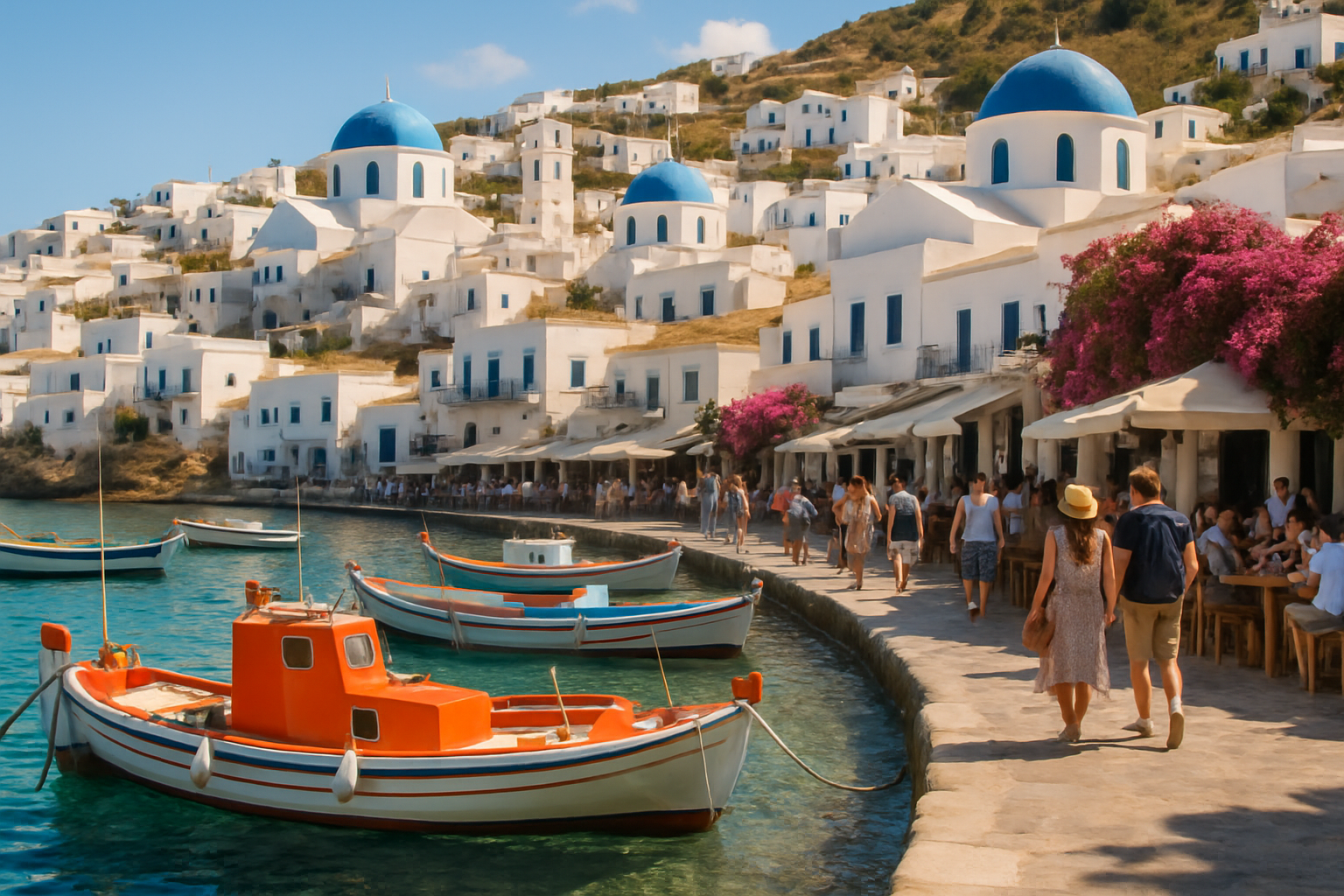
Greece's premier tourist destinations are showing encouraging signs of recovery as the 2026 season opens, while a significant shift away from independent travel toward professional agency services emerges across Europe amid persistent global disruptions and rising costs.
The Greek islands of Crete, Rhodes, and Santorini are accelerating preparations for what industry experts anticipate will be a pivotal season, capitalizing on high demand during the Easter period to signal the start of a robust recovery. These developments come as the travel industry continues to navigate the most challenging operational environment since the COVID-19 pandemic.
Greek Islands Lead Mediterranean Recovery
According to reports from major Greek tourism stakeholders, the country's most popular Aegean destinations are experiencing strong early booking patterns as travelers seek safer European alternatives to traditional Middle Eastern routes. The islands have positioned themselves as beneficiaries of the global aviation crisis that has seen over 18,000 flights cancelled worldwide since March 2026.
"The strong players and popular tourist destinations of the Aegean are already accelerating from this year's Easter period," industry sources confirm. Crete, Rhodes, and Santorini are particularly well-positioned to capitalize on the current demand surge, leveraging their reputation for safety, accessibility, and authentic Mediterranean experiences.
This positioning aligns with broader European tourism patterns, where destinations like Croatia and Spain have emerged as primary beneficiaries of travelers seeking alternatives to volatile regions. Croatia has deployed Europe's most extensive seasonal healthcare network with 62 tourist medical clinics for the 2026 season, while Spain's capacity of 513.6 million annual nights positions it to capture significant redirected demand.
Professional Travel Services Surge
Simultaneously, Italian tourism industry analysis reveals a fundamental shift in traveler behavior, with professional travel agencies experiencing a resurgence over do-it-yourself planning. This transformation reflects growing consumer awareness of the risks associated with independent travel in an increasingly unpredictable global environment.
"The differences between those who decide to travel independently versus entrusting themselves to a professional are significant in terms of flight and hotel cancellations and protection from rising fuel costs."
— Italian Tourism Industry Report
The shift toward professional services has been accelerated by widespread gaps in travel insurance coverage, particularly regarding war-related cancellations. Standard travel insurance policies exclude conflict-related disruptions, leaving independent travelers financially exposed when emergencies arise. Austrian Consumer Centres confirm that travelers experiencing regional "anxiety" have no recourse unless they book through organized tours with comprehensive coverage frameworks.
Global Context Reshapes Travel Patterns
The current tourism landscape has been fundamentally altered by the unprecedented Middle Eastern aviation crisis that began in March 2026. With Dubai International Airport—the world's busiest with over 86 million annual passengers—completely shut down due to missile damage, and eight countries maintaining simultaneous airspace closures, the global aviation network has experienced its most severe disruption since the pandemic.
These disruptions have created a cascading effect throughout the industry. Jet fuel prices have surged 122% from $85-90 to $150-200 per barrel due to the closure of the Strait of Hormuz, affecting 40% of global oil transit. Major carriers including Emirates, Etihad, Air France-KLM, and Wizz Air have suspended Middle Eastern operations indefinitely, forcing complex rerouting through Caribbean stopovers for trans-Pacific routes.

Economic Impact and Industry Transformation
The financial implications of these disruptions extend far beyond individual travelers. The case of Swedish traveler Emily Grosser, who paid $560 for alternative routing from Paris to Australia after her Dubai connection was cancelled, exemplifies the extreme costs faced by passengers requiring emergency rerouting.
This economic pressure has accelerated a fundamental transformation within the tourism industry toward quality-focused strategies over volume-based approaches. The global tourism infrastructure investment surge continues at unprecedented levels, exceeding $570 billion in 2026, with emphasis on comprehensive visitor services including healthcare, transportation, and digital systems.
Rome's Trevi Fountain managed access system, generating €6 million annually through €2 fees while protecting the historic site, provides a successful template for balancing economic objectives with cultural preservation. This model represents the sophisticated destination management that is becoming essential for competitiveness in the current environment.
Technology Integration and Authentic Experiences
Generation Z travelers, representing 50% of those making multiple trips over five days annually, are driving demand for AI-integrated travel planning combined with authentic cultural experiences. This demographic seeks technology that enhances rather than replaces cultural authenticity, requiring destinations to balance digital innovation with preservation of traditional character.
Regional cooperation is increasingly replacing individual destination competition through coordinated marketing efforts, collaborative infrastructure development, and multi-destination experiences. This approach creates economic multiplier effects extending beyond traditional hospitality to include transportation improvements, cultural industry support, artisan networks, and year-round employment creation.
Climate Resilience and Sustainability
The importance of climate-resilient infrastructure has become paramount, with January 2026 marking the 18th consecutive month of global temperatures exceeding 1.5°C above pre-industrial levels. Destinations implementing proactive adaptation measures, including alternative transportation systems, weather-resistant infrastructure, and seasonal diversification strategies, demonstrate greater resilience to environmental challenges.
Success factors consistently emerging across the industry include cultural authenticity preservation enhanced by technology, strategic infrastructure investment, meaningful community involvement in tourism planning, international cooperation frameworks, and adaptive management responding to changing consumer preferences.
Future Implications
The developments in Greek tourism and the broader shift toward professional travel services represent more than temporary market adjustments—they signal a fundamental transformation in how the tourism industry operates in an increasingly volatile world. Enhanced security screening, mandatory conflict insurance, and pre-approval systems for high-risk destinations are likely to become standard features of international travel.
Recovery timelines remain uncertain, as unlike weather-related disruptions, current challenges depend on military and diplomatic resolutions rather than predictable natural patterns. Airlines are conducting daily operational reviews but cannot make long-term scheduling decisions with multiple airspaces closed and volatile security conditions.
The success of destinations like the Greek islands in navigating these challenges will likely serve as templates for sustainable tourism development in the decades ahead. Their emphasis on safety, quality service, cultural authenticity, and professional travel partnerships positions them to emerge stronger from the current unprecedented global tourism challenges.
As the industry continues to evolve, the choice between maintaining global connectivity and adapting to security-conscious regionalized travel patterns will define the sector's trajectory for years to come. The Greek islands' early success in this new environment, combined with the resurgence of professional travel services, suggests that quality, safety, and expertise will be the defining characteristics of successful tourism in the post-disruption era.