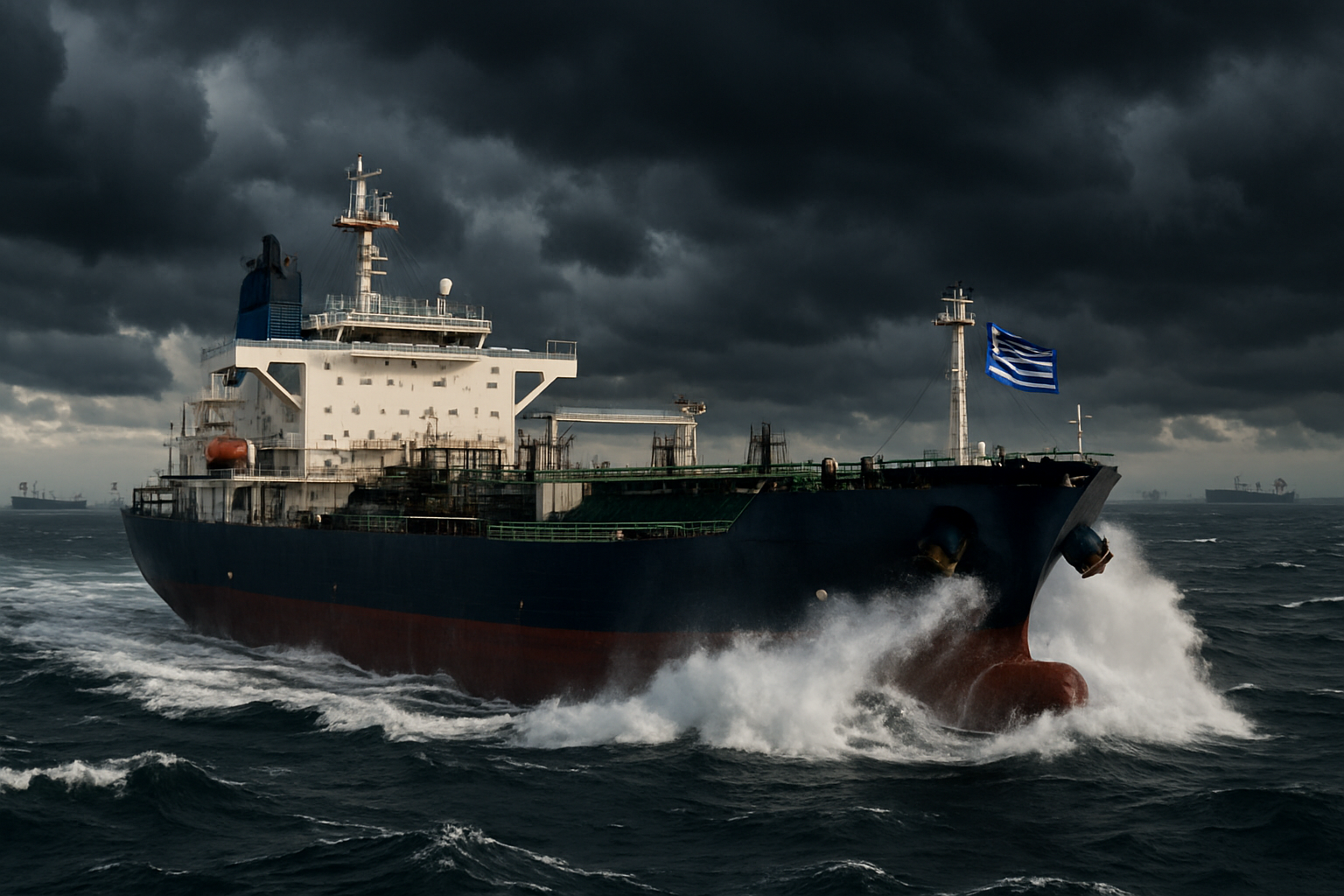
While the global maritime industry grapples with the most severe crisis since the Cold War, Greek shipping magnates are demonstrating exceptional resilience and strategic acumen. George Prokopiou has become the talk of international shipping circles after achieving historically high freight rates from his tanker fleet, while other Greek maritime companies expand operations despite unprecedented global challenges.
Prokopiou's Strategic Maritime Triumph
Greek tycoon George Prokopiou has emerged as a standout figure in international shipping discussions, having successfully secured freight rates at historic highs from his tanker operations. This achievement comes at a time when the global maritime sector faces extraordinary pressures from geopolitical tensions, supply chain disruptions, and regulatory challenges.
Prokopiou's success demonstrates the traditional Greek shipping approach of seizing opportunities where others dare not venture. His fleet's exceptional performance in volatile market conditions showcases the deep maritime expertise that has made Greek shipping a dominant force in global commerce for decades.
Greek Maritime Expansion Amid Global Turmoil
The resilience of Greek maritime companies is particularly evident in their strategic expansions during a period of unprecedented global challenges. Atlas Maritime, led by Leo Patitsas, has made a dynamic return to the Suezmax tanker market through strategic orders with DH Shipbuilding in South Korea, including options for additional vessels. This move represents a calculated pivot from automotive carriers to crude oil transportation, reflecting the industry's adaptability to changing market conditions.
Meanwhile, companies within the Polys V. Hadjioannou group have achieved remarkable operational excellence. Safety Management Overseas S.A. and Safe Bulkers Management Ltd. received top rankings in RISK4SEA's 6th edition "Top PSC Performers" list, achieving the highest scores in their respective categories with zero detentions over 36 months of verified inspection data.
"Greek maritime companies are demonstrating that operational excellence and strategic flexibility remain the cornerstones of success even in the most challenging global shipping environment."
— Maritime Industry Analyst
The Global Maritime Crisis Context
The achievements of Greek shipping companies are particularly impressive given the scale of current global maritime challenges. The industry faces its most severe crisis since the Cold War, with the Strait of Hormuz effectively closed, affecting 40% of global seaborne oil transit. This has created unprecedented disruptions:
- Oil prices have surged past $80 per barrel, with natural gas increasing 24% in Europe and 78% in the United States
- Major shipping companies Maersk and MSC have suspended Persian Gulf operations
- Over 150 oil and LNG tankers are stranded, representing billions in cargo value
- Qatar has halted LNG production at key facilities, affecting approximately 20% of global LNG exports
Shadow Fleet Operations and Regulatory Challenges
The maritime industry also confronts sophisticated sanctions evasion networks, with intelligence estimates suggesting over 600 vessels worldwide participate in Russia's shadow fleet operations. These vessels use false documentation and concealed ownership to circumvent international sanctions. The EU's 20th sanctions package has introduced a comprehensive maritime services ban, including restrictions on insurance, maintenance, port access, and technical support for Russian crude oil exports.
German investigative outlets have revealed that approximately one-third of Russia's shadow fleet operates without correct flag state authorization, creating potential legal enforcement opportunities under international maritime law. However, the sophisticated nature of these evasion methods presents ongoing challenges for maritime authorities worldwide.
Technology and Innovation in Maritime Operations
Despite these challenges, the maritime industry continues to evolve through technological advancement. China has mobilized its shipbuilding prowess and battery technology leaders like CATL to electrify shipping fleets, leveraging electric vehicle expertise for maritime applications. This initiative includes AI-powered navigation systems, cargo management, and route optimization technologies.
The Pure Car Truck Carrier (PCTC) market has reached a turning point after an extraordinary period from 2021-2024 that saw over 280 new vessel orders. However, 2025 witnessed subdued new ordering as the industry adapts to changing automotive trade patterns, including the regionalization of electric vehicle manufacturing.

Energy Security and Strategic Chokepoints
The current crisis has exposed critical vulnerabilities in global energy infrastructure. The 21-mile-wide Strait of Hormuz represents a single-point failure risk for modern logistics, demonstrating the over-dependence on strategic chokepoints with limited alternatives. This has accelerated discussions about supply diversification and alternative energy sources, though such transitions require years or decades to implement effectively.
The crisis has affected not just energy markets but entire supply chains dependent on Persian Gulf networks, impacting everything from automotive and electronics to textiles. Strategic petroleum reserves provide only temporary buffers for sustained disruptions of this magnitude.
Aviation and Maritime Convergence
The maritime crisis has been paralleled by unprecedented aviation disruptions, with over 18,000 flights cancelled worldwide as eight Middle Eastern countries simultaneously closed their airspace. Dubai International Airport, the world's busiest with over 86 million passengers annually, remains completely shut down due to missile damage. This has created cascading effects for global logistics networks that rely on both maritime and aviation connections.
Financial Market Impacts
Global financial markets have experienced severe disruptions, with Pakistan's KSE-100 crashing 8.97% in its largest single-day decline in history. South Korea's KOSPI plunged 12% with circuit breakers activated, while the Korean won hit a 17-year low. These market movements reflect the interconnected nature of global commerce and the immediate impact of maritime disruptions on financial systems worldwide.
"This is the most severe energy security crisis in decades, with single-chokepoint vulnerabilities exposed on a scale we haven't seen before."
— Samuel Ciszuk, Energy Analyst
Regional Implications and International Response
The crisis has severely strained regional coalitions, with the unprecedented Saudi Arabia/UAE/Qatar/Egypt diplomatic consensus threatened by attacks on member territories. Egypt's President Sisi condemned attacks on "sisterly Arab countries," warning of "comprehensive chaos." This has created complex diplomatic challenges as nations balance energy security needs with security concerns.
International evacuation operations have reached unprecedented scales, with Australia extracting 115,000 nationals, Germany 30,000 tourists, and Cyprus activating its ESTIA evacuation plan for the first time. These operations represent the largest coordinated evacuation effort since the Arab Spring of 2011.
Looking Forward: Industry Resilience and Adaptation
Despite these extraordinary challenges, the maritime industry continues to demonstrate remarkable resilience and adaptability. Greek shipping companies, in particular, have shown that operational excellence, strategic flexibility, and the ability to identify emerging opportunities in evolving cargo markets remain key success factors.
The success of companies like those in the Prokopiou and Hadjioannou groups, alongside the strategic expansions of firms like Atlas Maritime, illustrates that even in the most challenging global environment, well-managed maritime enterprises can not only survive but thrive.
The current crisis is likely to accelerate several industry trends, including enhanced risk assessment procedures, route diversification, and reduced dependence on single regional hubs. The template being set by this crisis will influence international approaches to maritime security, energy architecture, and conflict resolution for decades to come.
The Path Ahead
As the maritime industry navigates through this historic crisis, the examples set by Greek shipping companies provide valuable lessons in resilience, strategic thinking, and operational excellence. Their success during these challenging times reinforces Greece's position as a maritime powerhouse and demonstrates that even in the most turbulent waters, skilled navigation and strategic foresight can chart a course toward continued success.
The recovery timeline remains uncertain, depending entirely on military operations resolution and diplomatic normalization rather than predictable factors like weather disruptions. However, the foundation laid by operational excellence and strategic adaptation positions the best maritime companies to emerge stronger from this unprecedented global challenge.