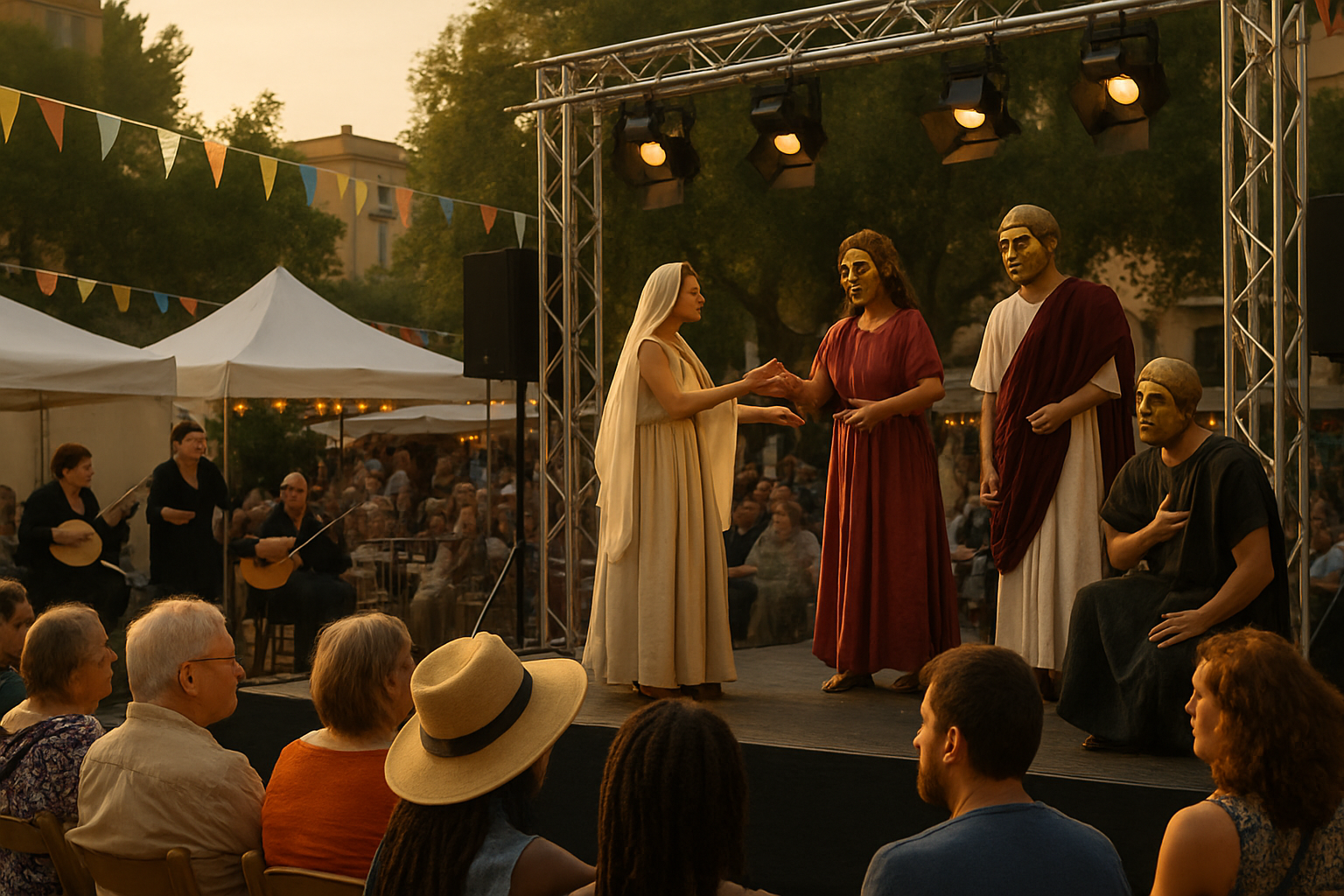
As May 2026 unfolds across the Mediterranean, Greece and Portugal emerge as exemplars of sophisticated cultural programming that seamlessly blends ancient traditions with contemporary innovation, continuing the momentum of the unprecedented global cultural renaissance documented since February 2026.
From Athens' ambitious theatrical seasons featuring both classical Euripides and cutting-edge contemporary works to Portugal's dynamic festival circuit celebrating everything from traditional fado to avant-garde cinema, these neighboring Mediterranean nations are demonstrating how authentic cultural expression can achieve global appeal while maintaining deep local significance.
Greece's Theatrical Renaissance: From Euripides to Contemporary Innovation
The Athenian theatrical scene remains in "intense rhythms" this May, as described by local cultural observers, presenting an extraordinary range of performances that span nearly three millennia of dramatic tradition. Contemporary political narratives stand alongside emblematic classical works, creating a vibrant cultural ecosystem that serves both local audiences and international visitors.
This programming diversity reflects Greece's strategic positioning as a cultural bridge between ancient Mediterranean traditions and modern European artistic movements. The successful integration of classical Greek drama with contemporary theatrical innovation demonstrates the country's commitment to preserving its unparalleled cultural heritage while fostering new artistic expression.
"The Athens cultural scene provides a unique laboratory where ancient wisdom meets contemporary urgency, creating performances that speak to universal human experiences."
— Cultural Programming Director, Athens Municipal Theatre
The economic impact extends far beyond ticket sales, generating substantial revenue through cultural tourism, with May typically representing peak season for international visitors seeking authentic Greek cultural experiences. Hotels report sustained high occupancy rates, while restaurants and cultural businesses throughout Athens benefit from the theatrical renaissance.
Portugal's Multifaceted Cultural Explosion
Simultaneously, Portugal showcases an equally impressive cultural agenda spanning multiple artistic disciplines. The country's cultural programming encompasses cinema through the IndieLisboa festival, contemporary dance via the Transborda festival, jazz performances in Valado dos Frades, and innovative fado presentations featuring acclaimed artist Carminho.
The diversity extends to visual arts with José Pedro Croft's "Reflexos, Enclaves, Desvios" exhibition, demonstrating Portugal's commitment to supporting both traditional cultural forms and experimental contemporary expression. This comprehensive approach positions Portugal as a cultural destination offering depth beyond its well-known historical attractions.
Portugal's strategy reflects lessons learned from successful cultural programming worldwide, emphasizing community engagement over elite consumption while maintaining artistic excellence. The integration of established artists like Carminho with emerging talents creates programming that serves multiple audiences simultaneously.
The Global Cultural Renaissance Context
These May 2026 developments continue the documented "February 2026 Cultural Renaissance" — an unprecedented period of coordinated international cultural activity spanning multiple continents. From Cyprus's youth-focused Fengaros High festival to Estonia's sophisticated classical music initiatives, smaller nations are achieving disproportionate cultural influence through strategic programming that emphasizes authenticity over scale.
The success patterns emerging across this global renaissance share common elements: technology enhancement rather than replacement of traditional practices, community-centered programming that prioritizes meaningful engagement, economic sustainability through cultural tourism and educational partnerships, and international cooperation that respects local distinctiveness while fostering global understanding.
Economic and Diplomatic Impact
The cultural initiatives across Greece and Portugal generate substantial multiplier effects extending far beyond immediate programming costs. Cultural tourism to Athens and Lisbon has increased significantly, with visitors specifically seeking authentic artistic experiences rather than superficial entertainment.
These programming strategies create year-round economic activity through enhanced international recognition, educational partnerships with institutions worldwide, and the development of lasting cultural infrastructure including performance networks, artistic collaborations, and community organizations that remain active beyond specific events.
From a diplomatic perspective, both nations leverage cultural programming as soft power tools, strengthening relationships within the European Union while building bridges to other Mediterranean cultures and global artistic communities. The cultural sector increasingly functions as strategic infrastructure equivalent to transportation or communication systems.
Community Engagement and Accessibility
A fundamental shift characterizes the programming approach in both countries: the evolution from elite cultural consumption toward dynamic programming serving multiple societal functions simultaneously. Greek theatrical programming includes educational outreach connecting schools and communities, while Portuguese festivals incorporate accessibility features ensuring broad community participation.
This democratization of cultural access reflects broader trends in the global cultural renaissance, where successful institutions serve heritage preservation, economic development, international cooperation, and social cohesion functions concurrently.
Technology-Tradition Synthesis
Both Greece and Portugal demonstrate sophisticated integration of digital tools with traditional cultural forms. Advanced acoustics and recording technology document performances for broader sharing, while social media enables global participation without compromising the essential community character of live performances.
This approach contrasts sharply with earlier concerns that digitization might diminish cultural authenticity. Instead, May 2026 programming shows thoughtful technology integration extending cultural reach while maintaining community ownership and spiritual significance of traditional practices.
Climate Adaptation and Sustainability
Cultural programming across the Mediterranean increasingly incorporates climate resilience considerations, with indoor venue alternatives, flexible scheduling, and contingency planning protecting both performers and audiences while maintaining essential cultural functions. This adaptive management approach demonstrates the sector's commitment to sustainability without compromising artistic quality.
Environmental consciousness particularly appeals to Generation Z audiences, who increasingly demand authentic cultural experiences combined with responsible environmental practices. This demographic shift influences programming decisions and venue management throughout the region.
Future Implications and Templates
The success of Greek and Portuguese May 2026 programming establishes precedents for 21st-century cultural stewardship that other nations can adapt to their specific circumstances. The balance achieved between innovation and tradition, local authenticity and international cooperation, economic viability and cultural integrity provides practical templates for sustainable cultural development worldwide.
These approaches demonstrate that authentic cultural expression can achieve global appeal while maintaining local significance, creating sustainable models that serve community needs while achieving international recognition. The Mediterranean examples suggest that thoughtful cultural investment creates lasting positive impacts that honor the past while embracing future possibilities.
Looking Ahead
As the global cultural renaissance continues throughout 2026, the Greek and Portuguese models offer compelling evidence of culture's capacity to unite communities across boundaries while celebrating the distinctive qualities that make each community unique. Their success provides hope that cultural diversity will not only survive but thrive in an increasingly interconnected world.
The ongoing programming throughout May represents more than isolated cultural achievements — it demonstrates humanity's remarkable capacity for cultural resilience, creative adaptation, and international cooperation during periods of rapid technological change, climate pressures, and economic uncertainties.
For cultural institutions worldwide seeking relevance while preserving essential character, the Mediterranean approach offers a framework where heritage preservation and contemporary innovation can coexist productively, serving both local communities and global audiences through authentic artistic expression that transcends linguistic and cultural boundaries.