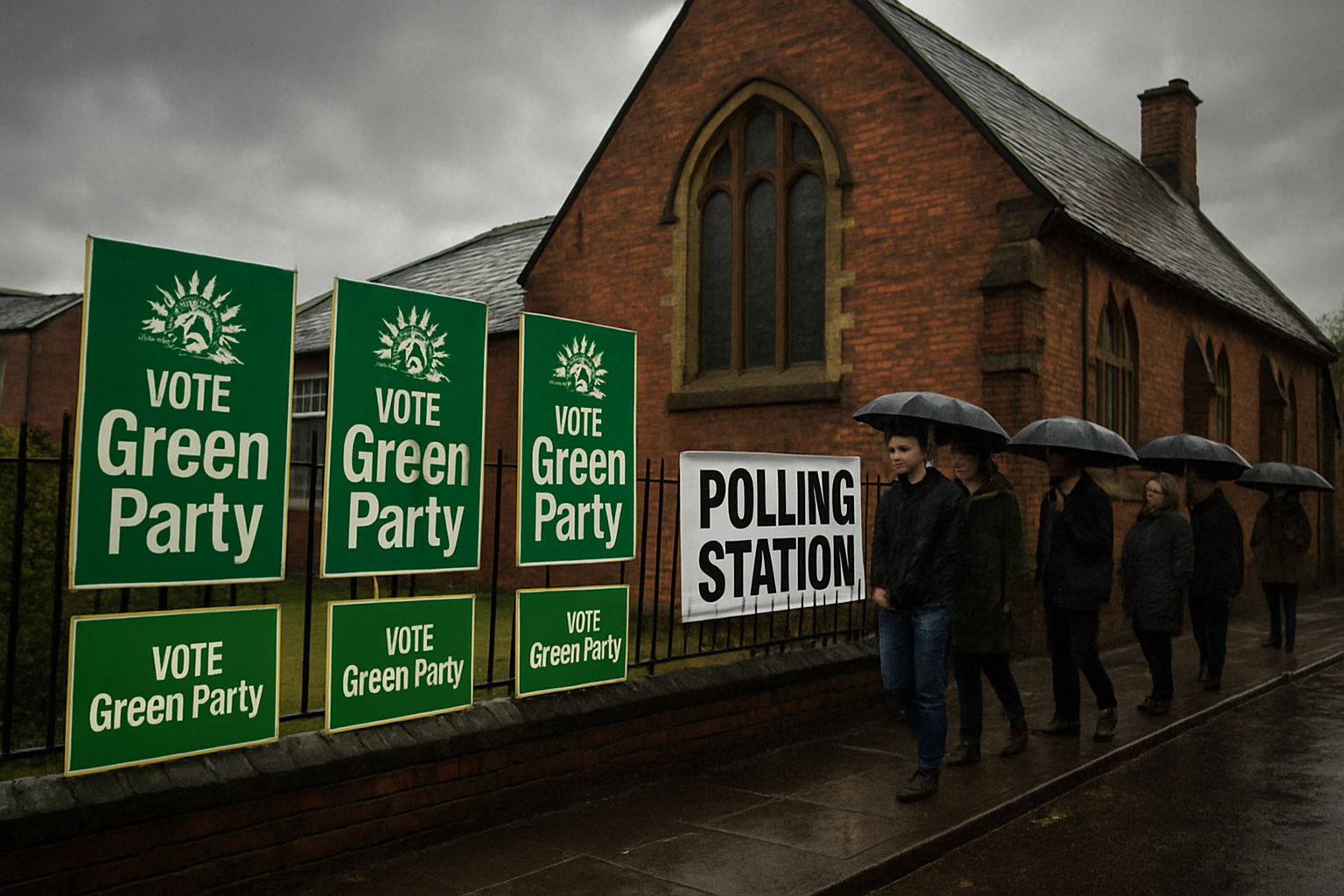
The Green Party achieved a landmark electoral breakthrough on Friday, winning the Gorton and Denton by-election in a devastating blow to Prime Minister Keir Starmer's Labour Party, which was relegated to third place in one of its safest seats for nearly a century.
Hannah Spencer, a 34-year-old local plumber and Green Party councillor, secured victory with approximately 41% of the vote, overturning Labour's commanding 13,000-vote majority from the 2024 general election. In a stunning upset that few political observers predicted, Labour suffered a catastrophic 25.3% drop in vote share, falling behind both the Greens and Nigel Farage's Reform UK party.
The result represents the Green Party's first parliamentary seat in northern England and marks one of the most significant electoral defeats for a governing party in a by-election in decades. Spencer's victory came in what Labour had dominated for almost a century, underscoring what political analysts are calling the "breakdown of Britain's two-party politics."
A Victory Against the Odds
In her victory speech at the count, Spencer emphasized her connection to the constituency's working-class roots. "I am no different from every single person in this constituency," she declared, reflecting the populist message that resonated with voters increasingly disillusioned with traditional party politics.
The final results painted a picture of dramatic political realignment:
- Green Party (Hannah Spencer): ~41% of votes
- Reform UK: Second place with significant gains
- Labour: Third place with ~25% (down 25.3% from 2024)
Spencer's background as a working plumber appears to have struck a chord with voters in an area that has traditionally been Labour's stronghold. Her victory speech emphasized economic pressures facing ordinary families, declaring that "working hard used to get you something" – a message that clearly resonated in the Greater Manchester constituency.
Starmer's Authority Under Fire
The defeat represents a personal humiliation for Keir Starmer, who had staked considerable political capital on retaining the seat. The Prime Minister made the controversial decision to block Andy Burnham, the popular Manchester Mayor, from standing as the Labour candidate, and made multiple campaign visits to the constituency in the final weeks.
Labour Party chair Anna Turley described the result as "clearly disappointing," while political commentators noted that this loss comes at the worst possible time for Starmer, who is already facing mounting pressure over the ongoing Peter Mandelson ambassador appointment scandal.
The timing of this electoral defeat compounds Starmer's current difficulties. His government is reeling from multiple high-profile resignations, including Chief of Staff Morgan McSweeney and Cabinet Secretary Chris Wormald, all connected to the Epstein files controversy surrounding the US ambassador appointment.
Reform UK's Strong Showing
Perhaps equally significant was the strong second-place finish by Reform UK, Nigel Farage's anti-immigration party. This represents a major breakthrough for the party in a traditional Labour heartland, suggesting that voter dissatisfaction extends beyond simply switching between the main parties.
The Reform UK surge reflects broader patterns seen across Europe, where populist and anti-establishment parties have been making significant inroads in traditional left-wing strongholds. Their success in Gorton and Denton indicates that economic anxieties and concerns over immigration are resonating even in areas where Labour once enjoyed unassailable support.
Implications for British Politics
The Gorton and Denton result signals a potentially seismic shift in British electoral politics. The Green Party's ability to win in a northern English constituency – traditionally seen as less receptive to environmental messaging – suggests their appeal has broadened beyond their traditional metropolitan base.
Political analysts are viewing this as evidence of the "breakdown of Britain's two-party politics," with voters increasingly willing to look beyond Labour and Conservative options. The result follows a pattern of electoral volatility that has characterized British politics since the Brexit referendum.
For the Green Party, this victory provides crucial momentum ahead of the May local elections. Spencer's success demonstrates that the party can compete effectively outside their traditional strongholds in Brighton and metropolitan areas. The victory also establishes a template for Green campaigns focusing on economic justice alongside environmental concerns.
A Test of Government Resilience
This electoral defeat comes as Starmer's government faces unprecedented pressure from multiple directions. The ongoing Metropolitan Police investigation into Peter Mandelson's alleged government leaks during the 2008 financial crisis, combined with the series of high-profile resignations, has created what sources describe as a "toxic atmosphere" within the parliamentary Labour Party.
Scottish Labour leader Anas Sarwar's unprecedented public call for Starmer's resignation – described as an extraordinary breach of party unity – has added to the Prime Minister's troubles. The Gorton and Denton defeat will likely embolden critics within Labour who question whether Starmer can lead the party to electoral success.
The result also has immediate implications for Labour's strategy ahead of May's local elections. With polls showing declining support and now a major by-election defeat, the party faces the prospect of significant losses that could further destabilize Starmer's leadership.
Looking Ahead
Hannah Spencer's victory speech struck themes that are likely to resonate beyond Gorton and Denton. Her emphasis on working families being left behind by traditional politics, combined with the Green Party's focus on economic justice and environmental sustainability, represents a potentially powerful political formula.
The defeat serves as a stark warning for Labour that their traditional working-class base cannot be taken for granted. In an area where the party had enjoyed almost uninterrupted dominance since the constituency's creation, the scale of this defeat suggests fundamental shifts in voter allegiance.
For Prime Minister Starmer, the immediate challenge is containing the political damage while addressing the multiple crises facing his government. With calls for his resignation from within his own party and a major electoral defeat in what should have been a safe seat, his political survival may depend on demonstrating renewed competence and restoring public confidence.
The Green Party, meanwhile, will be hoping to build on this breakthrough ahead of May's local elections. Spencer's victory provides proof that their message can resonate beyond traditional strongholds, potentially opening new electoral opportunities across England.
As the political establishment absorbs the implications of this stunning result, one thing is clear: British politics has entered a new phase of unpredictability, where traditional party loyalties can no longer be relied upon and voters are increasingly willing to embrace radical change.