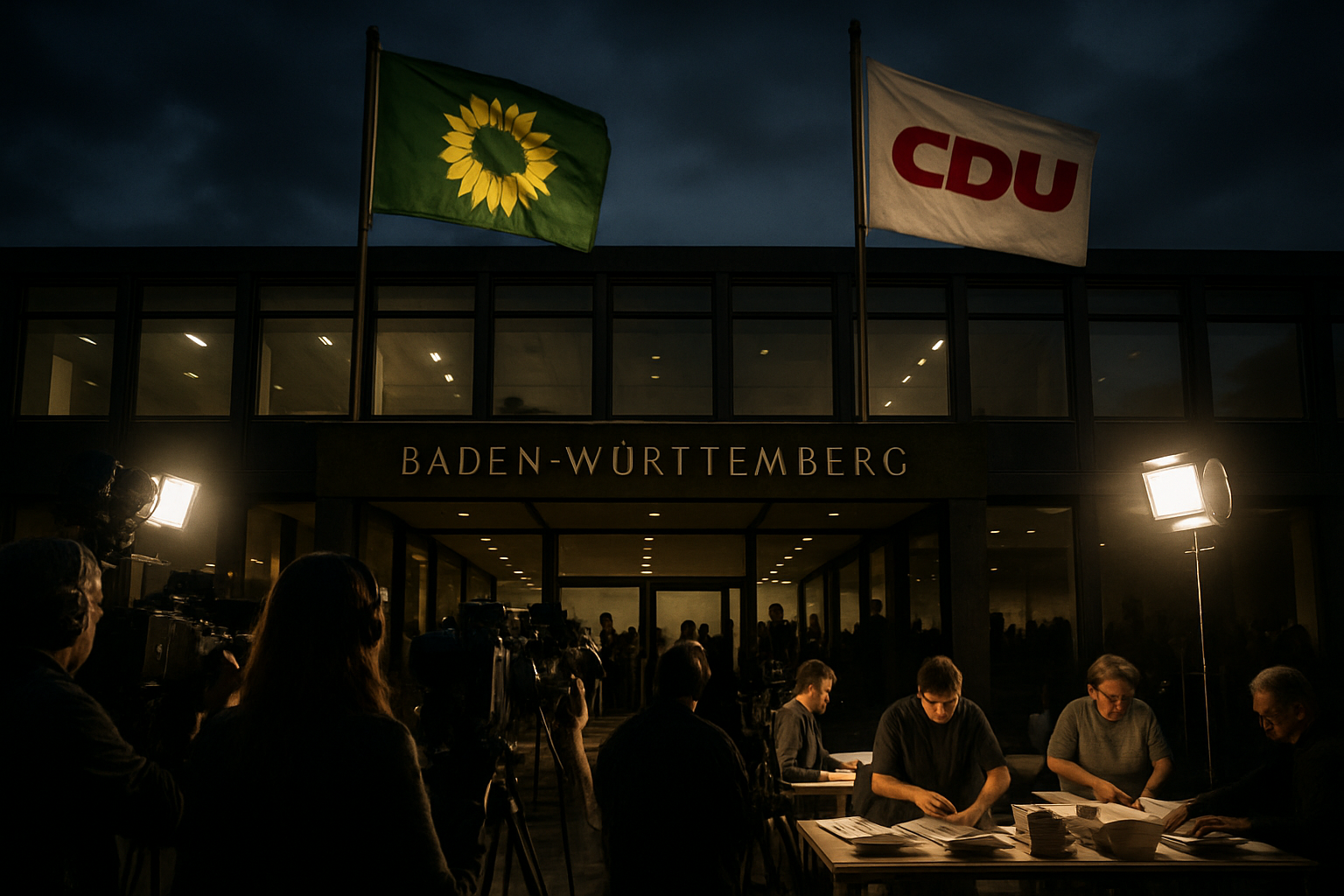
The Green Party successfully defended its position as the strongest force in Baden-Württemberg's state elections on March 8, 2026, despite suffering significant vote losses, while the far-right Alternative for Germany (AfD) achieved a historic breakthrough by nearly doubling its support to become the third-largest party.
According to preliminary results from European media sources, the Greens maintained their leading position with approximately 31.8% of the vote, though this represented a decline from their previous performance. The Christian Democratic Union (CDU), led by frontrunner Manuel Hagel, achieved a strong showing with 29.6% but fell short of their predicted victory that would have reclaimed the southwestern German state for the conservatives.
Environment Minister's Decisive Impact
The Green Party's victory was largely attributed to Environment Minister Cem Özdemir's candidacy, with political analyst Jörg Schönenborn noting that "for every second Green voter, Özdemir was the decisive factor." This represented what observers called a successful Green "comeback on the home straight" after the CDU had led in earlier polling.
Özdemir's transition from federal Environment Minister to potential Minister-President represents a significant political evolution, establishing a template for ecological modernization balanced with economic strength. The result ends Winfried Kretschmann's historic 15-year tenure as Germany's first Green Minister-President.
Far-Right Breakthrough Reshapes Political Landscape
The most striking development was the AfD's dramatic surge, nearly doubling their 2021 result to secure approximately 18% of the vote and third place in the state parliament. This breakthrough occurs at a time when the party faces ongoing legal challenges, including recent court rulings regarding intelligence surveillance classifications.
The AfD's success in Baden-Württemberg, known for its economic prosperity and technological innovation, demonstrates the party's expanding appeal beyond its traditional eastern German strongholds. European media coverage emphasized this as part of broader far-right gains across the continent.
Coalition Mathematics and Political Realignment
The election results create complex coalition scenarios, with both the Free Democratic Party (FDP) and The Left party failing to reach the 5% threshold required for parliamentary representation. The Social Democratic Party (SPD) narrowly maintained its presence in the state legislature but recorded what sources describe as its worst-ever state election result.
All established parties have ruled out cooperation with the AfD despite the far-right party's significant gains, likely necessitating either a continuation of the Green-CDU coalition or more complex three-party arrangements. The coalition mathematics reflect broader challenges facing established parties across Europe in responding to populist pressure while maintaining democratic governance standards.
National Implications for Chancellor Merz
The results represent the first major electoral test for Chancellor Friedrich Merz since taking office, with the outcome characterized as a significant setback for his CDU leadership. The party had expected to reclaim the state they governed for 58 years until 2011, making the defeat particularly stinging for conservative strategists.
French media coverage described the result as a "bad surprise" for the CDU, while German political analysts noted the implications for Merz's authority within the party. The election occurred following Merz's re-election as CDU leader with 91.2% support at the February Stuttgart party congress, where he had vowed that the AfD would not "ruin our country."
Democratic Resilience Amid European Context
The Baden-Württemberg election took place during what observers characterize as the most severe European political crisis since World War II, with traditional coalition governments fracturing and far-right parties gaining ground across multiple member states. The election was conducted successfully despite challenging weather conditions and exceeded turnout expectations.
International coverage emphasized the democratic resilience demonstrated through the election process, despite the concerning rise in extremist support. The result occurs during a complex period including ongoing Ukraine peace negotiations and broader discussions about European strategic autonomy.
Economic Prosperity Meets Political Change
Baden-Württemberg's status as an automotive and technology hub created unique political messaging challenges, with parties attempting to balance economic competitiveness concerns with social and environmental priorities. The state's economic prosperity has traditionally insulated it from the populist appeals that have proven successful in other German regions.
The Green Party's ability to maintain power while implementing environmental policies in an industrial heartland demonstrates the potential for ecological politics to succeed when combined with economic competence. However, the AfD's breakthrough suggests that even prosperous regions are not immune to anti-establishment sentiment.
Looking Ahead: Coalition Formation and Future Elections
The coming weeks will be crucial for coalition negotiations, with the likely outcome being a continuation of Green-CDU cooperation under new leadership. The success of this arrangement will be closely watched as Germany faces a series of additional state elections throughout 2026.
For the AfD, the Baden-Württemberg result provides significant momentum heading into these upcoming contests, potentially establishing a template for far-right success in previously resistant regions. The party's ability to maintain this support while facing continued legal challenges and democratic opposition will be a key factor in determining Germany's political trajectory.
The election ultimately demonstrates both the resilience of democratic institutions and the ongoing challenges they face from extremist movements. As European leaders grapple with similar pressures across the continent, the Baden-Württemberg model of Green-CDU cooperation may offer insights for managing political transitions while preserving democratic values and effective governance.