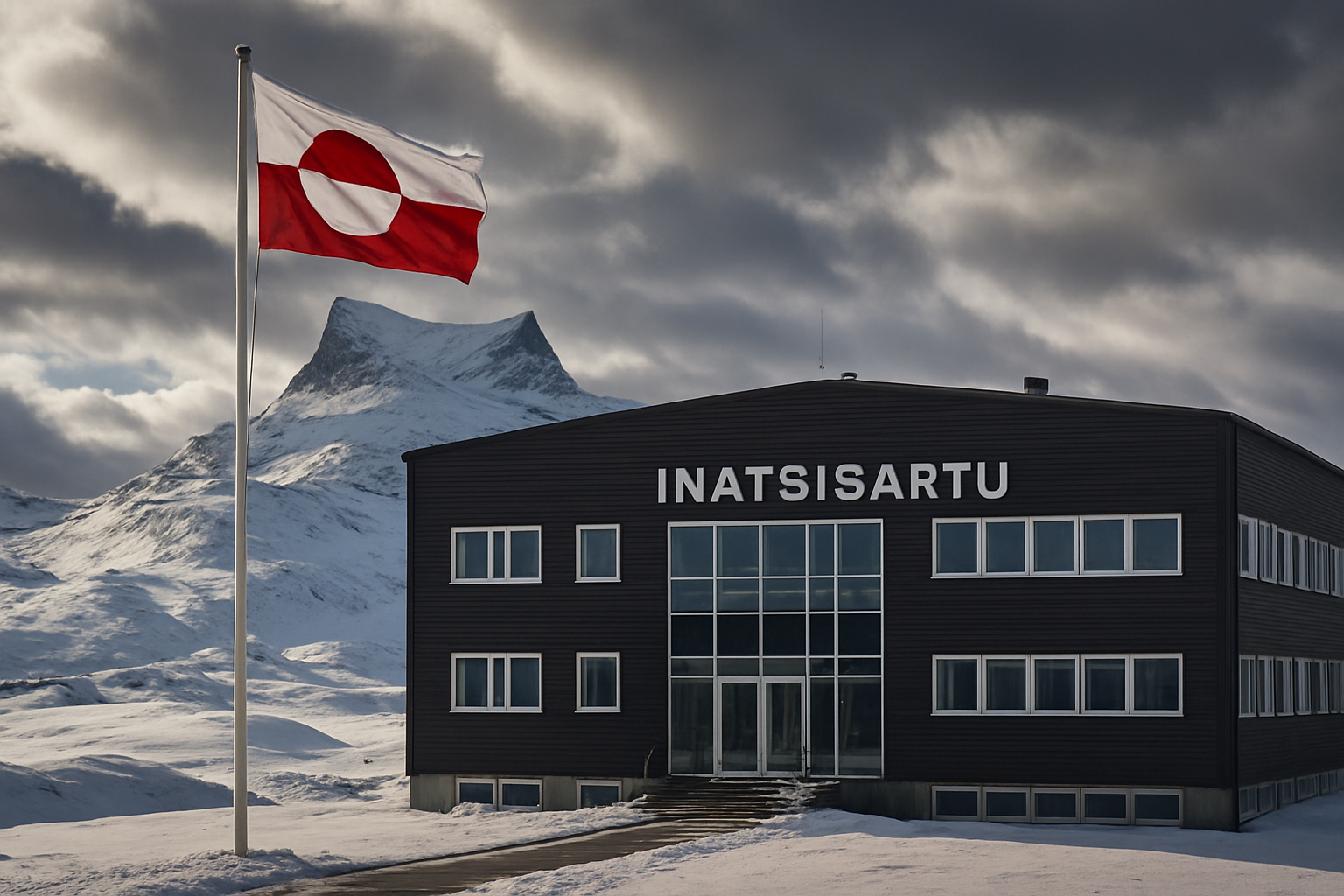
Greenland's Prime Minister Jens-Frederik Nielsen delivered a powerful rebuke to President Trump's latest territorial comments, declaring "we're not some piece of ice" but rather "a proud people" seeking to maintain global order, as tensions between the Trump administration and NATO allies reach crisis levels.
Speaking from Nuuk on Thursday, Nielsen pushed back against Trump's characterization of Greenland as a "BIG, POORLY RUN, PIECE OF ICE" during the president's latest frustrations with NATO allies over the Iran war. The comments, made Wednesday during a heated exchange about alliance obligations, marked a significant escalation in Trump's territorial rhetoric toward the Arctic territory.
Escalating Territorial Pressure Campaign
The latest verbal attack comes as working group meetings between US and Greenlandic representatives continue since January 28, 2026, despite repeated rejections of American territorial ambitions. Nielsen has consistently maintained that "Greenland is neither for sale nor for purchase" while engaging cautiously in dialogue.
Trump's renewed focus on Greenland coincides with the most serious NATO crisis in the alliance's 75-year history, with the president threatening withdrawal after European allies rejected his requests for military support in the Iran conflict. The characterization of Greenland as "poorly run ice" represents a particularly inflammatory escalation in what has become a sustained campaign of territorial pressure.
"What is important for Greenland is that we represent a proud nation seeking to maintain global order and democratic values."
— Jens-Frederik Nielsen, Prime Minister of Greenland
International Solidarity Demonstrates Unprecedented Unity
The response to Trump's territorial ambitions has generated remarkable international solidarity, establishing new precedents for collective sovereignty defense. France and Canada simultaneously opened their first consulates in Nuuk in February 2026, with Canadian Foreign Minister Anita Anand and Indigenous Governor General Mary Simon personally attending the ceremonies.
A Canadian Inuit delegation delivered a blunt message to Trump: "Back off," demonstrating the cultural and historical connections that bind Arctic Indigenous communities across national boundaries. King Frederik X of Denmark completed a symbolic three-day visit to Greenland, while EU Commission President Ursula von der Leyen planned a March visit with a comprehensive support package.
NATO's Arctic Response Reshapes Alliance Dynamics
European allies have responded to the Greenland crisis through the NATO Arctic Sentry mission, launched in February 2026 as the alliance's most comprehensive Arctic security response in decades. The European-led initiative includes Britain doubling its troop presence in Norway from 1,000 to 2,000 soldiers, Sweden deploying Gripen jets for Greenland exercises, and Finland contributing operational planning expertise.
The mission addresses not only Russian military activities in the Arctic but also serves as a diplomatic statement supporting Danish sovereignty. With Russian Arctic military activity increasing by 23% since Finland and Sweden joined NATO, the coordinated European response demonstrates burden-sharing capabilities while subtly countering American territorial pressure.
Evolution of American Diplomatic Strategy
Trump's approach to Greenland has evolved from direct purchase proposals in 2019 to more sophisticated pressure tactics. In February 2026, the administration announced plans to deploy a hospital ship to provide medical assistance, despite Denmark's universal healthcare system already covering all Greenlandic residents.
Louisiana Governor Jeff Landry, serving as Trump's special envoy to Greenland, has characterized Danish rule as an "occupation" and urged independence aligned with US interests. The hospital ship proposal was politely rejected by Greenlandic authorities, who requested direct dialogue rather than social media announcements.
Danish Political Consequences
The Greenland crisis profoundly influenced Danish domestic politics, with Prime Minister Mette Frederiksen calling snap elections in February 2026 to capitalize on the "Greenland effect" - a surge in nationalist sentiment from her firm sovereignty stance. However, the strategy ultimately failed, with the Social Democrats suffering their worst electoral performance in over 120 years as economic concerns outweighed foreign policy achievements.
The Danish experience highlights the complex relationship between international crisis management and domestic electoral politics, demonstrating that even successful sovereignty defense may not translate into political rewards when citizens prioritize economic issues.
"This crisis is about more than Greenland. It's about whether small nations can maintain their sovereignty in an era of great power competition."
— Danish Foreign Minister Lars Løkke Rasmussen
Strategic Significance of the Arctic
Greenland's strategic importance has intensified due to climate change, which is opening new Arctic shipping routes and exposing vast mineral resources. The territory controls key sea lanes and harbors significant rare earth mineral deposits essential for modern technology. Its military positioning provides crucial surveillance capabilities for North American defense.
The sustained American interest reflects broader great power competition in the Arctic, where Russia has been reopening Cold War-era military bases and China has expanded its research presence. Climate change has made previously inaccessible resources economically viable, intensifying international attention on Arctic sovereignty.
Legal and Constitutional Framework
Any transfer of Greenlandic sovereignty would require approval from both the Danish parliament and Greenlandic authorities under the territory's autonomous status arrangement. Polling consistently shows overwhelming local support for maintaining the current relationship with Denmark rather than American acquisition.
International law experts note that Trump's pressure campaign, while diplomatically aggressive, operates within established frameworks for territorial negotiations between sovereign nations. However, the scale and persistence of the American approach represents an unprecedented challenge to established sovereignty principles in the post-World War II order.
Template for 21st Century Sovereignty Defense
The coordinated international response to American territorial pressure has created new templates for collective sovereignty defense in an era of renewed great power competition. The combination of diplomatic solidarity, economic support, and security cooperation demonstrates how smaller nations and their allies can resist pressure from major powers.
The crisis has strengthened European strategic autonomy initiatives, with the continent developing independent capabilities for crisis response while maintaining alliance relationships. Success in defending Greenlandic sovereignty could provide a model for other regions facing similar territorial pressures.
Looking Forward: Sustained Pressure and Resilient Response
As the working group meetings continue and Trump maintains territorial ambitions, the international community faces a sustained test of sovereignty defense mechanisms. The April 2026 comments represent not an isolated incident but part of a systematic campaign that shows no signs of abating.
Nielsen's firm response, backed by unprecedented international solidarity, demonstrates that small nations need not stand alone against great power pressure. The Greenland crisis has become a defining test of whether democratic values and territorial sovereignty can be preserved in an era of increasing authoritarian challenges to the international order.
The world continues to watch this Arctic drama unfold, knowing that the outcome will influence how territorial sovereignty disputes are managed for decades to come. For now, Greenland's message remains clear: they are not "some piece of ice" but a proud people determined to chart their own course in an increasingly complex world.