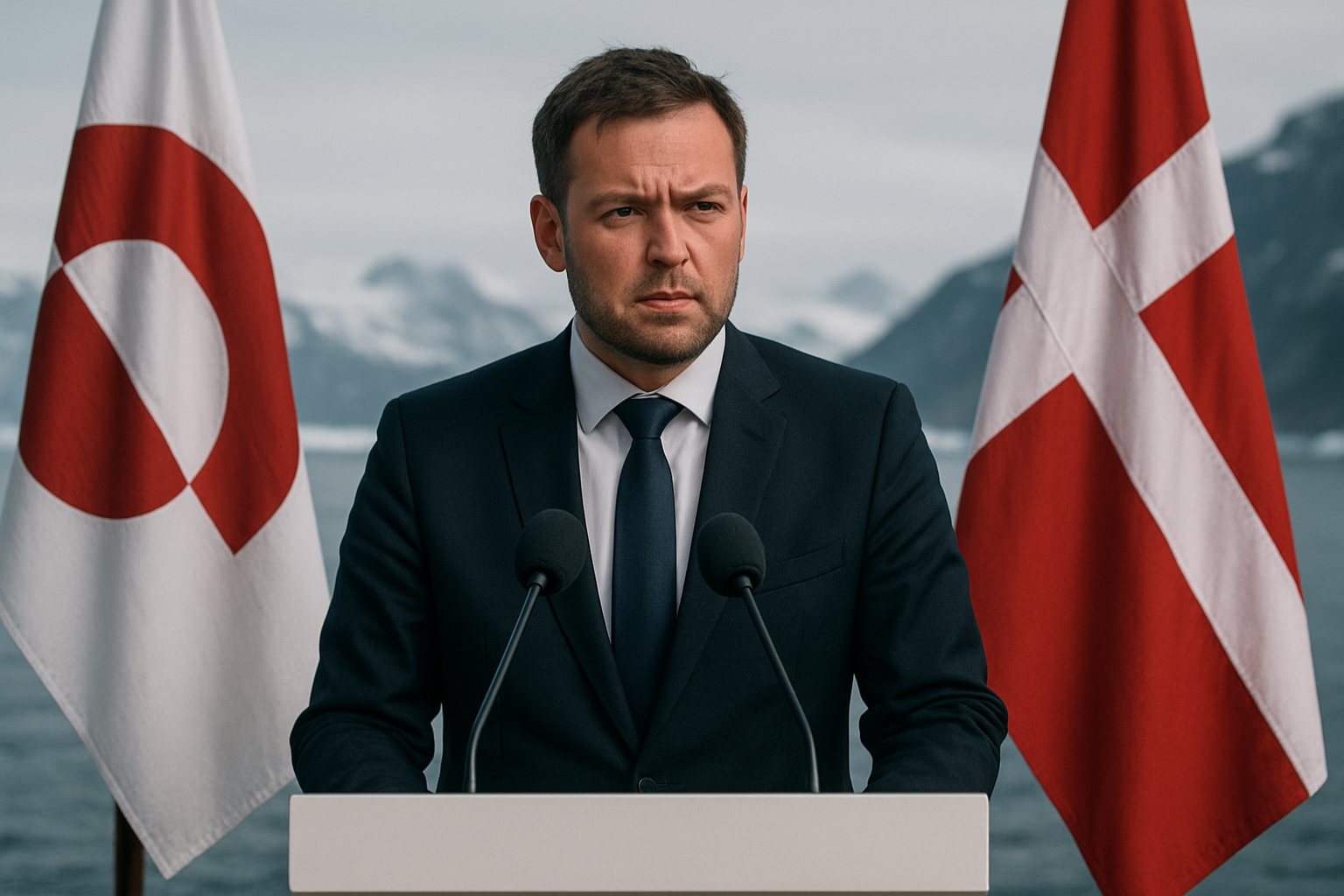
Greenland's Prime Minister Jens-Frederik Nielsen has firmly rejected President Trump's proposal to send a US Navy hospital ship to the Arctic territory, emphasizing that Greenland already provides free universal healthcare to all residents under Denmark's comprehensive system.
The rejection, delivered publicly on Sunday, February 22, 2026, represents the latest escalation in ongoing diplomatic tensions between the Trump administration and the Danish territory, which has been the subject of renewed American territorial ambitions since working group meetings began in January.
Nielsen's response was both diplomatic and pointed: "Thank you, but no," he stated, while calling for direct dialogue rather than social media announcements. "We are open to dialogue, but speak with us—don't write random things on social media."
Trump's Hospital Ship Initiative
The hospital ship proposal emerged during a White House dinner for Republican governors, where Trump sat alongside Louisiana Governor Jeff Landry, who serves as the US special envoy to Greenland. Trump announced his administration was working to deploy "a great hospital boat" to provide medical aid for "many people who are sick and not being taken care of there."
The announcement, shared on Trump's Truth Social platform with an AI-generated image of a hospital ship sailing toward a snowy Arctic landscape, came despite questions about feasibility. Danish broadcaster DR reports that both US Navy hospital ships are currently docked in Alabama, raising logistical concerns about the proposal's implementation timeline.
However, Danish experts have questioned the underlying premise of the initiative. A Danish professor emeritus noted that healthcare pressure in Greenland primarily stems from staffing shortages rather than access problems, describing the hospital ship offer as creating a "misleading picture" of actual medical needs.
Existing Healthcare System
Greenland's 56,000 inhabitants already receive comprehensive healthcare coverage through Denmark's universal system, a fact that Nielsen was quick to emphasize in his rejection. Unlike the United States, where medical bankruptcy remains a leading cause of personal financial crisis, Greenlandic residents enjoy free access to medical services, prescription medications, and specialized treatments.
The territory's healthcare infrastructure, while facing staffing challenges in remote areas, operates within the Danish healthcare framework that consistently ranks among the world's most effective and equitable systems. Medical evacuations to Denmark for specialized procedures are routinely covered, and the system maintains emergency medical capabilities appropriate for the territory's population and geography.
Diplomatic Backlash Intensifies
The rejection prompted an immediate and harsh response from US officials. Jeff Landry, Trump's special envoy to Greenland, took to social media platform X to criticize Nielsen directly, writing that the Greenlandic Prime Minister "should be ashamed."
Landry's public rebuke represents a significant escalation in diplomatic rhetoric, particularly given his previous characterization of Danish rule over Greenland as an "occupation" and his advocacy for independence aligned with US interests. The harsh language suggests growing frustration within the Trump administration over Greenland's resistance to American overtures.
"The Prime Minister should be ashamed of himself for rejecting help for his people."
— Jeff Landry, US Special Envoy to Greenland
Norwegian media coverage characterized the exchange as a significant diplomatic incident, with Aftenposten noting the unusual nature of such direct public criticism between allied nations.
Historical Context and Strategic Implications
The hospital ship proposal represents an evolution in Trump's approach to Greenland from direct territorial acquisition attempts to humanitarian assistance framing. This shift follows Trump's failed 2019 proposal to purchase the territory and the establishment of working group meetings between US and Greenlandic representatives that began January 28, 2026.
Nielsen has consistently maintained that "Greenland is neither for sale nor for purchase" while engaging cautiously in ongoing diplomatic discussions. The territory's strategic importance has grown significantly due to climate change opening Arctic shipping routes, vast rare earth mineral deposits, and military positioning in a region of increasing great power competition.
International support for Danish sovereignty has solidified in recent weeks. France and Canada simultaneously opened their first consulates in Nuuk, Greenland's capital, in February 2026, representing unprecedented diplomatic solidarity. A Canadian Inuit delegation reportedly told Trump to "back off," while King Frederik X completed a symbolic three-day visit to the territory.
NATO and Arctic Security Response
The Greenland tensions have prompted significant military and diplomatic responses from European allies. NATO launched the Arctic Sentry mission in February 2026, with the UK doubling its troop presence in Norway from 1,000 to 2,000 soldiers over three years, while Sweden deployed Gripen jets for Greenland exercises.
EU Commission President Ursula von der Leyen has announced plans for a March 2026 visit to Greenland with a comprehensive support package, signaling unprecedented European Union engagement with the territory. These developments reflect broader concerns about American territorial pressure tactics and their implications for international law and sovereignty principles.
Healthcare as Diplomatic Tool
The hospital ship offer adds a humanitarian dimension to what has been primarily a strategic and economic territorial discussion. However, critics argue that framing territorial ambitions through humanitarian assistance represents a calculated pressure campaign that mischaracterizes actual conditions in Greenland.
The timing of the healthcare proposal, coinciding with ongoing working group meetings and international efforts to support Danish sovereignty, suggests coordination between humanitarian offers and broader territorial strategy. This approach raises questions about the genuine nature of humanitarian concerns versus strategic positioning.
Regional and Global Implications
The Greenland crisis has become a template for understanding 21st-century territorial disputes that combine humanitarian assistance offers, economic pressure, climate change implications, and collective diplomatic opposition. The international response has established precedent-setting mechanisms for sovereignty defense that could influence similar situations globally.
Success or failure in resolving the Greenland tensions diplomatically will significantly influence territorial sovereignty enforcement, the effectiveness of collective diplomatic responses, and the balance between major power territorial ambitions and international law principles.
The Arctic's strategic importance continues to grow as climate change opens new shipping routes and exposes valuable mineral resources, making Greenland's 56,000 inhabitants guardians of territory that could reshape global trade patterns and military positioning for decades to come.
Looking Forward
As working group meetings continue and international support for Danish sovereignty strengthens, the hospital ship rejection represents more than a simple diplomatic disagreement. It reflects fundamental questions about territorial sovereignty, the effectiveness of humanitarian assistance as diplomatic pressure, and the role of international law in protecting smaller territories from major power ambitions.
The coming weeks will test whether diplomatic engagement can resolve these tensions or if the escalating rhetoric and international positioning will lead to a prolonged crisis that could redefine Arctic governance and set dangerous precedents for territorial disputes in strategically valuable regions worldwide.