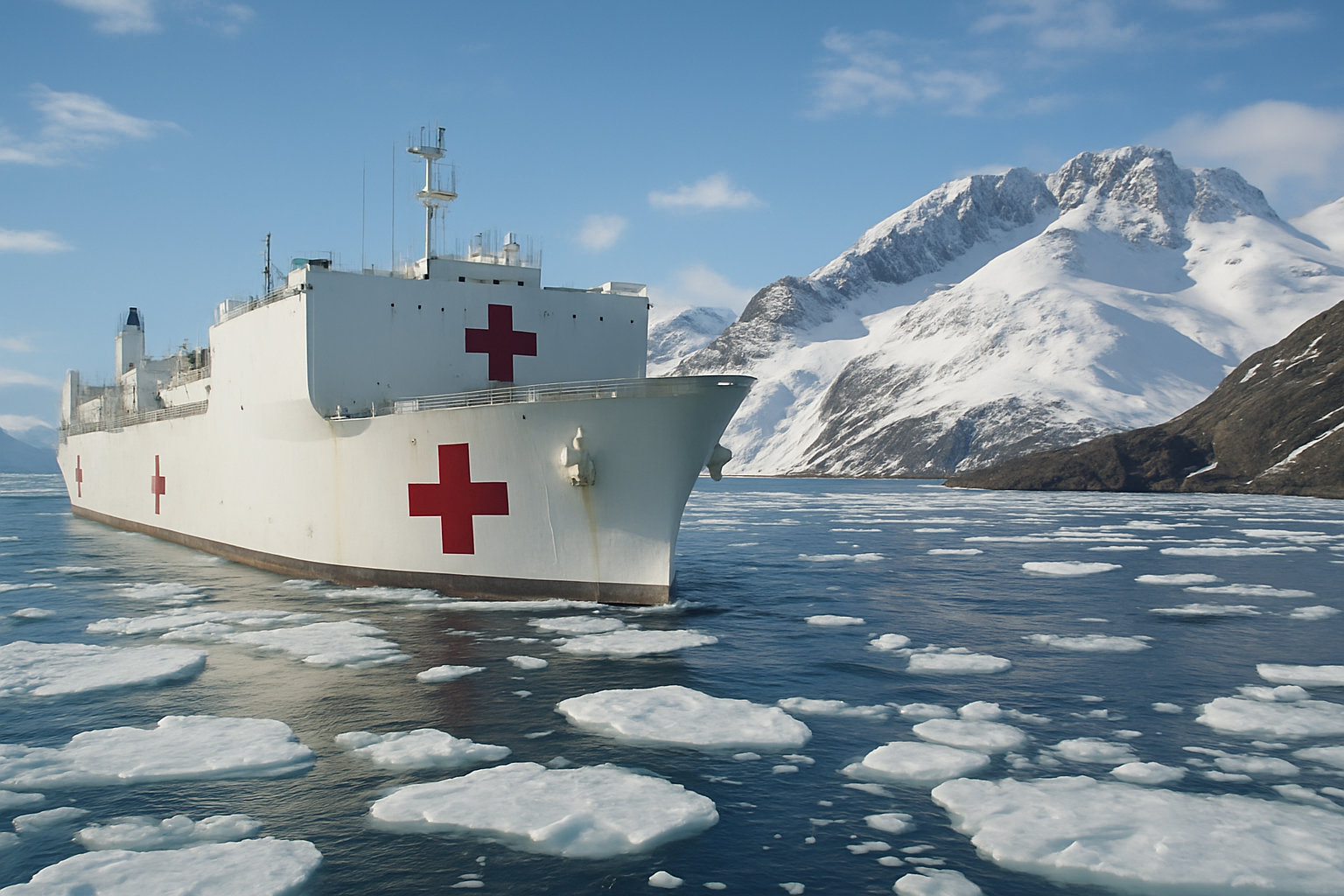
Greenland's Prime Minister Jens-Frederik Nielsen on Sunday firmly but diplomatically rejected President Trump's offer to send a US hospital ship to the Arctic territory, stating that the autonomous Danish region already provides free and universal healthcare to all residents.
The rejection came just 24 hours after Trump announced on his Truth Social platform that he was working with Louisiana Governor Jeff Landry to deploy "a great hospital boat to Greenland to take care of the many people who are sick, and not being taken care of there."
Prime Minister Nielsen responded through multiple channels, emphasizing Greenland's preference for direct diplomatic dialogue rather than social media announcements. "We are open to dialogue, but please speak with us and don't write random things on social media," Nielsen stated, according to Italian sources close to the matter.
Healthcare System Already Universal and Free
Danish and Greenlandic authorities were quick to clarify that the Arctic territory does not require external medical support. The island's healthcare system operates under Denmark's comprehensive social welfare model, providing free and universal medical care to all 56,000 residents.
German broadcaster ARD reported that both US Navy hospital ships are currently docked in Alabama, raising questions about the feasibility and timeline of Trump's announcement. Danish sources described the hospital ship offer as creating a "misleading picture" of Greenland's actual medical needs.
"We are happy to live in a country where healthcare access is free and equal for everyone,"
— Danish Prime Minister, responding to the hospital ship proposal
While Greenland does face healthcare challenges, particularly regarding staffing shortages in remote areas, Danish professor emeritus sources note these are administrative rather than access issues. The territory's medical infrastructure, supported by Denmark's robust healthcare system, ensures comprehensive coverage for all residents.
Escalating Territorial Tensions
The hospital ship announcement represents the latest escalation in President Trump's renewed interest in acquiring Greenland, which began with working group meetings between US and Greenlandic representatives on January 28, 2026. These talks marked a significant evolution from Trump's failed 2019 attempt to purchase the territory outright.
Prime Minister Nielsen has consistently maintained that "Greenland is neither for sale nor for purchase," while engaging cautiously in diplomatic dialogue. However, the hospital ship offer appears to introduce a humanitarian dimension to what have primarily been strategic and economic discussions.
Louisiana Governor Jeff Landry, whom Trump appointed as his special representative for Greenland affairs, has previously characterized Danish rule as an "occupation" and urged Greenlandic independence aligned with US interests. The governor's involvement in the hospital ship initiative suggests a coordinated approach to American engagement with the territory.
International Opposition Strengthens
The hospital ship announcement has intensified coordinated international opposition to Trump's territorial ambitions. In February 2026, France and Canada simultaneously opened their first consulates in Nuuk, Greenland's capital, in a unprecedented diplomatic show of solidarity with Danish sovereignty.
Canadian Foreign Minister Anita Anand personally attended the consulate opening alongside Indigenous Governor General Mary Simon, whose Inuit heritage provided cultural legitimacy to the initiative. An Inuit delegation from Canada reportedly delivered a direct message to Trump: "back off."
King Frederik X of Denmark recently completed a symbolic three-day visit to Greenland, representing the highest-level Danish diplomatic response to American pressure. European Union Commission President Ursula von der Leyen is planning a March 2026 visit to announce a comprehensive EU support package for the territory.
Strategic Arctic Implications
Greenland's strategic importance extends far beyond its 56,000 inhabitants. The territory controls crucial Arctic shipping routes that are becoming increasingly accessible due to climate change, while sitting atop vast reserves of rare earth minerals essential for modern technology and military applications.
The island's position provides critical military advantages in an Arctic region experiencing growing international competition between Russia, China, and Western powers. NATO has launched "Arctic Sentry" operations, with the UK doubling its troop presence in Norway to 2,000 soldiers and Sweden deploying Gripen jets for Greenland exercises.
This European-led military initiative demonstrates how Trump's territorial pressure has paradoxically strengthened NATO cooperation in the Arctic, as European allies coordinate to support Danish sovereignty while addressing legitimate Russian and Chinese threats in the region.
Diplomatic Innovation or Pressure Tactic?
The timing of the hospital ship announcement—during a White House dinner for Republican governors where Trump sat alongside Governor Landry—suggests careful orchestration rather than spontaneous humanitarian concern. The proposal emerged as working group meetings between US and Greenlandic representatives continue, with Danish Foreign Minister Lars Løkke Rasmussen acknowledging Denmark is in a "better position" but emphasizing "we are not out of the crisis."
Critics argue the hospital ship represents a classic pressure tactic, offering humanitarian assistance to address problems that don't actually exist while creating grounds for increased American presence. Supporters view it as genuine engagement addressing remote area healthcare challenges.
Finnish sources report that Prime Minister Nielsen hopes the United States will engage in direct dialogue with Greenlanders rather than announcing initiatives through social media, highlighting the importance of diplomatic protocol in these sensitive negotiations.
Broader Context of 21st Century Territorial Disputes
The Greenland crisis has evolved into a template for modern territorial disputes, combining humanitarian assistance offers, economic pressure, climate change implications, and collective diplomatic opposition. The international response—from French and Canadian consulate openings to EU support packages—establishes precedents for how democratic allies can support sovereignty principles against major power pressure.
The hospital ship rejection underscores Greenland's position: open to dialogue but resistant to unilateral American initiatives that bypass proper diplomatic channels. Prime Minister Nielsen's measured response maintains engagement possibilities while firmly establishing Greenlandic autonomy under Danish sovereignty.
As climate change continues opening Arctic resources and shipping routes, the Greenland situation represents a critical test of whether international law and diplomatic solidarity can constrain territorial ambitions in strategically valuable regions. The success or failure of the international community's response will influence how similar challenges are addressed in the decades ahead.