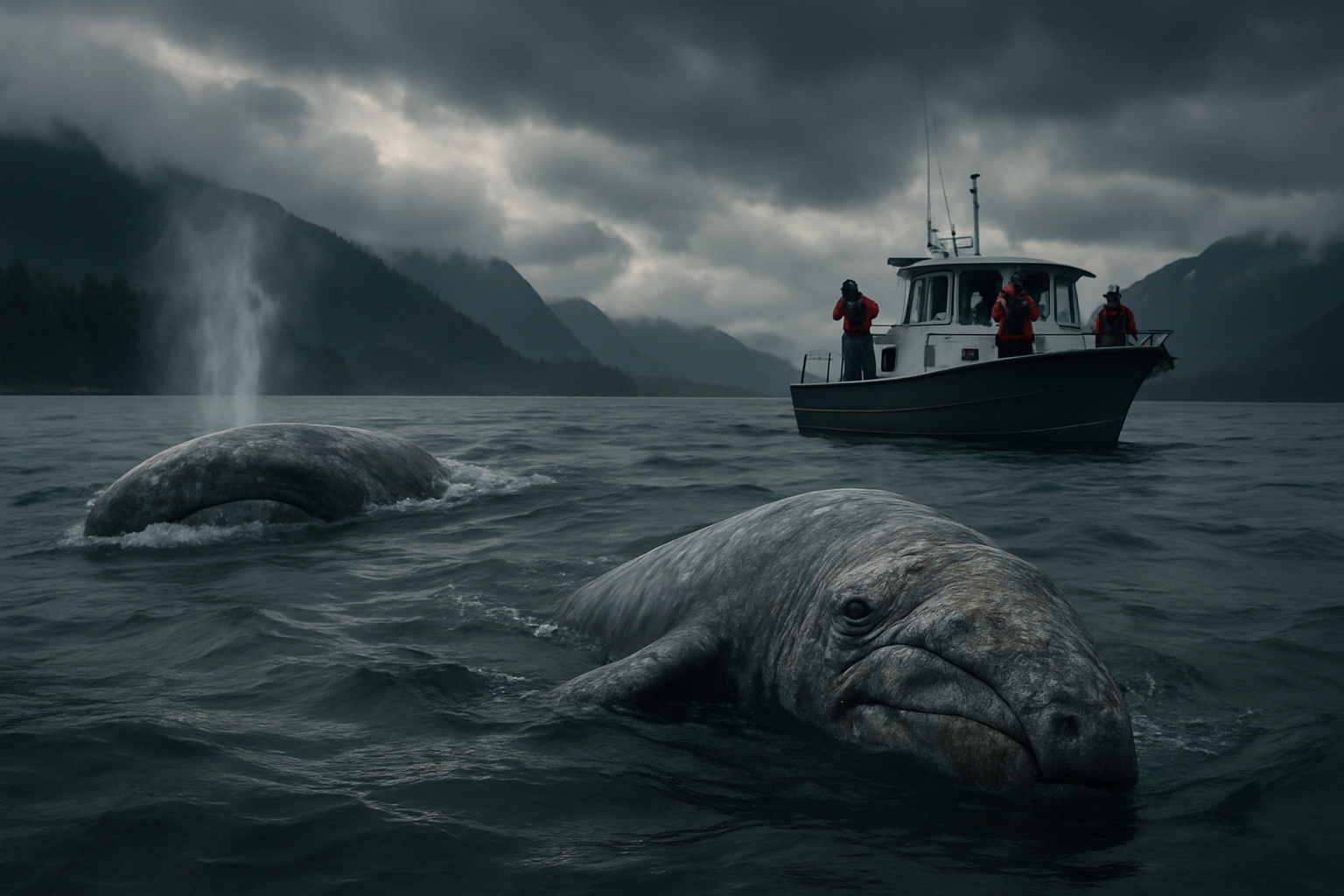
Four grey whales have been discovered dead along the British Columbia coast, prompting warnings from marine officials that more deaths are likely as changing water temperatures disrupt traditional feeding patterns in northern waters.
The mortalities, reported off the B.C. coastline in recent weeks, represent the latest manifestation of a broader environmental crisis affecting marine ecosystems during what scientists are calling the most challenging period for whale populations in decades. Marine scientists point to changing water temperatures as a primary factor affecting the availability of prey in northern feeding grounds, disrupting migration patterns that have remained stable for millennia.
Climate Change Disrupts Traditional Feeding Patterns
The grey whale deaths come during the 24th consecutive month of global temperatures exceeding 1.5°C above pre-industrial levels—the longest sustained warming streak in recorded human history. This unprecedented climate acceleration is fundamentally altering marine food webs, with ocean temperatures rising faster than many species can adapt to changing conditions.
According to marine biologists, grey whales typically feed in nutrient-rich northern waters during summer months before migrating south for breeding. However, rising ocean temperatures are disrupting the delicate balance of marine ecosystems, affecting the abundance and distribution of amphipods and other small crustaceans that form the whales' primary food source.
"We're seeing a fundamental alteration of ocean conditions that have supported these migration patterns for thousands of years. The whales are arriving at feeding grounds that no longer provide adequate nutrition."
— Dr. Marina Eriksen, Marine Research Scientist
Global Marine Mammal Crisis
The B.C. whale deaths are part of a broader pattern of marine mammal distress across global waters. Recent months have witnessed similar incidents worldwide, including humpback whale strandings in the Baltic Sea, sperm whale deaths in Mediterranean waters, and unprecedented migration disruptions affecting multiple cetacean species.
Historical context from conservation records reveals that 2026 has seen an alarming acceleration of marine wildlife crises. Research indicates that every 0.1°C of ocean warming per decade reduces fish populations by 7.2%, creating cascading effects throughout marine food webs that support whale populations.
The situation represents what marine biologists are calling a "climate-driven ecological collapse" in traditional whale habitats. Arctic species populations have plummeted by 60% in the past decade as habitats disappear, while North Atlantic spawning grounds have shifted hundreds of kilometers northward, devastating coastal communities that depend on predictable marine ecosystems.
Scientific Response and Monitoring Efforts
Marine conservation scientists are deploying sophisticated technology to understand and respond to the crisis. Modern approaches combine environmental DNA sampling, satellite tracking, and AI-powered analysis with traditional ecological knowledge from coastal Indigenous communities who have observed whale behavior patterns for generations.
Canadian marine research programs are utilizing advanced post-mortem techniques and comprehensive health assessments to determine the exact causes of death. Early findings suggest a combination of factors including nutritional stress, exposure to marine pollutants, and disrupted migration timing that leaves whales vulnerable during critical feeding periods.
The research represents a fundamental evolution in conservation methodology, moving beyond purely technological approaches toward comprehensive frameworks that respect traditional knowledge while leveraging global scientific capabilities.
Economic and Environmental Implications
The whale deaths carry significant implications beyond immediate conservation concerns. Marine ecosystems support fisheries worth hundreds of billions of dollars annually, while whale watching tourism generates substantial revenue for coastal communities throughout British Columbia.
Environmental protection increasingly functions as an economic development strategy rather than a regulatory burden. Countries implementing comprehensive marine wildlife protection demonstrate greater economic resilience and attract sustainable investment across eco-tourism, environmental technology, and green services sectors.
The economic costs of marine ecosystem collapse—including lost fisheries revenue, tourism industry impacts, and coastal infrastructure damage from disrupted ocean currents—often exceed the investments required for proactive environmental protection.
International Cooperation and Conservation Renaissance
Despite the sobering whale deaths, marine conservation efforts worldwide are experiencing what scientists term a "global conservation renaissance." Recent successes include Ecuador's reintroduction of 158 giant tortoises to the Galápagos after a 150-year absence, unprecedented dolphin "super pods" documented in Thai waters, and breakthrough whale rescue operations in European seas.
These successes demonstrate that effective conservation requires sophisticated integration of cutting-edge technology with traditional ecological knowledge and community-based management. International cooperation frameworks are evolving from traditional North-South aid relationships toward peer-to-peer collaboration, recognizing that developing nations are increasingly becoming environmental solution providers.
Critical Action Window
Marine scientists warn that the environmental action window is narrowing rapidly as ecological systems approach critical thresholds that could trigger irreversible changes affecting global food security, climate stability, and human settlements. The choice facing the international community is between reactive crisis management and proactive ecosystem service management.
Success stories from around the world demonstrate that comprehensive environmental protection tools and knowledge frameworks exist. However, implementation requires sustained international cooperation, enhanced coordination across multiple sectors, and increased financial commitments that recognize environmental protection as essential infrastructure for planetary sustainability.
"We have the tools and knowledge for comprehensive marine protection. What we need now is the political will to implement solutions rapidly enough to match the pace of environmental change."
— Dr. Richard Bennett, UN Marine Conservation Specialist
Looking Forward
The grey whale deaths off British Columbia serve as a stark reminder of the urgent need for coordinated global action. As marine officials continue investigating the immediate causes of death, the broader challenge remains clear: protecting marine ecosystems requires immediate, comprehensive action that addresses both climate change and direct human impacts on ocean health.
The conservation renaissance of 2026 offers hope that effective environmental protection is achievable with proper planning, community engagement, and international support. However, scaling these efforts to match the pace of environmental change demands unprecedented cooperation and recognition that marine conservation is not just an environmental imperative, but an economic and social necessity for coastal communities worldwide.
As the investigation into the B.C. whale deaths continues, the findings will likely provide crucial insights into how climate change is reshaping marine ecosystems and what measures are needed to protect vulnerable whale populations during this critical period in Earth's environmental history.