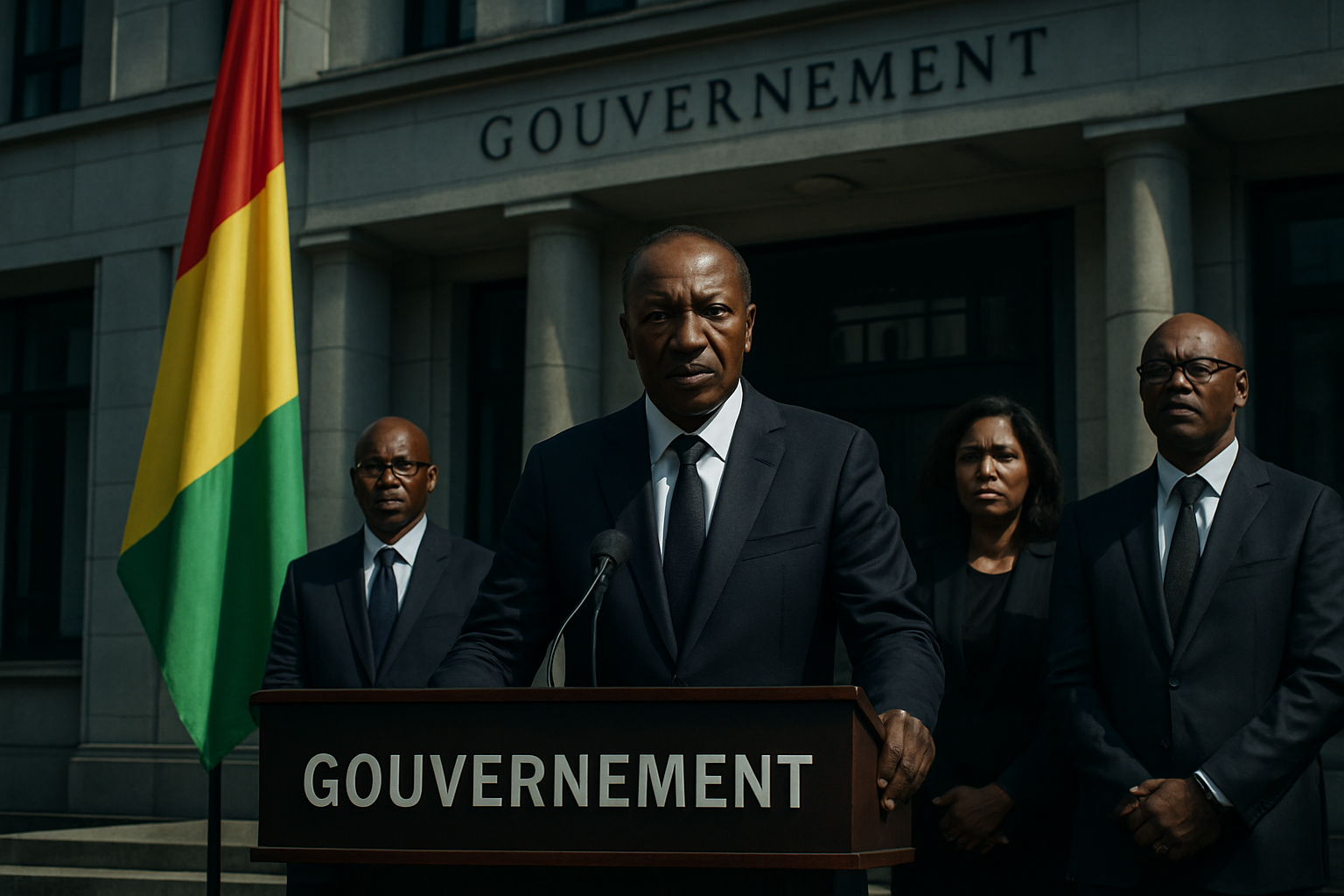
Guinea's Ministry of Territorial Administration and Decentralization announced the dissolution of 40 political parties on March 6, 2026, marking one of the most significant political crackdowns in West Africa since the country's military coup in September 2021.
The sweeping decision, announced late Friday evening on national television, targets major opposition formations including three of Guinea's largest political parties. Among the dissolved entities are the Union of Democratic Forces of Guinea (UFDG) led by Cellou Dalein Diallo, the Rally of the Guinean People (RPG) of former President Alpha Condé, and the Union of Republican Forces (UFR) headed by opposition figure Sidya Touré.
Legal Justification and Implementation
The Ministry of Territorial Administration and Decentralization cited "failure to comply with certain legal provisions governing the functioning of political parties in the Republic of Guinea" as justification for the unprecedented mass dissolution. The decision represents the most extensive elimination of political organizations in Guinea's recent history, effectively reshaping the country's political landscape.
The timing of the announcement, delivered through a ministerial decree in the late hours of Friday, March 6, suggests careful orchestration to minimize immediate public response. The UFDG had already been suspended in August 2025, while the RPG faced suspension in March 2025, indicating a systematic approach to eliminating opposition voices over the past year.
Historical Context and Regional Patterns
Guinea's political dissolution occurs within a broader pattern of democratic backsliding across West Africa. The current military government, led by Colonel Mamadi Doumbouya who seized power in September 2021, has faced sustained pressure from regional organizations including ECOWAS to restore civilian rule.
According to archived diplomatic analysis from February 2026, ECOWAS reached a pragmatic "peace of the braves" agreement with Guinea-Bissau's military junta, representing a shift from previous hardline sanctions approaches to more accommodating diplomatic engagement with military governments across the region.
The international community's response has been notably muted compared to previous African political crises. As documented in regional analysis, there has been increasing "international indifference to African democratic backsliding" as foreign powers "prioritize resource access over governance principles," particularly evident in the Alliance of Sahel States' continued separate path from traditional regional organizations.
Impact on Major Opposition Figures
The dissolution directly affects Guinea's most prominent opposition leaders, each representing different political traditions and constituencies. Cellou Dalein Diallo's UFDG has historically been one of Guinea's most organized opposition parties, while Alpha Condé's RPG represents the legacy of the former president who was ousted in the 2021 coup after controversially seeking a third term.
Sidya Touré's UFR dissolution eliminates another significant opposition voice, further consolidating the military government's control over Guinea's political discourse. These leaders have been central figures in Guinean politics for decades, and their parties' dissolution effectively removes the most credible alternative political voices.

Regional Democratic Challenges
Guinea's actions reflect broader challenges facing democratic governance across West Africa. Recent analysis of African political transitions reveals a concerning pattern where "economic imperatives override democratic concerns" and "post-colonial governance structures" face questions about their effectiveness in addressing contemporary challenges.
The dissolution occurs as Guinea participates in major continental initiatives, including the US-EU-Japan Critical Minerals Partnership, where seven African countries are challenging China's dominance in mineral production and refining. This economic positioning provides the military government with international legitimacy despite domestic political repression.
Regional organizations have struggled to maintain consistent responses to democratic backsliding. The African Union's Peace and Security Council, recently reconstituted with Somalia, DRC, Morocco, and other members, faces immediate multiple crisis challenges that test continental governance capacity beyond symbolic declarations.
Economic Context and Resource Politics
Guinea's political crackdown coincides with significant economic developments in the mining sector. The country is preparing its Simandou iron ore strategy presentation as part of Africa's unprecedented mining investment surge, with the African Finance Corporation reporting $29.5 trillion in continental mineral reserves.
The military government's emphasis on resource sovereignty aligns with broader trends across the Alliance of Sahel States, where countries like Burkina Faso achieved record gold production of 94 tons in 2025, worth over $6 billion. This economic success provides political cover for authoritarian governance models that prioritize resource control over democratic participation.
International partners increasingly adopt pragmatic approaches that separate economic cooperation from democratic governance concerns. China's announcement of zero-tariff access for 53 African countries starting May 1, 2026, represents the most comprehensive China-Africa trade expansion in history, regardless of governance structures.
Civil Society and Opposition Response
The dissolved parties and civil society organizations face limited options for challenging the government's decision. Guinea's judicial system operates under military oversight, reducing the likelihood of successful legal challenges to the dissolutions.
International human rights organizations have documented increasing restrictions on political expression and association in Guinea since the 2021 coup. The mass party dissolution represents an escalation of these restrictions, effectively eliminating formal opposition political activity.
The decision also impacts thousands of party members, local organizers, and political activists who now find themselves without legal political platforms. This grassroots impact extends the government's control beyond national political figures to community-level political engagement.
International Implications and Responses
Guinea's political development occurs amid shifting international approaches to African governance. The Trump administration's pragmatic approach, as evidenced by State Department officials' emphasis on "respect for sovereignty" over democratic values during Mali visits, suggests reduced American pressure for democratic restoration.
European responses have been similarly restrained, with focus shifting toward economic partnerships rather than governance conditionality. The EU's critical minerals partnership with African countries, including Guinea, demonstrates prioritization of strategic resource access over political reform demands.
This international approach reflects broader "twilight of democracy in Africa occurring amid global indifference," as noted in recent continental analysis. Regional institutions adapt their strategies for relevance amid changing political dynamics rather than enforcing democratic standards.
Future Political Trajectory
The mass dissolution of political parties positions Guinea's military government for extended rule without credible opposition challenges. The elimination of established political organizations creates barriers to future democratic transitions by removing institutional memory and organizational capacity.
Guinea's approach may influence similar actions across the region, where military governments observe international responses to gauge acceptable levels of political repression. The absence of significant international consequences could encourage comparable measures elsewhere in West Africa.
The military government faces the challenge of maintaining legitimacy without competitive political processes. Economic performance, particularly in the mining sector, becomes increasingly important for sustaining public support in the absence of democratic accountability mechanisms.
Broader African Governance Evolution
Guinea's political dissolution reflects broader questions about post-colonial governance structures and their effectiveness in addressing contemporary African challenges. The success of authoritarian models in delivering economic growth, as demonstrated by resource-rich Sahel nations, provides alternative legitimacy sources beyond democratic processes.
Continental integration through mechanisms like the African Continental Free Trade Area (AfCFTA) continues regardless of domestic governance structures, suggesting that economic development may proceed independently of democratic consolidation.
The African Union's capacity to address democratic backsliding faces testing as multiple member states adopt authoritarian governance models while maintaining continental membership and participation in economic initiatives.
Guinea's political trajectory will influence broader African governance patterns, particularly regarding the balance between resource sovereignty, economic development, and democratic participation. The international community's response—or lack thereof—will signal acceptable parameters for political governance across the continent in the coming years.