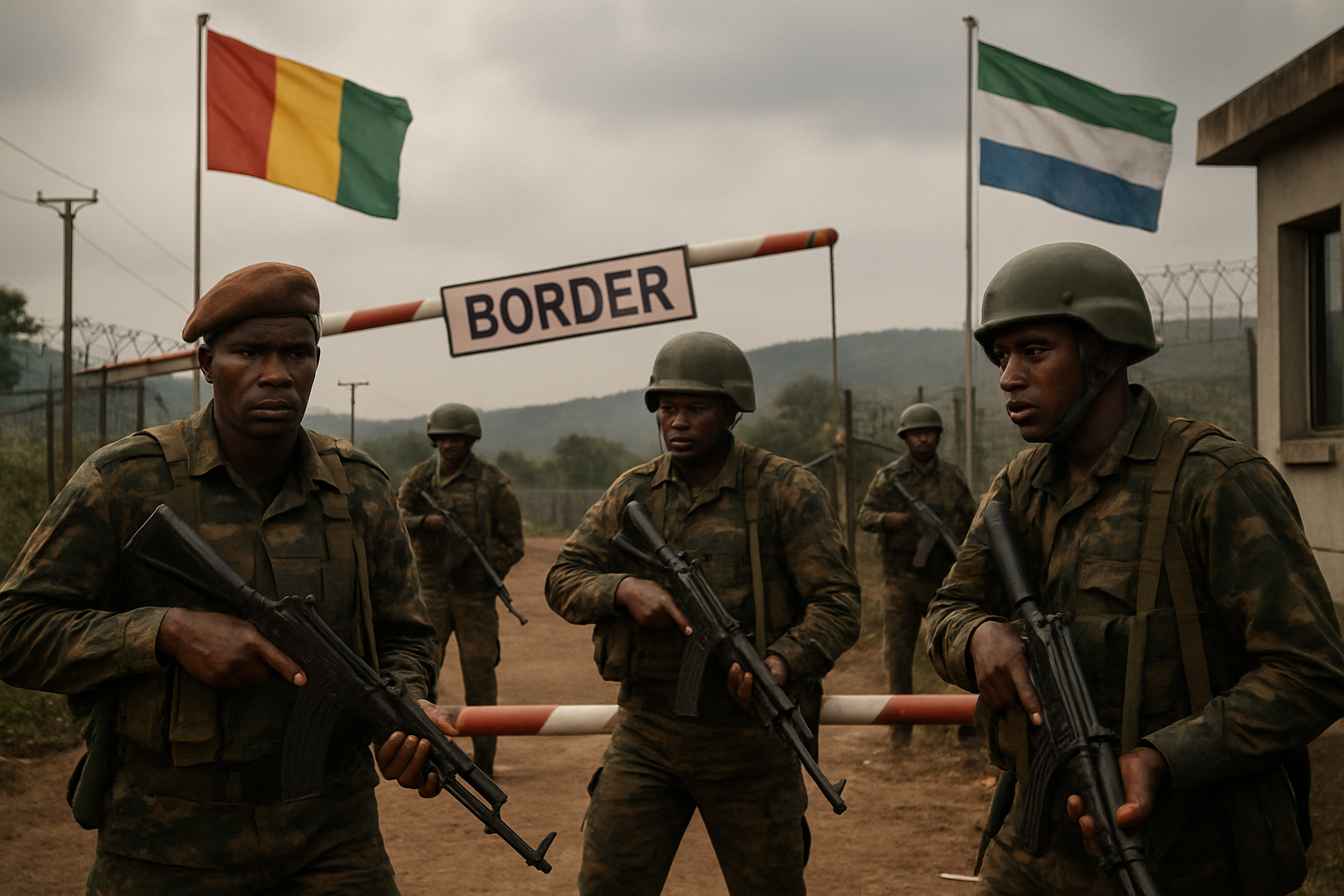
Guinea has detained 16 Sierra Leone military personnel following allegations of unauthorized border crossing and flag raising in disputed territory, sparking the latest diplomatic crisis between the West African neighbors amid rising regional tensions.
According to an official statement from Guinea's General Staff of the Armed Forces released Tuesday, February 24, 2026, the incident occurred Sunday evening in the district of Koudaya, Sub-Prefecture of Sandénia, Prefecture of Faranah. Guinean authorities allege that several dozen armed Sierra Leonean soldiers crossed approximately 1.4 kilometers into Guinean territory, where they allegedly erected a tent and raised their national flag.
Conflicting Accounts Emerge
The competing narratives from both nations illustrate the complexity of West African border disputes, where colonial-era demarcations often lack clear physical markers. Guinea's military command stated that upon receiving an alert, Guinean Armed Forces were immediately deployed to the location where they confirmed the presence of Sierra Leonean personnel and arrested sixteen officers, seizing their equipment.
Sierra Leone's Ministry of Information countered with its own statement Tuesday, asserting that Guinean military elements had illegally entered Sierra Leonean territory in the town of Kalierehe, Falaba District. According to Freetown, the incident occurred while Sierra Leonean security forces were preparing to construct a border post and residential facility to support security operations in the area.
"The government's update on the border incident is calm, measured, and diplomatic, the kind of language that helps prevent escalation when tensions are high. That level of restraint is appropriate and responsible."
— Basita Michael, Sierra Leone Lawyer
Regional Context of Instability
The border confrontation occurs within a broader context of West African instability, where territorial disputes and security challenges have become increasingly common. The region has witnessed multiple military coups in recent years, the formation of the Alliance of Sahel States (Niger, Mali, Burkina Faso), and persistent challenges from transnational criminal networks.
Both Guinea and Sierra Leone have experienced significant political transitions in recent years. Guinea, under President Mamadi Doumbouya's military-led government following the September 2021 coup, has been working to restore international legitimacy and recently participated in the African Union's 39th Summit in February 2026. Sierra Leone, under President Julius Maada Bio's civilian administration, has focused on democratic consolidation and economic development.
Economic and Strategic Implications
The border tension comes at a particularly sensitive time for both nations, which are seeking to capitalize on West Africa's mining boom and infrastructure development surge. Guinea possesses significant mineral wealth, including some of the world's largest bauxite reserves and the massive Simandou iron ore project, while Sierra Leone has been developing its own mining sector and tourism industry.
The disputed area's location in the Faranah Prefecture is strategically significant, as this region has been identified for potential mining development and cross-border trade facilitation under the African Continental Free Trade Area (AfCFTA) framework.
Diplomatic Response and Mediation Efforts
Prominent Sierra Leonean lawyer Basita Michael praised the government's measured response to the crisis, emphasizing the importance of diplomatic restraint during periods of heightened tension. Her comments reflect broader regional recognition that border disputes require careful handling to prevent escalation into broader conflicts.
The detention of the 16 Sierra Leonean personnel and their equipment has been turned over to relevant authorities, according to Guinea's military statement. However, neither government has provided detailed information about the specific legal procedures or timeline for resolving the diplomatic incident.
Historical Border Challenges
Border demarcation issues between Guinea and Sierra Leone are rooted in colonial-era boundaries that often failed to account for traditional communities and geographic realities. The two nations share approximately 652 kilometers of border, much of which passes through remote, mountainous terrain where effective monitoring and control remain challenging.
Previous border incidents have been resolved through diplomatic channels and regional mediation, often involving the Economic Community of West African States (ECOWAS) or other international partners. The current crisis tests both nations' commitment to peaceful conflict resolution mechanisms.
Regional Security Concerns
The incident highlights broader security vulnerabilities in West Africa, where porous borders facilitate both legitimate trade and illicit activities. Regional security experts have noted increasing pressure on border management systems as governments struggle with limited resources while facing multiple security challenges.
The timing of the incident, occurring during preparation for infrastructure development projects, suggests that territorial control may become increasingly contentious as both nations seek to develop their border regions for economic purposes.
International Implications
The border tension occurs as West African nations are working to implement continental integration initiatives through AfCFTA while managing domestic stability challenges. Both Guinea and Sierra Leone are participants in various international mining partnerships and infrastructure development programs that could be affected by prolonged diplomatic tensions.
Recent developments in the region, including China's announcement of zero-tariff access for 53 African countries starting May 1, 2026, have created new economic opportunities that require stable regional relationships to fully realize.
Path Forward
Resolution of the current crisis will likely require high-level diplomatic engagement between Conakry and Freetown, possibly with regional or international mediation. The detained personnel's status remains the immediate priority, followed by longer-term discussions about border demarcation and joint security arrangements.
Both nations have expressed commitment to diplomatic solutions, with Sierra Leone's measured response and Guinea's formal communication channels suggesting mutual interest in preventing escalation. The challenge lies in balancing national sovereignty concerns with practical requirements for regional stability and economic development.
As West Africa continues to navigate complex political transitions and economic opportunities, the Guinea-Sierra Leone border incident serves as a reminder of the ongoing challenges facing regional integration efforts. The resolution of this crisis may set important precedents for how neighboring states manage territorial disputes in an era of increasing economic interdependence and security cooperation.