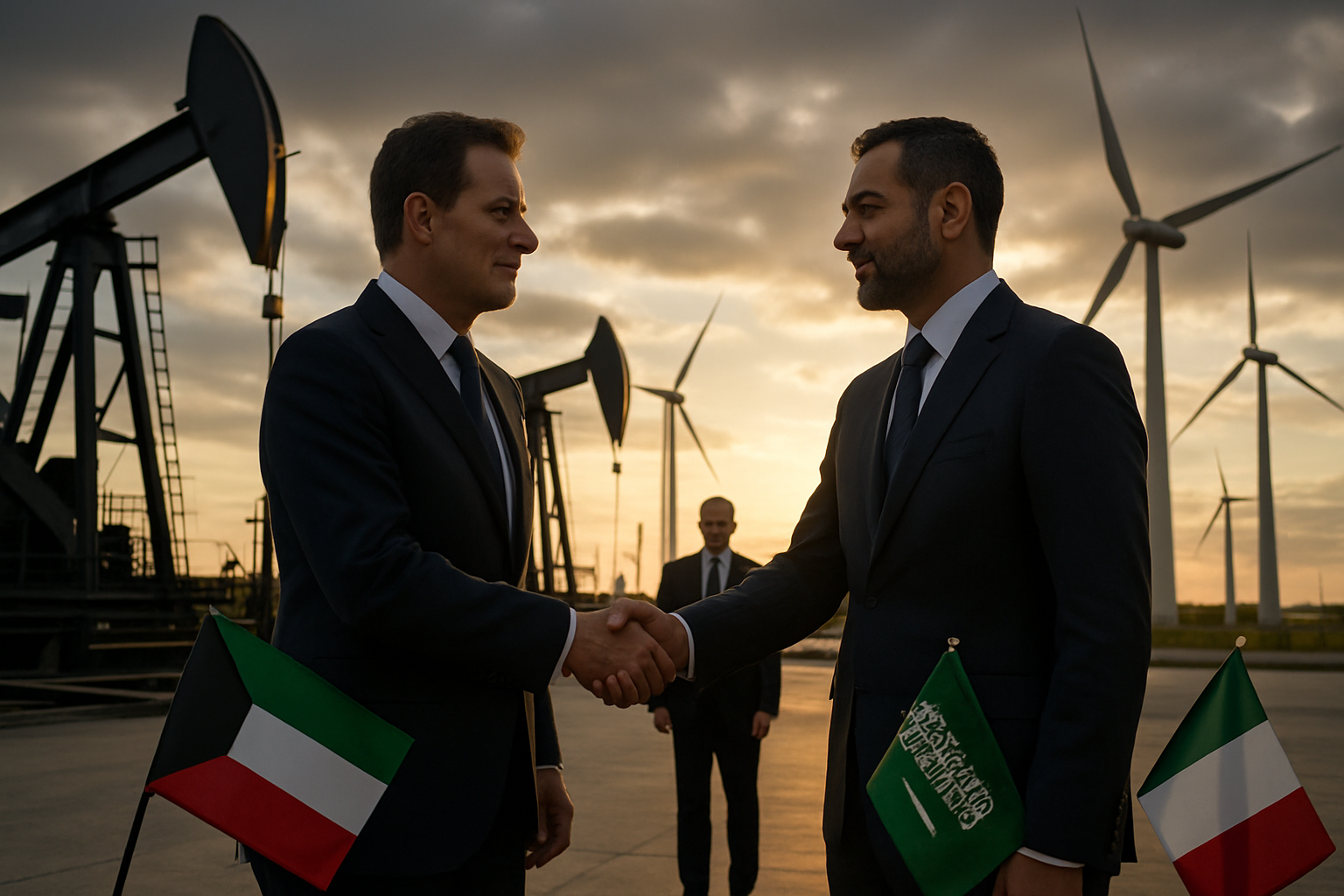
Kuwait's oil industry secured over $5 billion in new partnerships and investments during a landmark energy conference, while Saudi Arabia expanded into massive renewable energy projects, signaling a transformation in Gulf energy strategy amid global transition pressures.
The Kuwait Oil & Gas Show and Conference (KOGS 2026), held under the patronage of Prime Minister Sheikh Ahmad Abdullah Al-Ahmad Al-Sabah, witnessed unprecedented deal-making that underscores the Gulf's evolving approach to energy security and diversification.
Kuwait's Multi-Billion Dollar Partnership Spree
Kuwait Oil Company (KOC) signed a series of strategic agreements with international energy majors, headlined by a $1.5 billion contract with SLB (formerly Schlumberger) for the management and development of the strategic Matrabah field in northwest Kuwait. The five-year agreement marks the first of its kind for managing this critical oil asset.
The state oil company also formalized cooperation agreements with TotalEnergies, the French energy giant, focusing on technical studies, scientific research, and enhanced exploration opportunities. The partnership aims to evaluate geological formations across Kuwait's oil-rich territories and improve recovery rates from existing fields.
Kuwait Petroleum International (KPI) announced a major biofuel production complex partnership with Italy's Eni, building on their longstanding relationship that dates back to the Milazzo refinery cooperation in 1996. KPI Chief Executive Officer Shafi Al-Ajmi explained that the new facility in Sicily will utilize Eni's proprietary Ecofining technology, converting waste vegetable oils into 100% renewable biofuel.
"This partnership represents a significant step in Kuwait's global energy transition strategy, expanding our biofuel production capabilities while strengthening our international presence,"
— Shafi Al-Ajmi, KPI Chief Executive Officer
International Partnerships Expand Kuwait's Global Reach
The Kuwait Foreign Petroleum Exploration Company (KUFPEC) secured multiple framework agreements during KOGS 2026, including partnerships with both Shell Kuwait and TotalEnergies. KUFPEC CEO Eissa Al-Marraghi emphasized that these agreements support the company's long-term international growth strategy and enhance its global exploration and production capabilities.
In a significant bilateral development, the Kuwait Gulf Oil Company and Saudi Arabia's Aramco Gulf Operations updated their joint Khafji operations agreement, originally signed in 2010. The updated framework launches a new phase of cooperation between the two Gulf neighbors, building on their deep historical ties and shared vision for regional energy development.
Saudi-Turkey Renewable Energy Breakthrough
Simultaneously, Saudi Arabia announced a landmark renewable energy agreement with Turkey during Turkish President Recep Tayyip Erdoğan's official visit to Riyadh. Saudi Energy Minister Prince Abdulaziz bin Salman and Turkish Energy Minister Alparslan Bayraktar signed the deal for solar power projects with a total installed capacity of up to 5,000 megawatts to be developed in Turkey across two phases.
The agreement represents a significant expansion of bilateral cooperation in renewable energy and green technologies, supporting both countries' objectives to diversify their energy mix, enhance energy security, and accelerate the transition toward a low-carbon economy. The first phase of the project is expected to commence immediately, with the second phase following strategic implementation timelines.
Regional Energy Integration and Strategic Implications
These developments occur against a backdrop of global energy market volatility and increasing pressure for energy transition. The Gulf states are positioning themselves not merely as oil exporters but as comprehensive energy partners capable of supporting both traditional and renewable energy needs.
The timing of these agreements is particularly significant given recent global energy challenges, including supply chain disruptions and critical materials shortages that have affected renewable energy development worldwide. EU auditors recently warned that climate goals face serious risks due to dangerous dependence on China for critical raw materials, with China controlling 60% of global production of essential components for renewable energy infrastructure.
"The cooperation framework establishes organized foundations for collaboration focused on knowledge and experience exchange in the global energy sector,"
— Eissa Al-Marraghi, KUFPEC CEO
Technology Transfer and Innovation Focus
The partnerships emphasize technology transfer and innovation, particularly in enhanced oil recovery techniques and renewable energy integration. The agreements with TotalEnergies and Shell specifically include provisions for technical studies, geological assessments, and the implementation of advanced exploration technologies.
KPI's biofuel venture with Eni demonstrates Kuwait's commitment to developing alternative energy sources while leveraging existing industrial capabilities. The Ecofining technology being deployed can process various feedstocks, including waste cooking oils and other sustainable raw materials, contributing to circular economy objectives.
Economic and Geopolitical Context
These energy agreements come during a period of significant Middle Eastern diplomatic activity, with multiple regional powers pursuing pragmatic cooperation across traditional political divides. The Saudi-Turkey renewable energy deal particularly reflects this trend, as both countries seek to enhance their positions in the evolving global energy landscape.
The economic impact extends beyond immediate investment figures. Industry analysts suggest that these partnerships could generate thousands of jobs across engineering, construction, and operations phases, while establishing technology transfer programs that build local capabilities in both traditional and renewable energy sectors.
Future Energy Landscape
The February 2026 agreements signal a fundamental shift in Gulf energy strategy, moving beyond pure hydrocarbon extraction toward integrated energy solutions that encompass traditional oil and gas operations alongside renewable energy development and advanced biofuel production.
This comprehensive approach addresses multiple strategic objectives: maintaining competitiveness in traditional energy markets, developing new revenue streams through renewable technologies, and establishing technological capabilities that will be essential for long-term energy transition success.
The scale and scope of these partnerships, combined with their emphasis on technology transfer and long-term cooperation, suggest that the Gulf energy sector is positioning itself not just to survive the global energy transition, but to play a leading role in shaping its direction and implementation.