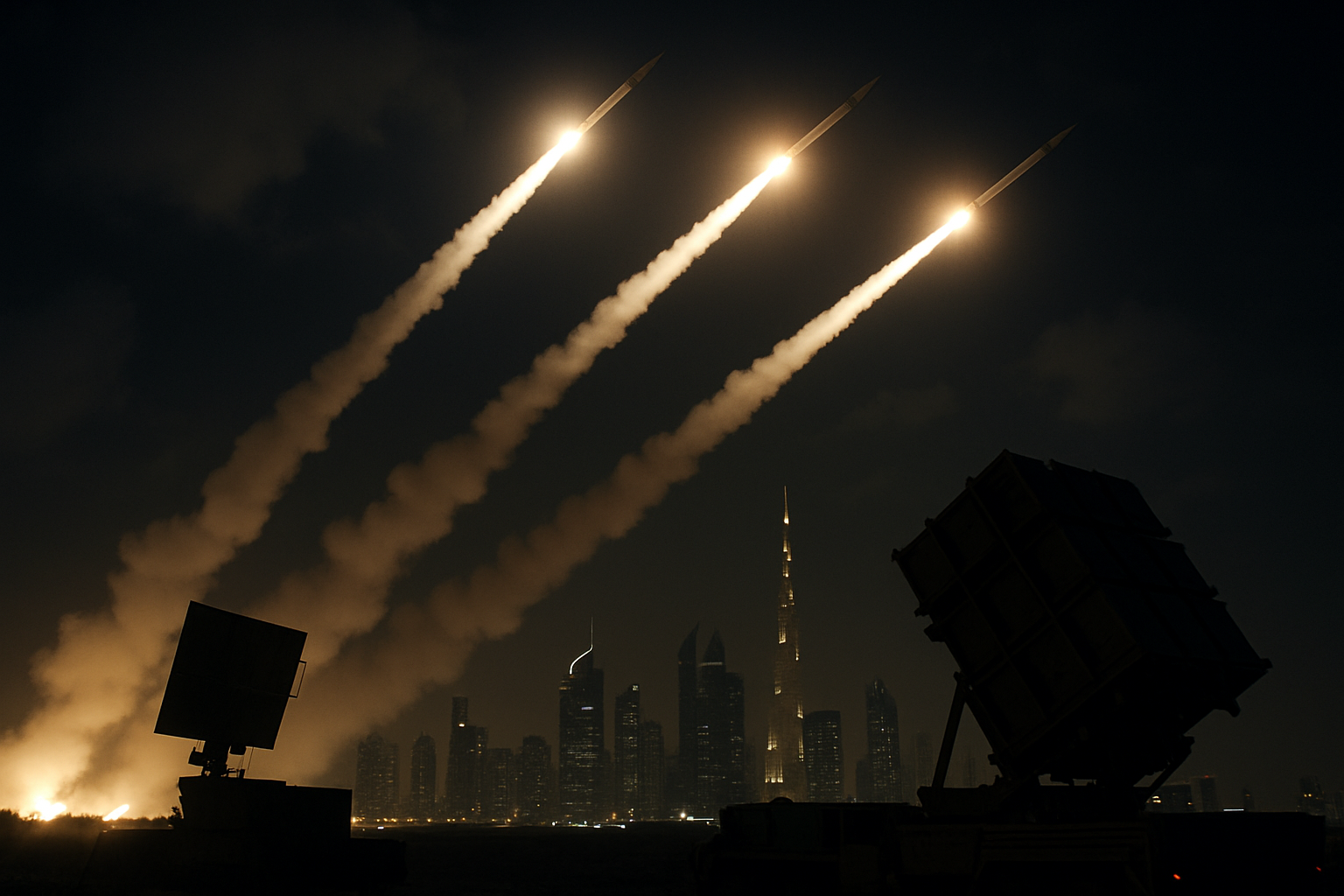
Gulf states continue to face devastating Iranian missile and drone attacks targeting critical infrastructure, despite a ceasefire agreement announced just hours earlier between Tehran and Washington, marking a dangerous escalation that threatens to derail diplomatic efforts to contain the month-long regional conflict.
According to Brigadier General Nasser Bousleib, spokesperson for Kuwait's Ministry of Interior, Iranian forces launched a coordinated assault since dawn Wednesday targeting vital facilities across the oil-rich nation. Kuwait's armed forces successfully intercepted 4 ballistic missiles and 42 drones over the past 24 hours, though significant damage was reported to energy and water infrastructure.
Widespread Infrastructure Damage
The attacks have caused substantial material damage to critical infrastructure across Kuwait, affecting power generation units, water distillation plants, and fuel storage facilities. Several fires broke out at targeted sites, forcing authorities to implement emergency response protocols. Colonel Saoud Al-Atwan, Kuwait's Defense Ministry spokesman, confirmed that three electricity and water desalination stations suffered direct hits from Iranian drones.
The targeting of civilian infrastructure represents a significant escalation in Iran's "Operation True Promise 4" campaign, which Iranian Revolutionary Guard forces have maintained under their declared policy that "no red lines remain" following the death of Supreme Leader Ali Khamenei in March.
Regional Coalition Under Pressure
The continued attacks have placed enormous strain on the unprecedented Saudi-UAE-Qatar-Egypt diplomatic coalition that had supported negotiations. Egyptian President Abdel Fattah al-Sisi condemned the attacks on "sisterly Arab countries," warning of "comprehensive chaos" spreading across the region if the violence continues.
The UAE has declared a "state of defense" following over 1,400 missiles and drones targeting civilian sites, while Bahrain's King Hamad condemned what he termed "unprecedented attacks" on Gulf infrastructure. Qatar has intercepted 65 ballistic missiles and 12 drones using Patriot systems, with 8 civilians injured by falling debris despite successful interceptions.
"The Islamic Emirate voices serious concern over the rapidly escalating political and security tensions, warning that consequences could negatively affect all neighboring countries."
— Afghanistan Ministry of Foreign Affairs
Ceasefire Violations Immediate
The attacks occurred within hours of a two-week ceasefire announcement between the United States and Iran, raising serious questions about Tehran's commitment to the diplomatic process. The temporary truce was agreed barely an hour before President Trump's deadline to "obliterate Iran" was due to expire, opening what was intended as a two-week negotiating window with delegations expected to meet in Islamabad on Friday.
Iranian Revolutionary Guard Corps forces launched what sources describe as "three waves" of missile strikes against targets across the Gulf region, maintaining their operational doctrine that all US and Israeli assets remain "legitimate targets" despite the ceasefire declaration.
Global Energy Crisis Deepens
The continued conflict has created the most severe global energy crisis since the 1970s oil shocks. Oil prices have surged past $100 per barrel, with the critical Strait of Hormuz – through which 40% of global seaborne oil transit passes – effectively closed due to Iranian naval mining operations.
The International Energy Agency has deployed its largest strategic petroleum reserve release in 50-year history, releasing 400 million barrels from 32 countries. Qatar has halted LNG production at its Ras Laffan and Mesaid facilities, affecting approximately 20% of global LNG exports and threatening European energy supplies.
Aviation Networks Paralyzed
The crisis has triggered unprecedented disruption to global aviation networks, with over 18,000 flights cancelled worldwide – the most extensive disruption since COVID-19. Eight Middle Eastern countries have simultaneously closed their airspace, creating an "aviation black hole" that has severed critical Europe-Asia flight corridors.
Dubai International Airport, the world's busiest with over 86 million passengers annually, remains shut down due to missile damage. Major carriers including Emirates, Air France-KLM, and Wizz Air have suspended operations indefinitely, affecting hundreds of thousands of passengers globally.
Diplomatic Breakdown Context
The current crisis emerged from the complete collapse of nuclear negotiations in February 2026, despite achieving what diplomats described as "broad agreement on guiding principles" – the most significant progress since the JCPOA collapse in 2018. The fundamental disagreement proved insurmountable, with Iran excluding ballistic missiles and regional proxies as "red lines" while the US demanded a comprehensive agreement covering missiles, armed groups, and human rights.
The breakdown led to Operation Epic Fury, the largest coordinated US-Israeli military campaign since 2003, resulting in the confirmed death of Supreme Leader Ali Khamenei on March 1 and the unprecedented hereditary succession of his son Mojtaba Khamenei – the first such transition in the Islamic Republic's 47-year history.
Nuclear Governance Crisis
The escalation occurs against the backdrop of an unprecedented nuclear governance crisis. The New START treaty between the US and Russia expired on February 5, 2026, creating the first gap in nuclear constraints between the superpowers in over 50 years. Iran continues uranium enrichment at 60% purity, with over 400 kilograms of weapons-grade material – sufficient for multiple nuclear weapons if weaponized.
UN Secretary-General António Guterres has described the situation as the "greatest test of multilateral cooperation in the modern era," warning that nuclear risks are at their "highest levels in decades."
Massive International Evacuations
The crisis has triggered the largest coordinated international evacuation since the Arab Spring of 2011. Australia has 115,000 nationals requiring evacuation, while Germany has 30,000 stranded tourists across the region. The European Union activated its ESTIA emergency evacuation plan for the first time in the bloc's history following Iranian drone strikes on RAF Akrotiri in Cyprus – the first attack on European territory since World War II.
Economic Disruption Worldwide
Global financial markets have experienced severe disruption, with Pakistan's KSE-100 index recording its largest single-day decline in history at -8.97%. South Korea's KOSPI fell 12%, triggering circuit breakers, while the Korean won hit 17-year lows. The crisis has exposed critical vulnerabilities in global supply chains, particularly affecting manufacturing in automotive, electronics, and textiles sectors dependent on Persian Gulf logistics networks.
Consumer impacts are being felt globally, with Bangladesh implementing fuel rationing for 170 million people, Pakistan adopting wartime austerity measures including four-day government work weeks, and European heating oil prices approaching €2 per liter.
Congressional Opposition Mounting
In Washington, bipartisan congressional opposition to the military operations is intensifying. Senator Richard Blumenthal stated he is "more concerned than ever" about potential ground troop deployments, while Operation Epic Fury costs have reached $11.3 billion in the first week alone – far exceeding initial Pentagon estimates of a 4-6 week timeline.
Public support for the conflict stands at just 25%, described by analysts as "almost unprecedented" unpopularity for early-stage military operations. Financial markets are increasingly viewed as the "ultimate constraint" on prolonged military engagement.
Template-Setting Crisis
Military analysts and diplomats describe the current situation as a "template-setting" moment for 21st-century international crisis management. The rapid transition from diplomatic breakthrough to military confrontation demonstrates what experts term "multipolar era crisis management fragility."
The stakes extend far beyond the Middle East, affecting regional war prevention, global energy security, nuclear governance credibility, and international law enforcement mechanisms. Success in containing the escalation could provide a framework for future nuclear crisis resolution, while failure may accelerate military solutions to international disputes, reshaping global diplomatic approaches for decades.
Looking Ahead
As the ceasefire violations continue, the viability of diplomatic solutions appears increasingly uncertain. The systematic targeting of Gulf state infrastructure by Iranian forces, despite the announced truce, has severely strained the regional coalition that supported negotiations and raised fundamental questions about Tehran's commitment to peaceful resolution.
The coming days will be crucial in determining whether the ceasefire can be salvaged or if the region will slide toward broader conflict with global implications. With nuclear proliferation concerns, energy security at stake, and international governance mechanisms under unprecedented stress, the crisis represents the most dangerous moment in international relations since the end of the Cold War.
The international community faces the urgent challenge of preventing further escalation while addressing the underlying issues that led to the dramatic collapse of what appeared to be the most promising US-Iran diplomatic engagement in years. The template established in this crisis will likely influence how similar confrontations are managed for decades to come.